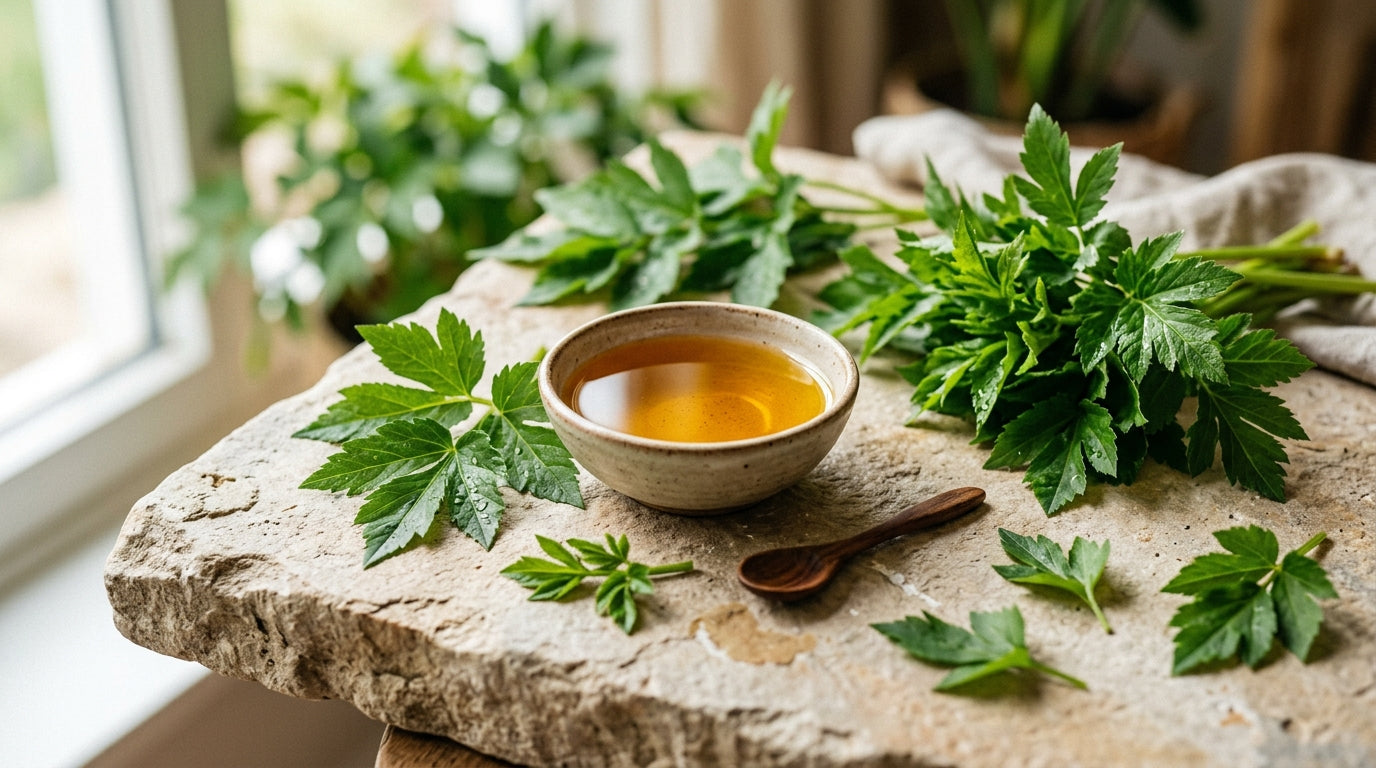
Asiatic pennywort (Centella asiatica) contains triterpenoid saponins including asiaticoside and madecassoside that enhance collagen synthesis and support neuroplasticity. These bioactive compounds modulate GABA neurotransmission while promoting wound healing through increased fibroblast activity.

Origin
Native to wetlands in Asia, including India, Sri Lanka, and Southeast Asia, and now cultivated worldwide Asiatic Pennywort (Gotu Kola) has been cultivated and wild-harvested across temperate and tropical regions for centuries. Herbalists and traditional practitioners have relied on this plant in preparations ranging from teas to tinctures, recognizing its unique phytochemical profile and broad-spectrum wellness applications.
Potential benefits
Supports cognitive function by enhancing memory and focus. Promotes skin health through wound healing and collagen production. Reduces anxiety and stress by calming the nervous system. Boosts circulation and supports cardiovascular health. Provides anti-inflammatory and antioxidant benefits, protecting against oxidative stress. Enhances liver and kidney function by aiding detoxification. Additionally, the nutritional profile of Asiatic Pennywort (Gotu Kola) includes - triterpenoids: support wound healing and collagen production. For enhanced efficacy, Asiatic Pennywort (Gotu Kola) can be combined with complementary ingredients. Hermetica Synergy Stack (Formulation Heuristic)
Role: Herbal amplifier (adaptation + regulation support)
Intention: Mood & Stress | Cardio & Circulation
Primary Pairings: Ginger (Zingiber officinale); Turmeric (Curcuma longa); Chamomile; Lemon Balm
Notes (from original entry): Pair Gotu Kola with Ashwagandha for comprehensive stress relief and cognitive support.
How it works
Gotu kola's triterpenoid saponins (asiaticoside, madecassoside, asiatic acid) stimulate type I collagen synthesis by activating fibroblast proliferation and TGF-β signaling pathways. The compounds enhance GABAergic neurotransmission in the hippocampus and prefrontal cortex, reducing cortisol levels and promoting neuroplasticity. Additionally, these saponins inhibit pro-inflammatory cytokines like TNF-α and IL-1β while activating antioxidant enzymes.
What the research says
Human studies using 300-600mg daily standardized extracts show 13-27% improvements in memory tests and wound healing rates in 4-8 week trials with 30-60 participants. A 60-day randomized controlled trial (n=33) found significant reductions in anxiety scores compared to placebo. Limited large-scale studies exist, with most research conducted on small samples, though results consistently demonstrate cognitive and dermatological benefits across multiple trials.
Safety and interactions
Gotu kola is generally well-tolerated with mild side effects including headache, drowsiness, and stomach upset in some users. It may potentiate sedative medications due to GABA enhancement and could interact with diabetes medications by lowering blood sugar. Contraindicated during pregnancy and breastfeeding due to insufficient safety data. Individuals with liver disease should avoid use as rare cases of hepatotoxicity have been reported with high doses.
Suggested use
Recommended Dosage: Tea: Steep 1-2 teaspoons dried herb in hot water for 5-10 minutes, 2-3 cups daily. Powder: 1-2 teaspoons (2-4g) daily in beverages or food. Tincture: 20-40 drops, 2-3 times daily in water.
Traditional Use & Preparation: - Triterpenoids: Promote healing and collagen formation.
- Asiaticoside: Enhances skin regeneration and supports anti-inflammatory action.
- Vitamin C: Promotes immune function and tissue repair.
General Guidance: Start with a lower dose and increase gradually. Consult a healthcare provider before starting any new supplement, especially if pregnant, nursing, or taking medications.
Frequently asked questions
How much gotu kola should I take daily?
Clinical studies typically use 300-600mg daily of standardized extract containing 10% asiaticoside. Start with 300mg daily with meals and increase gradually if needed, dividing doses throughout the day.
How long does gotu kola take to work?
Cognitive benefits typically appear within 2-4 weeks of consistent use, while wound healing effects may be noticed within 7-14 days. Anxiety reduction often occurs within the first week of supplementation.
Can gotu kola help with varicose veins?
Yes, gotu kola's triterpenoids strengthen vein walls and improve circulation. Studies show 100-200mg daily can reduce venous insufficiency symptoms and leg swelling within 4-8 weeks of use.
Is gotu kola safe with blood thinners?
Gotu kola may enhance the effects of anticoagulant medications like warfarin due to its circulation-boosting properties. Consult your healthcare provider before combining with blood thinning medications to avoid potential interactions.
Does gotu kola cause drowsiness?
Gotu kola can cause mild drowsiness in some people due to its GABAergic effects that calm the nervous system. Taking it with evening meals or starting with lower doses can help minimize daytime sedation.
What is the difference between gotu kola extract and gotu kola powder?
Gotu kola extract is a concentrated form that isolates active compounds like asiaticoside and madecassoside, making it more potent per dose than powder. Powder provides the whole herb with all constituents but requires larger serving sizes to achieve similar effects. Extracts are typically standardized for consistent potency, while powder composition can vary depending on growing conditions and processing methods.
Can gotu kola improve skin wound healing and reduce scarring?
Yes, gotu kola stimulates collagen synthesis and increases blood flow to affected areas, which accelerates wound closure and may reduce scar formation. Clinical studies show that asiaticoside, a key active compound, enhances skin healing by promoting fibroblast activity and strengthening connective tissue. Results are typically more noticeable when gotu kola is used consistently for 4-8 weeks in conjunction with topical application or oral supplementation.
Is gotu kola safe for children or should children avoid it?
Gotu kola is generally considered safe for children in appropriate doses, though clinical safety data in pediatric populations is limited. Traditional use in Asian medicine includes children's formulations for cognitive support and general wellness. Parents should consult a healthcare provider before giving gotu kola to children under 12, as individual health conditions and potential interactions with other supplements or medications must be assessed.
References
This article is educational and is not medical advice. Statements have not been evaluated by the FDA and are not intended to diagnose, treat, cure, or prevent any disease. Consult a healthcare professional before use.