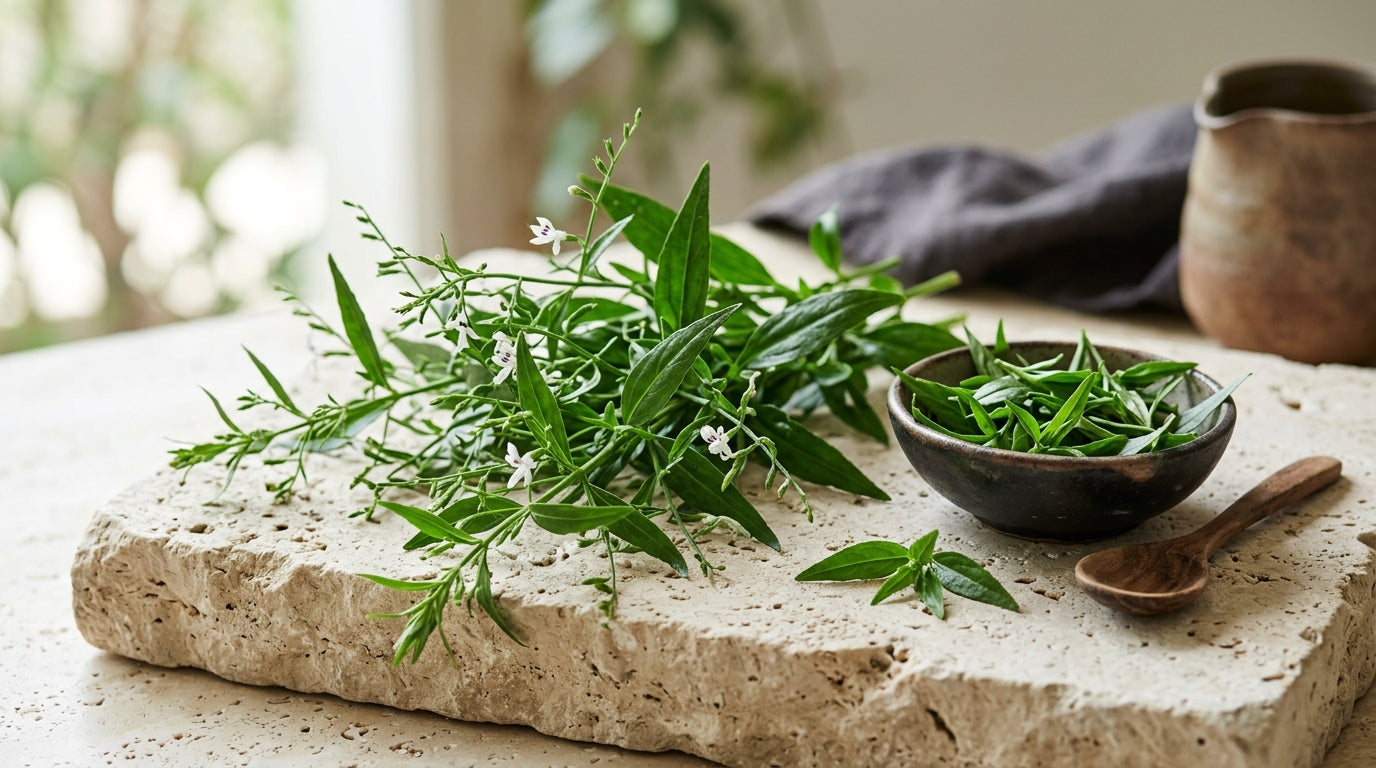
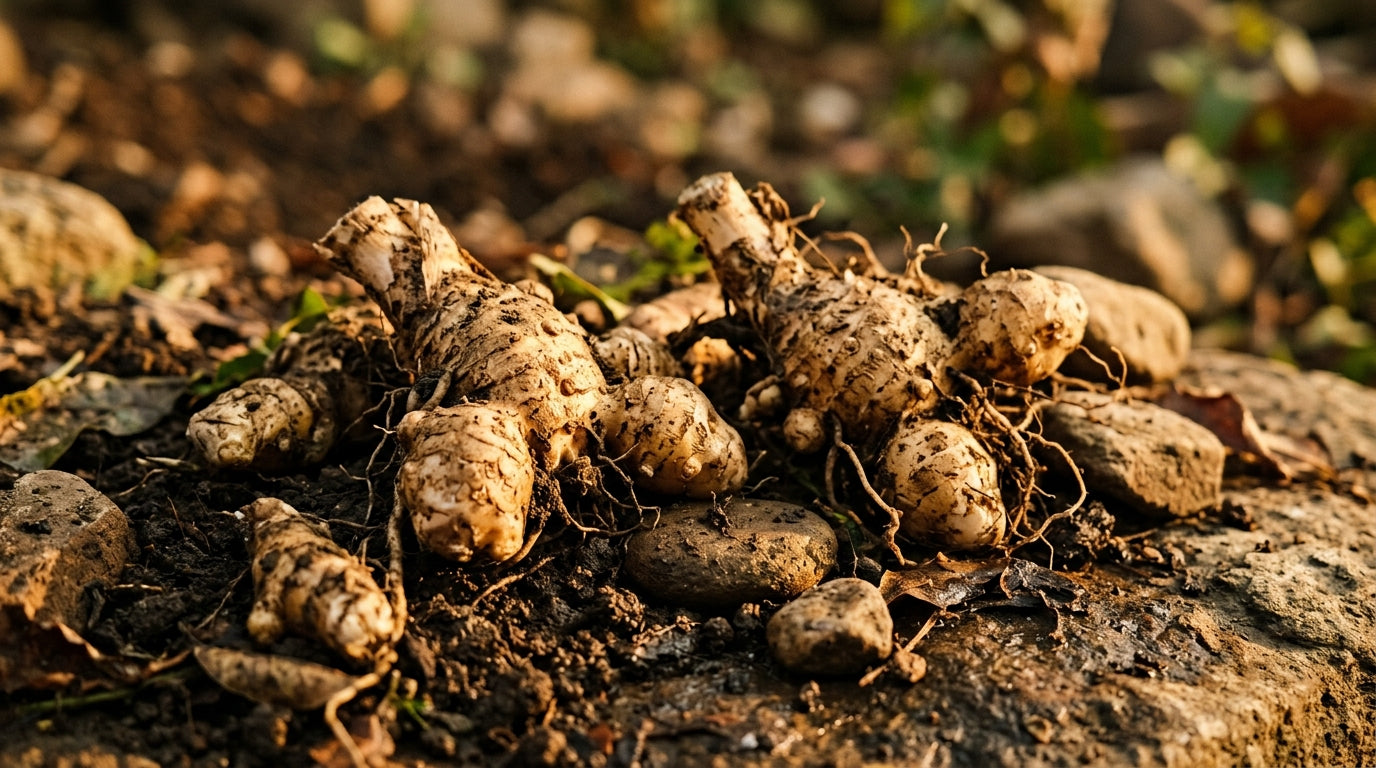
Arctic Fireweed Root (Epilobium angustifolium) is a rhizome notably rich in the macrocyclic ellagitannin oenothein B (4–8% dry mass), along with quercetin-3-O-glucuronide and kaempferol glycosides, which collectively inhibit 5-alpha-reductase (types I and II) and aromatase, reducing dihydrotestosterone and estrogen biosynthesis relevant to prostate and hormonal health. The root also delivers anti-inflammatory and antioxidant activity through suppression of COX-2 and NF-κB signaling, supporting its traditional use across circumpolar cultures for gastrointestinal, urinary, and immune complaints.

Origin
Arctic Fireweed Root (Chamerion angustifolium) is a resilient botanical native to the tundra, boreal forests, and glacial valleys of Arctic regions, including Canada, Alaska, Scandinavia, and Siberia. This hardy root has been traditionally valued for its adaptogenic and anti-inflammatory properties. It is recognized in functional nutrition for its potential to support digestive restoration, immune resilience, and stress adaptation.
Potential benefits
- Supports digestive restoration by modulating gut flora and soothing the gastrointestinal tract.
- Enhances immune resilience through its immunomodulatory compounds.
- Regulates metabolism, contributing to balanced energy utilization.
- Reduces inflammation by inhibiting pro-inflammatory pathways.
- Balances hormones, supporting endocrine system function.
- Fortifies stress adaptation, acting as an adaptogen to improve systemic resilience.
How it works
Oenothein B, the principal macrocyclic ellagitannin in Arctic Fireweed Root, competitively occupies the NADPH-binding pocket of both type I (expressed in skin and liver) and type II (expressed in prostate) 5-alpha-reductase isoforms, blocking the conversion of testosterone to dihydrotestosterone (DHT) and thereby attenuating androgen-driven proliferative signaling in prostate epithelial cells. Concurrently, quercetin-3-O-glucuronide and kaempferol-3-O-glucoside inhibit aromatase (CYP19A1) activity, reducing peripheral estrogen biosynthesis and contributing to hormonal homeostasis. Oenothein B further suppresses the NF-κB/IκB kinase axis and downstream COX-2 and iNOS transcription, lowering prostaglandin E₂ and nitric oxide output in activated macrophages. These polyphenols also scavenge reactive oxygen species directly via catechol and galloyl moieties, reinforcing cellular antioxidant defenses through indirect upregulation of the Nrf2/ARE pathway.
What the research says
Current evidence is limited to in vitro studies with no human clinical trials available. Fireweed extract demonstrated dose-dependent inhibition of HT-29 colon cancer cell proliferation to 27% of control at 250 μg/mL while stimulating normal cell growth to 128% at highest concentrations. Oenothein B specifically reduced Caco-2 cell mitochondrial leak respiration by 34% (p<0.05) and oxidative phosphorylation by 24% (p<0.05). Human clinical trials are urgently needed to validate these preliminary cellular findings and establish therapeutic relevance.
Safety and interactions
Epilobium angustifolium root preparations have a long history of traditional use and are generally considered well-tolerated at standard doses (250–500 mg standardized extract daily); mild gastrointestinal discomfort has occasionally been reported. Due to the root's demonstrated 5-alpha-reductase and aromatase inhibition, individuals taking finasteride, dutasteride, or aromatase inhibitors (e.g., letrozole, anastrozole) should consult a healthcare provider before concurrent use, as additive effects on hormone metabolism are theoretically possible. In vitro data suggest that high concentrations of oenothein B may modestly inhibit CYP3A4 and CYP1A2; clinical significance at typical oral doses is not established, but caution is warranted with narrow-therapeutic-index drugs metabolized by these enzymes. Pregnant or breastfeeding individuals should avoid supplementation due to insufficient safety data in these populations.
Suggested use
- Common forms: Dried root (teas, infusions, tonics), standardized extracts (powders, capsules).
- Dosage: 250–500 ml of tea daily, or 500–1000 mg of extract daily.
- Traditional use: Utilized in Arctic and Nordic medicine for digestion, stress adaptation, immune support, and to regulate inflammation.
- Modern applications: Incorporated into gut-healing, immune-boosting, and stress-resilience formulations.
Frequently asked questions
What is fireweed root used for?
Fireweed root (Epilobium angustifolium) is traditionally used for prostate and urinary tract support, gastrointestinal soothing, and inflammation reduction. Its high oenothein B content inhibits 5-alpha-reductase and aromatase, making it of particular interest for managing benign prostatic hyperplasia symptoms and supporting hormonal balance. The root is also consumed in circumpolar indigenous traditions as a food and digestive aid.
What are the main active compounds in arctic fireweed root?
The root is dominated by the macrocyclic ellagitannin oenothein B, present at 4–8% of dry mass, which is the principal bioactive responsible for enzyme-inhibitory effects. It also contains significant levels of quercetin-3-O-glucuronide, kaempferol-3-O-glucoside, myricetin-3-O-rhamnoside, gallic acid, and ellagic acid, all contributing to its antioxidant and anti-inflammatory profile.
Does fireweed root help with prostate health?
In vitro studies published in the Journal of Ethnopharmacology show that fireweed root extracts inhibit both type I and type II 5-alpha-reductase at low micromolar concentrations, reducing DHT formation associated with benign prostatic hyperplasia. European herbal traditions, particularly in Austria and Central Europe, have long used Epilobium species for prostate complaints. However, large-scale randomized clinical trials in humans are still needed to confirm clinical efficacy.
Is fireweed root safe to take daily?
Fireweed root is generally considered safe for daily use at standard supplemental doses of 250–500 mg of standardized extract, supported by centuries of traditional use in European and indigenous North American herbal practice. Mild digestive upset is the most commonly reported side effect. Individuals on hormone-modulating medications or drugs metabolized by CYP3A4 should consult a healthcare provider before starting supplementation.
How is arctic fireweed root different from fireweed leaf or flower?
While fireweed leaves and flowers are commonly used as teas and food (e.g., Ivan Chai in Russia), the root and rhizome contain significantly higher concentrations of oenothein B (4–8% dry weight vs. 1–3% in aerial parts), making it more pharmacologically potent for 5-alpha-reductase and aromatase inhibition. The root also provides a distinct polysaccharide and mineral profile, contributing to its traditional use as a starchy food source among circumpolar peoples. Aerial parts tend to be richer in certain flavonoid aglycones, so the plant part chosen should match the desired health outcome.
Does Arctic Fireweed Root interact with common medications?
Arctic Fireweed Root may interact with medications that affect the immune system or anti-inflammatory drugs due to its immunomodulatory and anti-inflammatory properties. It can also potentially interact with hormone-sensitive medications given its endocrine-balancing effects. Consult with a healthcare provider before combining Arctic Fireweed Root with prescription medications, particularly those for autoimmune conditions, hormone therapy, or chronic inflammation management.
What is the recommended dosage and best time to take Arctic Fireweed Root?
Typical dosing for Arctic Fireweed Root extract ranges from 500–1,500 mg daily, divided into 1–2 doses, though optimal amounts vary based on individual health goals and extract concentration. Many practitioners recommend taking it with meals to enhance absorption and minimize gastrointestinal sensitivity, particularly when supporting digestive restoration. Start with lower doses to assess tolerance, especially if new to adaptogenic root supplements.
Who should avoid Arctic Fireweed Root supplementation?
Pregnant and nursing women should avoid Arctic Fireweed Root due to its hormone-balancing and uterine effects unless directed by a qualified healthcare provider. Individuals with autoimmune conditions requiring immune suppression, or those taking immunosuppressant medications, should consult a practitioner before use given its immunomodulatory activity. People with known allergies to Epilobium species (the fireweed genus) should avoid this supplement entirely.
References
- https://www.ncbi.nlm.nih.gov/search/all/?term=Arctic+Fireweed+Root
- https://fdc.nal.usda.gov/fdc-app.html#/search?query=Arctic+Fireweed+Root
- https://pubmed.ncbi.nlm.nih.gov/36679241
- https://www.sciencedirect.com/science/article/pii/S2213453022004435
- https://www.ncbi.nlm.nih.gov/pmc/articles/PMC7701982/
This article is educational and is not medical advice. Statements have not been evaluated by the FDA and are not intended to diagnose, treat, cure, or prevent any disease. Consult a healthcare professional before use.