Velvet bean (Mucuna pruriens) contains up to 5–6% L-DOPA, a direct dopamine precursor that crosses the blood-brain barrier and replenishes dopaminergic neurons, with a 2024 review in Neurologia Internationalis (PMID 39585071) confirming its potential as a treatment for depressive disorders through monoaminergic modulation. Beyond L-DOPA, the seed contains bioactive polyphenols, tannins, and glycoproteins that confer broad neuroprotective, anti-inflammatory, and antioxidant effects relevant to neurodegenerative disease prevention (PMID 35380400).

Origin
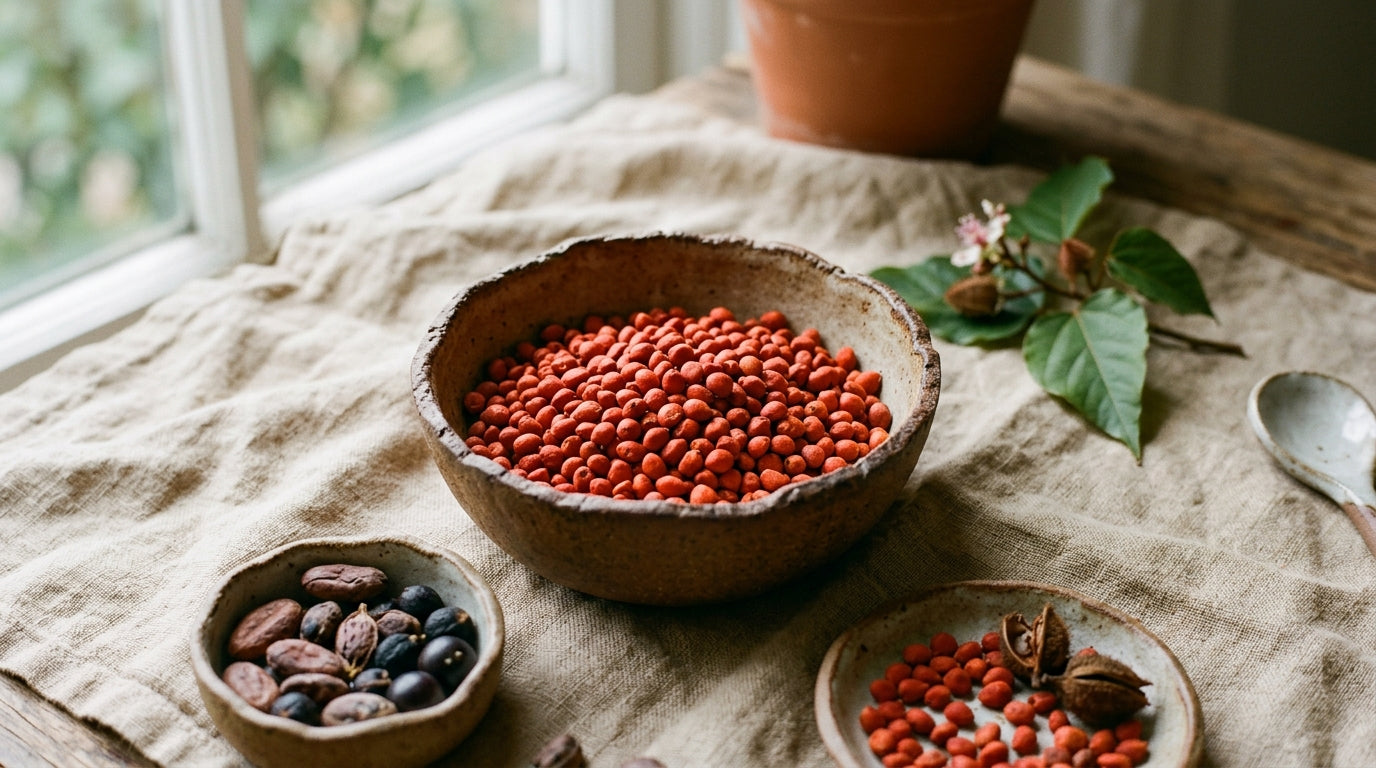
Velvet Bean (*Mucuna pruriens*), also known as Kapikachhu, is a fast-growing legume native to tropical regions of Africa, Asia, and the Caribbean. It thrives in hot, humid climates, producing distinctive long, hairy pods containing neuroactive seeds. This botanical is prized for its adaptogenic properties and its rich content of L-Dopa, making it a significant ingredient for neurological and mood support.
Potential benefits
- Enhances mood and cognitive function by providing L-Dopa, a direct precursor to dopamine.
- Modulates the stress response as an adaptogen, improving resilience to physical and emotional stressors.
- Supports neurotransmitter balance, contributing to mental well-being and anxiety reduction.
- Boosts libido and reproductive vitality, traditionally recognized as an aphrodisiac.
- Protects against oxidative damage through flavonoids and phenolic acids, supporting cellular health.
- Aids muscle recovery and growth, beneficial for active individuals.
How it works
L-DOPA (levodopa) in velvet bean seeds crosses the blood-brain barrier via the large neutral amino acid transporter (LAT1) and is decarboxylated by aromatic L-amino acid decarboxylase (AADC) in dopaminergic neurons to yield dopamine, directly restoring depleted neurotransmitter pools in the nigrostriatal and mesolimbic pathways. Dopamine subsequently modulates D1/D2 receptor signaling, influencing mood, motivation, motor control, and prolactin inhibition—the latter contributing to improved testosterone and reproductive parameters in men (PMID 30790614). Polyphenolic constituents, including quercetin, gallic acid, and ursolic acid, scavenge reactive oxygen species, inhibit NF-κB–mediated neuroinflammation, and suppress microglial activation, providing neuroprotection independent of dopamine synthesis (PMID 40297338; PMID 35380400). Tannins and protease inhibitors additionally modulate digestive enzymes such as α-amylase and trypsin, contributing to glycemic regulation and gut-level bioactive interactions.
What the research says
Human clinical trials remain limited, with most evidence derived from animal and in vitro studies. In Parkinson's disease fruit fly models, 0.1% Mucuna pruriens extract fully restored olfactory response and improved motor function in PINK1B9 mutants. Swiss albino mice receiving 48 mg/kg body weight showed significantly decreased oxidative stress levels compared to controls. Human trials with single doses demonstrated faster onset and longer duration compared to standard levodopa, though specific quantitative data and sample sizes were not detailed in available research.
Safety and interactions
Because velvet bean is a potent natural source of levodopa, concurrent use with synthetic levodopa/carbidopa (Sinemet) or MAO inhibitors can cause additive dopaminergic effects, risking dyskinesia, hypotension, or serotonin-like syndrome; dose adjustment and medical supervision are essential. High-dose or prolonged intake may suppress prolactin excessively, potentially disrupting lactation and hormonal balance in susceptible individuals. The seeds contain anti-nutritional factors such as trypsin inhibitors, tannins, and phytic acid that may impair protein digestion and mineral absorption unless properly processed (boiling, fermentation, or roasting). Individuals taking antipsychotic dopamine-antagonist medications (e.g., haloperidol, risperidone) should avoid M. pruriens as it may counteract therapeutic efficacy; no significant CYP450 interactions have been documented to date, but pharmacokinetic studies remain limited.
Suggested use
- Traditional Forms: Seeds are cooked or ground into flour for porridges and soups in Ayurvedic and African medicine.
- Modern Forms: Available as powdered supplements or capsules.
- Dosage: For cognitive and stress support, 200–500 mg of extract per day. For vitality and hormonal balance, 1–3 grams of whole seed powder daily.
Frequently asked questions
What are the main velvet bean benefits for brain health?
Velvet bean provides L-DOPA, which converts directly to dopamine in the brain, supporting mood, motivation, and motor function. A 2022 review in Neurochemical Research (PMID 35380400) confirmed its neuroprotective effects against oxidative stress and neuroinflammation in models of Parkinson's and other neurodegenerative diseases. Its polyphenols further protect neurons by inhibiting NF-κB signaling and scavenging free radicals.
Can velvet bean help with depression?
A 2024 review published in Neurologia Internationalis (PMID 39585071) evaluated Mucuna pruriens as a possible treatment for depressive disorders, noting that its L-DOPA content restores dopaminergic tone linked to anhedonia and low motivation. The plant's additional serotonergic and antioxidant compounds may provide complementary antidepressant mechanisms. However, clinical trials in humans are still limited and medical guidance is recommended.
Does Mucuna pruriens improve testosterone and male fertility?
Yes. A 2020 systematic review in Andrologia found that M. pruriens supplementation improved sperm count, motility, and morphology while reducing seminal oxidative stress markers. Santos et al. (2019) in the Journal of Ethnopharmacology (PMID 30790614) also reported that the herb positively influenced testosterone levels and prostate parameters, partly through dopamine-mediated suppression of prolactin.
Is velvet bean safe to take with Parkinson's medication?
Velvet bean contains the same active compound—levodopa—found in standard Parkinson's drugs like Sinemet (levodopa/carbidopa), so combining them without medical supervision risks dopamine excess, which can cause dyskinesia, nausea, or hypotension. Bhattacharyya (2022) in the Annals of Indian Academy of Neurology (PMID 35342258) documented the long history of levodopa use and emphasized precise dosing. Patients on any dopaminergic or MAO-inhibitor therapy should consult a neurologist before adding velvet bean.
How much L-DOPA is in velvet bean seeds?
Mature velvet bean seeds typically contain 3.1–6.1% L-DOPA by dry weight, with most commercial preparations standardized to approximately 5%. The 2022 chromosomal-level genome study (PMID 35980175) in DNA Research mapped the biosynthetic genes responsible for L-DOPA accumulation, confirming genetic variation across cultivars. Processing methods such as boiling and fermentation can reduce L-DOPA content significantly, so standardized extracts are preferred for therapeutic use.
What is the difference between velvet bean and other dopamine-boosting supplements?
Velvet bean (Mucuna pruriens) provides L-DOPA as a direct precursor to dopamine, making it unique compared to supplements that only support dopamine synthesis indirectly. Unlike tyrosine or phenylalanine, which require multiple enzymatic steps to convert to dopamine, velvet bean's L-DOPA crosses the blood-brain barrier and converts to dopamine more efficiently. This direct mechanism makes velvet bean particularly effective for those seeking rapid mood and motivation support, though it also requires more careful dosing and monitoring.
Who should avoid velvet bean supplementation?
Individuals with schizophrenia, bipolar disorder, or a family history of psychosis should avoid velvet bean, as excess dopamine may exacerbate these conditions. Pregnant and breastfeeding women should not use velvet bean due to insufficient safety data and potential effects on fetal dopamine regulation. Additionally, those taking certain medications such as antipsychotics, MAOIs, or levodopa-based Parkinson's treatments should consult a healthcare provider before supplementing.
What is the optimal dosage and timing for velvet bean supplementation?
Standard velvet bean doses typically range from 5–30 grams of whole seed powder daily, or 250–1,000 mg of standardized L-DOPA extract, divided into 1–3 doses. For best results, velvet bean is often taken in the morning or early afternoon to support mood, focus, and energy without disrupting sleep, though timing should be adjusted based on individual sensitivity. Starting with a low dose and gradually increasing helps assess tolerance, as excessive L-DOPA intake may cause nausea, dizziness, or overstimulation in some users.
References
- https://fdc.nal.usda.gov/fdc-app.html#/search?query=Velvet+Bean
- https://fdc.nal.usda.gov/fdc-app.html#/search?query=Velvet+Bean+Seed
- https://www.ncbi.nlm.nih.gov/search/all/?term=Velvet+Bean
- https://www.ncbi.nlm.nih.gov/search/all/?term=Velvet+Bean+Seed
- https://doi.org/10.1016/j.jep.2020.113300
- https://pubmed.ncbi.nlm.nih.gov/23020089
- https://www.ncbi.nlm.nih.gov/pmc/articles/PMC7658731/
- https://www.sciencedirect.com/science/article/pii/S1756464620304913
- https://www.sciencedirect.com/science/article/pii/S1874391920305480
This article is educational and is not medical advice. Statements have not been evaluated by the FDA and are not intended to diagnose, treat, cure, or prevent any disease. Consult a healthcare professional before use.