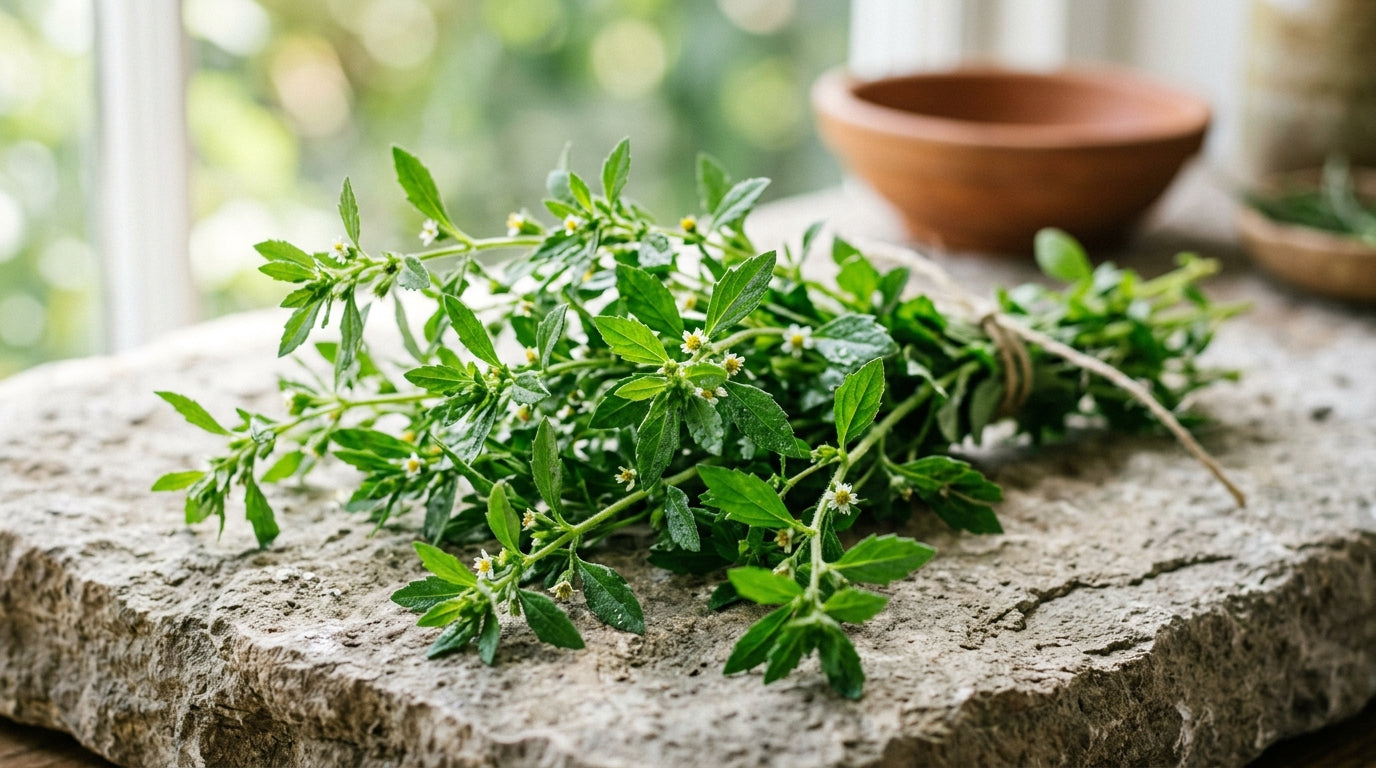
Tansy leaf (Tanacetum vulgare) contains bioactive compounds including camphor, borneol, and flavonoids like luteolin that exhibit antioxidant activity through hydrogen atom transfer mechanisms. The leaf's anti-inflammatory effects occur via NO production inhibition and NF-κB pathway modulation, with α-humulene showing particular potency against inflammatory markers.

Origin
Tanacetum vulgare, commonly known as Tansy, is a perennial herbaceous plant native to temperate regions of Europe and Asia, and naturalized across North America. It is recognized for its fern-like leaves and button-like yellow flowers. Historically, Tansy has been valued for its potent medicinal properties, though its use requires caution due to certain bioactive compounds.
Potential benefits
- Stimulates bile production and eases bloating, supporting overall gastrointestinal function.
- Reduces cellular inflammation and oxidative stress, contributing to joint health.
- Strengthens immune defenses through its antimicrobial and antiparasitic properties.
- Supports cognitive health, memory, and focus via its neuroprotective effects.
- Aids bodily detoxification by traditionally promoting perspiration and fluid elimination.
- Historically used to manage menstrual cramps and support hormonal balance, though modern use requires caution.
How it works
Tansy leaf's antioxidant activity operates through hydrogen atom transfer mechanisms, with Bulgarian essential oil showing ORAC values of 605.4 ± 49.3 µmol TE/mL and DCFH oxidation inhibition at IC₅₀ 51 µg/mL. Anti-inflammatory effects occur via NO production inhibition in macrophages, with compounds like α-humulene, α-pinene, and β-pinene demonstrating IC₅₀ values of 30-46 µg/mL. The mechanism involves suppression of COX-2/iNOS enzymes and modulation of NF-κB/JNK inflammatory pathways.
What the research says
Current evidence for tansy leaf derives exclusively from in vitro studies on cell lines such as RAW 264.7 macrophages, with no human clinical trials available. Laboratory studies demonstrate DPPH scavenging activity with IC₅₀ values ranging from 32-181 mg/L for crude leaf extracts and measurable NO inhibition in LPS-stimulated cells. The research shows promising antioxidant and anti-inflammatory potential, but lacks clinical validation in human subjects. Professional guidance remains essential due to limited human safety data and the presence of potentially toxic compounds like thujone.
Safety and interactions
Tansy leaf contains 0.4-6% thujone (α and β forms), which poses neurotoxicity risks at elevated concentrations, though specific toxic thresholds remain unestablished in available research. The tannin content up to 19% may cause gastrointestinal irritation, and compounds like camphor and borneol have demonstrated cytotoxic effects against cancer cell lines in laboratory studies. Use is contraindicated during pregnancy, in individuals with epilepsy, or those with known thujone sensitivity due to potential neurological effects. No specific drug interactions have been documented, but the lack of clinical trial data necessitates professional supervision for any therapeutic applications.
Suggested use
- Traditional: Employed in medieval European medicine for digestive, fever, and joint complaints; used in burial rites symbolizing immortality; valued in folk practices for pest repellent properties.
- Modern: Incorporated into carefully regulated herbal remedies for digestive, joint, and immune support; limited culinary use due to thujone content.
- Forms: Standardized extract.
- Recommended Dosage: 100–300 mg of standardized extract daily under professional supervision only, due to thujone content.
Frequently asked questions
What are the main bioactive compounds in tansy leaf?
Tansy leaf contains camphor as the dominant compound in certain chemotypes, along with borneol, 1,8-cineole, α-pinene, and caryophyllene oxide in the essential oil. The leaf extracts provide flavonoids like luteolin, phenolic acids including caffeic and gallic acid, tannins up to 19%, and thujone at 0.4-6% concentration.
How effective is tansy leaf for inflammation?
In vitro studies show tansy leaf compounds inhibit nitric oxide production in inflammatory cells, with α-pinene, β-pinene, and α-terpinene achieving IC₅₀ values of 30-46 µg/mL. The anti-inflammatory effects work through COX-2/iNOS suppression and NF-κB pathway modulation, though no human clinical trials have confirmed these effects.
Is tansy leaf safe to consume?
Tansy leaf contains thujone at 0.4-6% levels, which can cause neurotoxicity at high doses, and tannins up to 19% that may irritate the digestive system. No human clinical trials have established safe dosage ranges, making professional guidance essential before any therapeutic use.
What's the difference between common tansy and blue tansy?
Common tansy refers to Tanacetum vulgare with camphor-dominant essential oil, while blue tansy is the distinct species Tanacetum annuum with different chemical composition. Both are used in traditional medicine but have varying bioactive compound profiles and safety considerations.
How strong is tansy leaf's antioxidant activity?
Bulgarian tansy leaf essential oil demonstrates ORAC values of 605.4 ± 49.3 µmol TE/mL and inhibits DCFH oxidation with IC₅₀ of 51 µg/mL. Crude leaf extracts show DPPH scavenging activity with IC₅₀ values ranging from 32-181 mg/L, indicating moderate to strong antioxidant potential in laboratory conditions.
How much tansy leaf should I take daily, and what's the recommended dosage form?
Tansy leaf is typically consumed as a tea (1-2 grams dried leaf steeped in hot water) or tincture (20-40 drops in water), taken 1-3 times daily with meals to support digestion. Due to tansy's potency and potential toxicity at high doses, it's important not to exceed recommended amounts and to limit use to short-term periods (typically 2-4 weeks) unless under professional supervision. Always consult a healthcare provider to determine the appropriate dosage for your individual needs and health status.
Is tansy leaf safe during pregnancy, breastfeeding, or for young children?
Tansy leaf is not recommended during pregnancy or breastfeeding, as it may stimulate uterine contractions and contains compounds that could potentially harm fetal development or pass into breast milk. Children should not use tansy leaf supplements without explicit guidance from a pediatric healthcare provider, as their smaller body size makes them more susceptible to toxicity. Women of childbearing age should also avoid tansy if planning pregnancy or if there's any possibility of pregnancy.
Does tansy leaf interact with common medications, particularly those affecting liver or digestive function?
Tansy leaf may interact with medications metabolized by the liver (CYP450 enzymes), potentially affecting the efficacy or safety of drugs like statins, anticoagulants, and antidiabetic medications. Because tansy stimulates bile production and has antimicrobial properties, it may also interfere with medications for gallbladder or digestive conditions, and should not be combined with antiparasitic drugs without professional guidance. Anyone taking prescription medications should discuss tansy supplementation with their healthcare provider or pharmacist before use.
References
- https://fdc.nal.usda.gov/fdc-app.html#/search?query=Tansy+Flower
- https://fdc.nal.usda.gov/fdc-app.html#/search?query=Tansy+Leaf
- https://www.ncbi.nlm.nih.gov/search/all/?term=Tansy+Flower
- https://www.ncbi.nlm.nih.gov/search/all/?term=Tansy+Leaf
- https://www.ncbi.nlm.nih.gov/pmc/articles/PMC7124576/
- https://www.ncbi.nlm.nih.gov/pmc/articles/PMC7393152/
- https://www.sciencedirect.com/science/article/pii/S0963996920302019
- https://www.sciencedirect.com/science/article/pii/S1756464620303278
This article is educational and is not medical advice. Statements have not been evaluated by the FDA and are not intended to diagnose, treat, cure, or prevent any disease. Consult a healthcare professional before use.