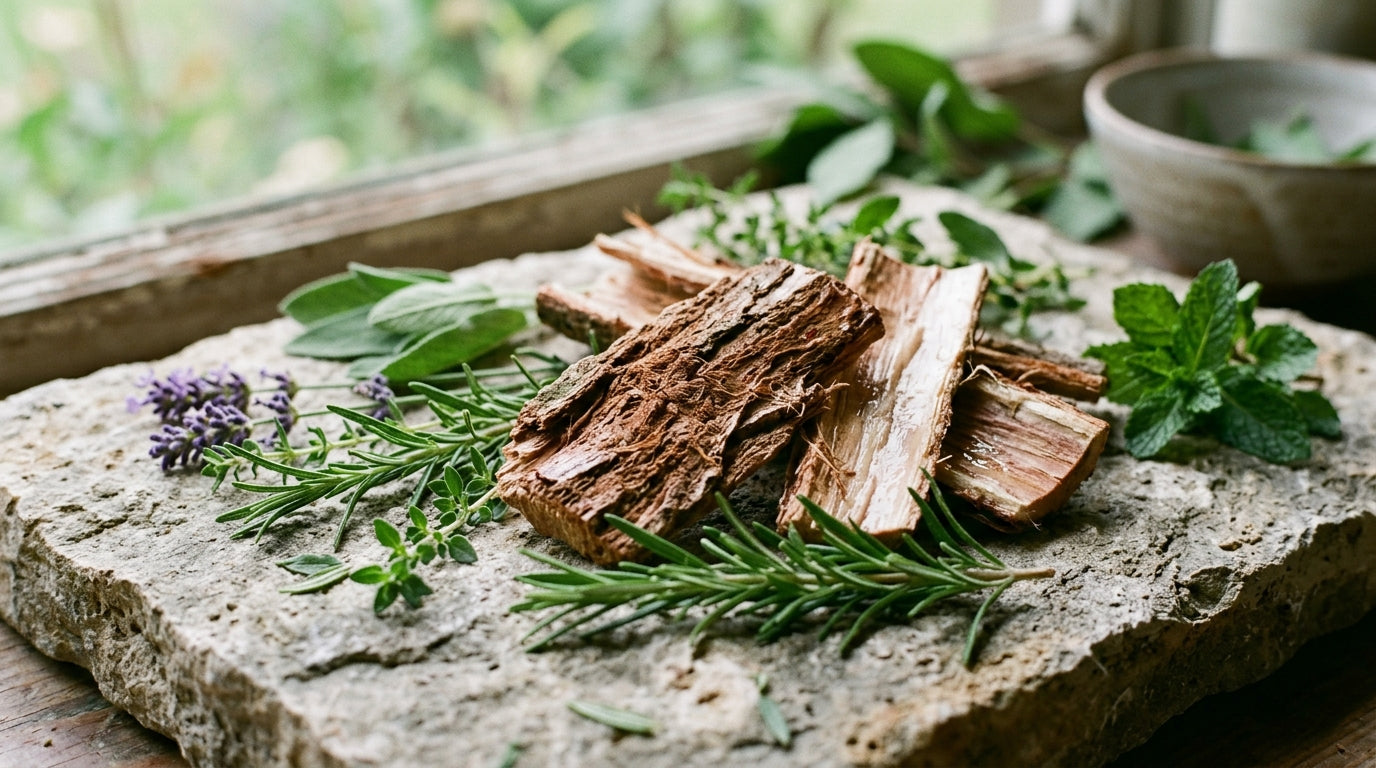
Slippery elm bark (Ulmus rubra) contains 50–60% mucilage composed of mucopolysaccharides—including hexose, pentose, methylpentose, and galacturonic acid residues—that hydrate into a viscous demulcent gel coating mucous membranes, providing mechanical protection and supporting epithelial repair throughout the gastrointestinal and respiratory tracts. The bark also delivers condensed tannins (catechins and procyanidins), flavonoids, and phenolic acids that exert complementary anti-inflammatory and antioxidant effects by scavenging reactive oxygen species and inhibiting pro-inflammatory cytokine cascades.

Origin
Ulmus rubra, commonly known as Slippery Elm, is a deciduous tree native to Eastern North America, found across the United States and Canada. Its inner bark is highly prized in functional nutrition for its abundant mucilage, which provides significant demulcent properties for digestive and respiratory support.
Potential benefits
- Soothes and protects the digestive tract by forming a demulcent layer, alleviating irritation and promoting gut lining repair.
- Alleviates respiratory irritation and coughs by coating mucous membranes in the throat and lungs with its mucilaginous compounds.
- Enhances immune resilience through its anti-inflammatory and antioxidant properties, supporting the body's natural defenses.
- Promotes skin vitality and wound healing when applied topically, due to its soothing and protective qualities.
- Supports healthy bowel function by promoting regularity and easing discomfort.
How it works
Slippery elm bark's primary bioactivity derives from its mucopolysaccharide-rich mucilage—composed of galactose, rhamnose, galacturonic acid, and 3-O-methyl galactose residues—which upon hydration forms a thick, adhesive gel that physically coats and shields inflamed or ulcerated mucosal surfaces, reducing contact with irritants and gastric acid while promoting epithelial cell migration and wound repair. The bark's condensed tannins (procyanidins and catechins) cross-link exposed extracellular matrix proteins and mucosal glycoproteins, forming a protective astringent barrier and inhibiting bacterial adhesion. Phenolic compounds including quercetin, kaempferol, and beta-sitosterol modulate inflammation by suppressing NF-κB signaling and reducing the expression of pro-inflammatory mediators such as COX-2, TNF-α, and IL-6, while concurrently scavenging superoxide and hydroxyl radicals via electron donation from their hydroxyl groups. This multi-pathway activity—mechanical protection, astringency, anti-inflammatory modulation, and antioxidant defense—accounts for the broad traditional applications across gastrointestinal, respiratory, and dermatological conditions.
What the research says
Clinical evidence remains limited, with one small study showing slippery elm in combination with other ingredients increased bowel movement frequency by 20% and improved stool consistency in IBS patients. No large standalone clinical trials exist for slippery elm bark alone. Animal and in vitro studies demonstrate systemic anti-inflammatory effects in porcine gastrointestinal models and dose-dependent ROS reduction in ulcerative colitis mucosal biopsies. The evidence base relies primarily on traditional use and mechanistic studies rather than robust human clinical data.
Safety and interactions
Slippery elm bark is classified as Generally Recognized as Safe (GRAS) by the FDA for use as a demulcent in oral healthcare products, and the NCBI LiverTox database reports no documented cases of clinically apparent liver injury attributable to slippery elm. Because the mucilage gel can physically coat the gastrointestinal lining, it may slow or reduce the absorption of concurrently administered oral medications; therefore, it is generally recommended to take slippery elm at least two hours apart from other drugs, particularly narrow-therapeutic-index medications such as warfarin, lithium, and thyroid hormones. No specific CYP450 enzyme interactions have been documented in the published literature, though formal pharmacokinetic interaction studies have not been conducted. Pregnant and breastfeeding individuals should exercise caution and consult a healthcare provider before use, as the whole bark (as opposed to the inner bark) has historically been associated with abortifacient properties in folk medicine, and safety data in these populations are insufficient.
Suggested use
- Common Forms: Powdered bark, extract.
- Preparation: Mix 1–2 teaspoons of powdered bark in warm water, up to three times daily, to form a soothing gruel.
- Dosage: Consume 500–1000 mg of extract daily.
- Guidance: Consult a healthcare professional for personalized dosage recommendations.
Frequently asked questions
What is slippery elm bark used for?
Slippery elm bark is primarily used as a natural demulcent to soothe irritated mucous membranes in the digestive tract (for conditions such as acid reflux, gastritis, and IBS symptoms) and the respiratory tract (for sore throats and dry coughs). Its mucilage forms a protective gel coating that reduces inflammation and supports tissue repair, and it has also been used topically as a poultice to promote wound healing and soothe minor skin irritations.
What are the main slippery elm bark benefits for digestion?
Slippery elm bark benefits digestion by coating the esophageal and gastric mucosa with a thick mucilaginous layer that shields irritated tissue from stomach acid and digestive enzymes, thereby reducing symptoms of GERD, gastritis, and inflammatory bowel conditions. Its tannins and flavonoids further reduce localized inflammation by inhibiting NF-κB-mediated pro-inflammatory cytokine production, while the gel may also serve as a prebiotic substrate supporting beneficial gut microbiota.
Does slippery elm bark interact with medications?
Yes, slippery elm bark's mucilage gel can physically coat the gastrointestinal lining and potentially reduce or delay the absorption of orally administered medications. Healthcare providers generally recommend separating slippery elm from other medications by at least two hours, especially for drugs with narrow therapeutic windows such as warfarin, levothyroxine, and lithium. No direct CYP450 enzyme interactions have been formally documented.
How do you take slippery elm bark — powder, capsules, or tea?
Slippery elm bark is available in several forms: capsules or tablets (typically 400–1,000 mg taken 2–3 times daily), powder mixed with warm water to form a soothing porridge or paste (1–2 tablespoons per cup), lozenges for sore throat relief, and as a tea steeped from coarse bark powder. The powder-and-water preparation maximizes mucilage hydration and is considered the most traditional method for gastrointestinal use, while lozenges provide convenient, direct contact with throat mucosa.
Is slippery elm bark safe during pregnancy?
Safety of slippery elm bark during pregnancy has not been established through clinical studies. Historically, the outer bark (as opposed to the inner bark) was used in folk medicine as an abortifacient, leading many health authorities to recommend caution. Pregnant and breastfeeding individuals should consult a qualified healthcare provider before using slippery elm in any form.
What is the best time of day to take slippery elm bark for maximum effectiveness?
Slippery elm bark is most effective when taken on an empty stomach, ideally 30 minutes to 1 hour before meals, to allow its mucilaginous compounds to coat and protect the digestive tract without interference from food. However, if you experience nausea on an empty stomach, taking it with a light snack is acceptable. For respiratory benefits, taking it in the morning and evening may help coat the throat and airways when inflammation is typically most noticeable. Consistency matters more than timing, so choose a schedule you can maintain daily.
Is slippery elm bark safe for children, and what dosage should they take?
Slippery elm bark is generally considered safe for children and is often used to soothe digestive upset and coughs in pediatric herbal medicine. However, dosing should be reduced proportionally to body weight, and it's best to consult a pediatrician or qualified herbalist for age-specific recommendations before giving it to children under 5 years old. The typical approach is to use lower concentrations in tea or powder form rather than capsules, which may be difficult for young children to swallow. Always ensure any slippery elm product is free from contaminants and from a reputable source when giving it to children.
How does slippery elm bark compare to other demulcent herbs like marshmallow root for soothing digestion?
Both slippery elm bark and marshmallow root are demulcents that coat and protect mucous membranes, but slippery elm is often considered more potent due to its higher mucilage content and faster-acting properties. Marshmallow root may be gentler and better tolerated by those with sensitive stomachs, while slippery elm is preferred for more severe inflammation or ulceration of the gut lining. Some practitioners recommend combining them for enhanced soothing effects, as they work through similar mechanisms but with slightly different nutrient profiles. The choice between them often depends on individual tolerance, the severity of symptoms, and whether respiratory vs. digestive symptoms are the primary concern.
References
- https://www.ncbi.nlm.nih.gov/search/all/?term=Slippery+Elm+Bark
- https://fdc.nal.usda.gov/fdc-app.html#/search?query=Slippery+Elm+Bark
- https://www.sciencedirect.com/science/article/pii/S2225411019305123
- https://www.ncbi.nlm.nih.gov/pmc/articles/PMC5260587/
This article is educational and is not medical advice. Statements have not been evaluated by the FDA and are not intended to diagnose, treat, cure, or prevent any disease. Consult a healthcare professional before use.