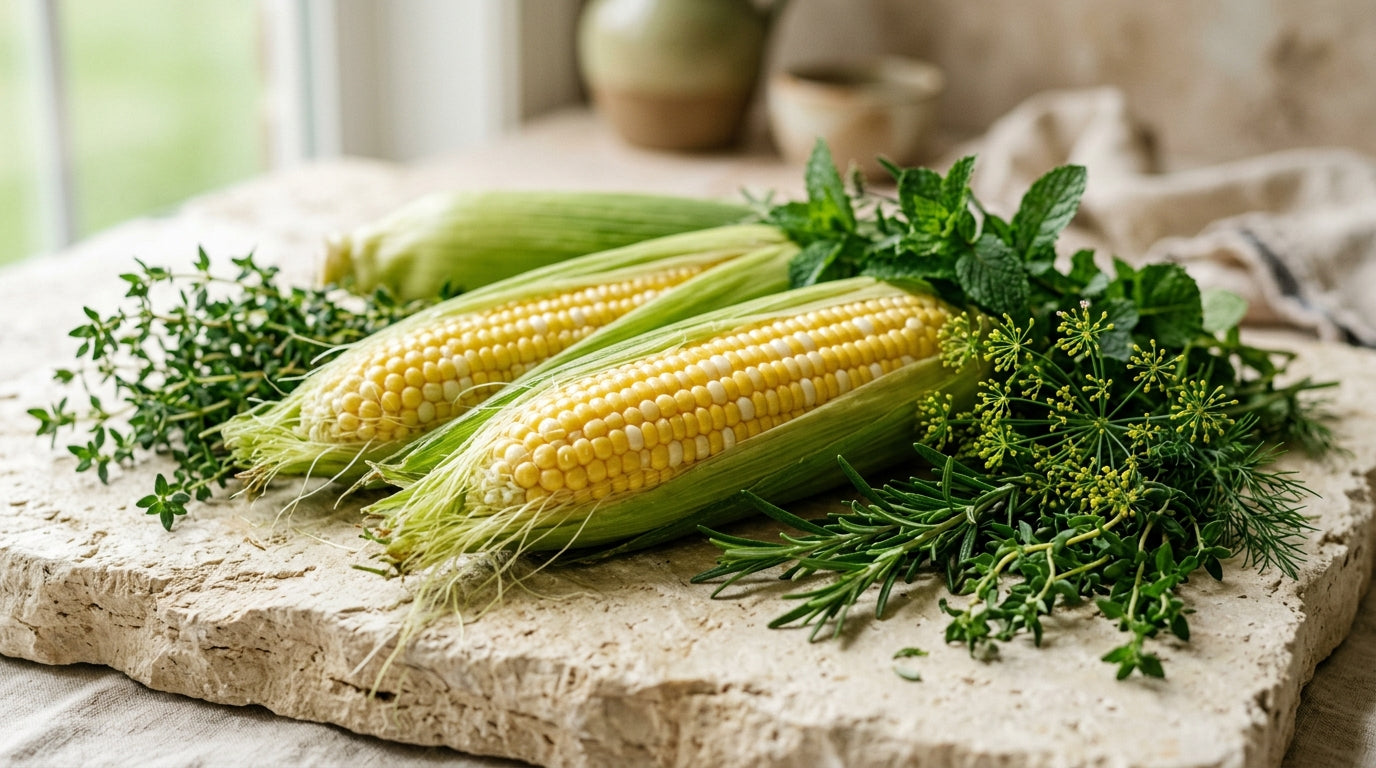
Sweet corn contains prebiotic fibers including resistant starch and inulin that selectively promote beneficial gut bacteria growth, particularly Bifidobacterium and Lactobacillus species. Fermented corn starch produces short-chain fatty acids and bioactive metabolites that enhance gut barrier integrity and modulate systemic inflammation through microbiome-immune axis interactions.

Origin
Sweet corn (Zea mays subsp. saccharata) is a domesticated variety of maize, native to Central and South America, where it has been cultivated for thousands of years. Prized for its natural sweetness and versatility, it is a functional food rich in prebiotic fibers like resistant starch and inulin, which nourish beneficial gut bacteria and support digestive health.
Potential benefits
- Promotes gut microbiota balance and enhances digestion through its rich content of prebiotic fibers, including inulin and resistant starch.
- Strengthens immune function and reduces oxidative stress with antioxidants such as vitamin C and various polyphenols.
- Provides sustained energy due to its high content of natural carbohydrates.
- Supports cardiovascular health by regulating blood pressure with essential minerals like potassium and magnesium.
- Protects against oxidative stress and supports eye health with carotenoids, specifically lutein and zeaxanthin.
- Helps moderate blood sugar levels and improves insulin sensitivity through the action of resistant starch.
How it works
Resistant starch and isomalto-oligosaccharides in sweet corn resist digestion in the small intestine, reaching the colon where they serve as substrates for beneficial bacteria including Lactiplantibacillus fermentum and Bifidobacterium breve. These bacteria ferment the prebiotic fibers into short-chain fatty acids, exopolysaccharides, and bacteriocins that strengthen gut barrier function and regulate glucose homeostasis through gut hormone pathways. Phenolic compounds like quercetin and ferulic acid provide additional anti-inflammatory effects through inhibition of pro-inflammatory cytokine production.
What the research says
Current evidence for sweet corn's prebiotic effects comes primarily from laboratory studies and mechanistic research rather than controlled human trials. Studies demonstrate that thermal processing at 115°C for 25 minutes increases antioxidant activity by 44% and ferulic acid content by 550%, enhancing bioactive compound availability. Research has identified specific beneficial bacterial strains that proliferate when exposed to corn-derived prebiotics, including documented anti-inflammatory and glucose-regulating metabolites. However, specific clinical trial data with quantified human health outcomes and standardized dosing protocols remain limited in the current literature.
Safety and interactions
Sweet corn is generally recognized as safe for consumption as a whole food, though safety data for concentrated prebiotic sweet corn extracts or supplements is not well-established in current research. Individuals with corn allergies should avoid sweet corn products entirely, and those with fructose malabsorption may experience digestive discomfort from high fiber content. No specific drug interactions have been documented for sweet corn or its prebiotic components, though the fiber content may affect absorption timing of oral medications. Pregnant and breastfeeding women can safely consume sweet corn as food, but should consult healthcare providers before using concentrated prebiotic supplements.
Suggested use
- Culinary Uses: Enjoyed grilled, boiled, steamed, or roasted; versatile in salads, soups, or casseroles.
- Prebiotic Maximization: Consume fresh or lightly cooked to preserve optimal fiber content.
- Serving Suggestion: 1 ear of corn or 1 cup of kernels daily to support overall health.
- Storage: Store fresh sweet corn in the refrigerator and use within 3–5 days for optimal freshness.
Frequently asked questions
How much resistant starch does sweet corn contain compared to other vegetables?
Sweet corn contains moderate levels of resistant starch that increase significantly when cooled after cooking, though specific comparative values vary by processing method. The resistant starch content is enhanced through fermentation processes, creating additional prebiotic compounds like isomalto-oligosaccharides and resistant dextrin.
Can sweet corn prebiotics help with blood sugar control?
Research indicates that fermented corn starch contains bioactive compounds that improve insulin sensitivity and support glucose homeostasis through gut hormone regulation. The resistant starch and fiber content may help moderate postprandial glucose response, though controlled human studies with specific dosing are needed to establish clinical efficacy.
What processing methods increase sweet corn's prebiotic benefits?
Thermal processing at 115°C for 25 minutes significantly increases bioactive compounds, boosting total antioxidant activity by 44% and ferulic acid content by 550%. Fermentation processes create additional beneficial compounds including short-chain fatty acids and postbiotic metabolites that support gut health.
Which gut bacteria benefit most from sweet corn prebiotics?
Research identifies Lactiplantibacillus fermentum, Bifidobacterium breve, and Saccharomyces cerevisiae as key beneficial strains that proliferate with corn-derived prebiotic substrates. These bacteria produce metabolites that strengthen gut barrier integrity and provide anti-inflammatory effects throughout the digestive system.
Are there any digestive side effects from prebiotic sweet corn?
While sweet corn is generally well-tolerated, individuals with fructose malabsorption may experience bloating or digestive discomfort from the high fiber and natural sugar content. Starting with smaller portions allows the gut microbiome to adapt gradually to increased prebiotic fiber intake.
Is prebiotic sweet corn safe for people with corn allergies or sensitivities?
Prebiotic sweet corn supplements may pose risks for individuals with corn allergies, as they are derived directly from corn and can trigger allergic reactions ranging from mild to severe. Those with corn sensitivities or intolerances should consult a healthcare provider before supplementing. People with celiac disease can typically tolerate corn-based prebiotics, as corn is naturally gluten-free, but should verify processing to avoid cross-contamination.
How does prebiotic sweet corn compare to inulin or FOS supplements for gut health?
Prebiotic sweet corn contains naturally occurring inulin and resistant starch, making it a whole-food alternative to isolated prebiotic supplements, though isolated inulin and FOS may provide higher concentrations of specific compounds. Sweet corn offers additional benefits from its polyphenols, antioxidants, and vitamin C content that isolated prebiotics typically lack. The choice depends on whether you prefer a comprehensive food-based approach or targeted, potency-optimized supplementation.
Can prebiotic sweet corn help improve energy levels and athletic performance?
Yes, prebiotic sweet corn's high natural carbohydrate content provides sustained energy for endurance and athletic activities by replenishing glycogen stores and supporting steady glucose availability. The resistant starch in sweet corn digests more slowly than regular carbohydrates, offering prolonged energy without rapid blood sugar spikes, making it suitable for athletes seeking stable fuel. Additionally, its antioxidant compounds may support post-exercise recovery by reducing oxidative stress from intense training.
References
- https://www.ncbi.nlm.nih.gov/search/all/?term=Prebiotic+Sweet+Corn
- https://fdc.nal.usda.gov/fdc-app.html#/search?query=Prebiotic+Sweet+Corn
- https://pubmed.ncbi.nlm.nih.gov/31567890
This article is educational and is not medical advice. Statements have not been evaluated by the FDA and are not intended to diagnose, treat, cure, or prevent any disease. Consult a healthcare professional before use.