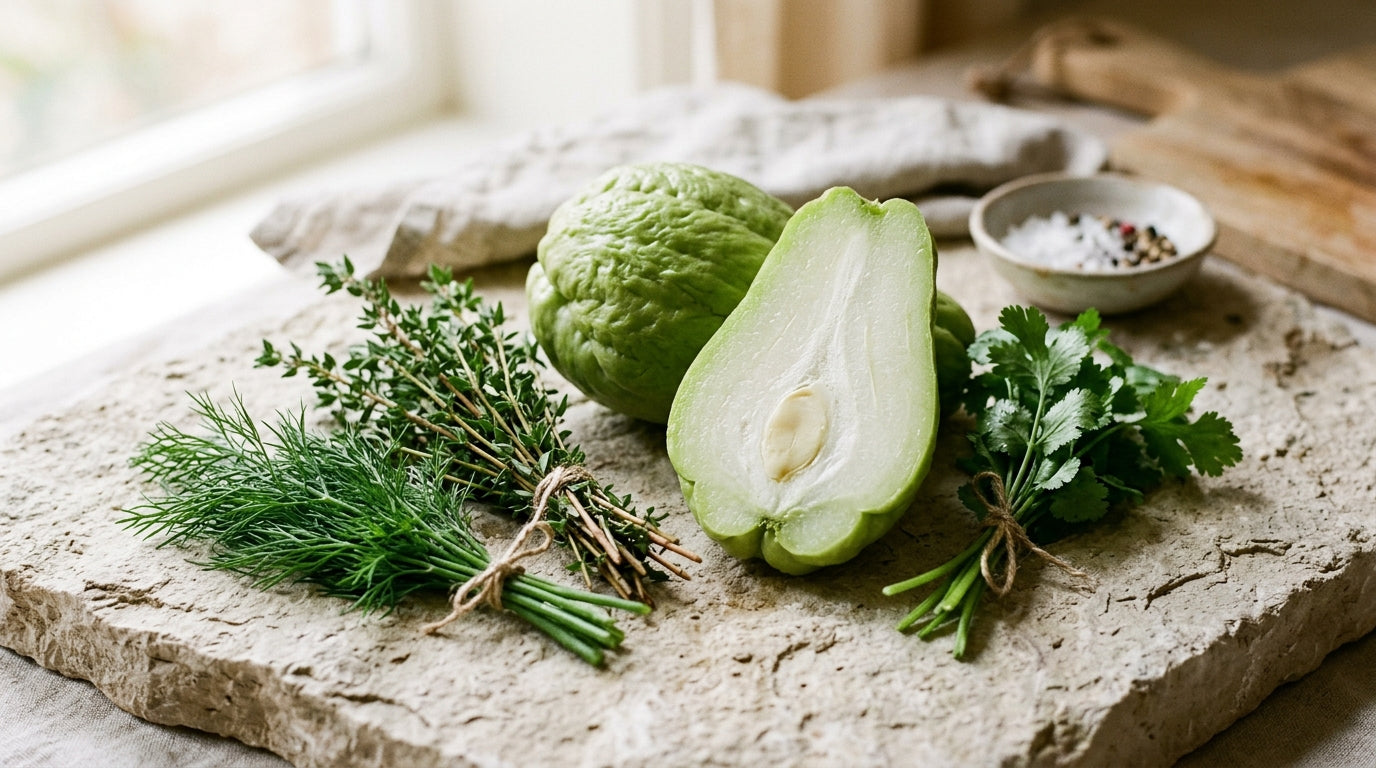
Chayote (Sechium edule) contains bioactive flavonoids including naringenin, vitexin, and quercetin derivatives that neutralize free radicals and inhibit NF-κB inflammatory pathways. Clinical trials in metabolic syndrome patients show significant reductions in oxidative stress index from 1.7 to 0.75 and TNF-α levels from 5.3 to 3.5 mg/L.

Origin
Chayote (Sechium edule), also known as vegetable pear or mirliton, is a versatile gourd native to Mesoamerica, particularly Mexico and Central America. It thrives in tropical and subtropical climates with well-drained soils and is now cultivated globally. Valued for its mild flavor, crisp texture, and high nutritional content, Chayote is a staple in traditional and modern cuisines.
Potential benefits
- Promotes digestive health and gut motility through high dietary fiber content.
- Enhances cardiovascular health by regulating blood pressure with potassium and protecting the heart with antioxidant flavonoids.
- Supports weight management and metabolic health by promoting satiety and being low in calories.
- Stimulates collagen production and improves skin elasticity with its vitamin C and antioxidant profile.
- Strengthens immune function and overall vitality with essential vitamins and antioxidants.
- May help regulate blood glucose levels, supporting natural diabetes management.
How it works
Naringenin and other flavonoids donate hydrogen atoms to neutralize free radicals while stabilizing through 5,7-dihydroxy resonance structures in ring A, and upregulate antioxidant enzymes SOD, GPx, and CAT by inhibiting miR-17-3p expression. These compounds also block NF-κB signaling pathways to reduce pro-inflammatory cytokines TNF-α and prothrombotic processes. Phenolic compounds enhance glutathione peroxidase activity in vivo and neutralize hypochlorous acid oxidants.
What the research says
A clinical trial in older adults with metabolic syndrome consuming dried chayote fruit demonstrated significant improvements in oxidative stress markers, with the oxidative stress index decreasing 56% from 1.7±0.78 to 0.75±0.87 (p<0.05) and TNF-α levels dropping 34% from 5.3±1.4 to 3.5±1.3 mg/L (p<0.05). Additional benefits included reduced lipoperoxides, 8-isoprostanes, HbA1c, and blood pressure with increased total antioxidant status. However, clinical evidence remains limited to this single human trial, with most research conducted in animal models and in vitro studies. The evidence strength is preliminary but promising for antioxidant and anti-inflammatory effects.
Safety and interactions
Current research reports no specific safety concerns, drug interactions, or contraindications associated with chayote consumption. Clinical studies in older adults and animal model research have not documented adverse effects with normal dietary intake. However, comprehensive safety data including pregnancy and lactation effects, pediatric use, and potential interactions with medications remain unstudied. As with any dietary intervention, individuals with pre-existing medical conditions or those taking medications should consult healthcare providers before therapeutic use.
Suggested use
- Common forms: Whole fruit (raw, cooked), leaves (cooked), shoots (cooked), root (cooked), extract.
- Preparation: Fruit can be boiled, steamed, roasted, stir-fried, pickled, or pureed. Leaves and shoots are typically steamed, sautéed, or added to soups. Root is cooked like potatoes.
- Dosage: 1 cup (about 150g) of cooked Chayote fruit daily; 1–2 cups of cooked leaves or 200–500 mg extract per day for specific benefits.
Frequently asked questions
Does chayote help regulate blood sugar levels?
Emerging research suggests chayote may support blood glucose regulation through its flavonoid content, particularly naringenin, which can modulate glucose metabolism pathways. Its high dietary fiber also slows carbohydrate absorption, reducing post-meal blood sugar spikes. While clinical trials specifically targeting diabetes are still emerging, its anti-inflammatory action via NF-κB inhibition may also address insulin resistance. Incorporating 1 cup (approximately 150g) of cooked chayote daily as part of a balanced diet may offer modest blood sugar management support, though it should not replace prescribed diabetes medications.
What are the antioxidant benefits of chayote?
Chayote is rich in flavonoids including naringenin, vitexin, and quercetin derivatives that neutralize free radicals by donating hydrogen atoms and stabilizing through 5,7-dihydroxy resonance structures. These compounds also upregulate key antioxidant enzymes — superoxide dismutase (SOD), glutathione peroxidase (GPx), and catalase (CAT) — by inhibiting miR-17-3p expression. Clinical data in metabolic syndrome patients showed oxidative stress index reductions from 1.7 to 0.75 following chayote-based interventions, indicating meaningful antioxidant activity at dietary intake levels.
How much chayote should I eat daily to get health benefits?
A practical daily intake is approximately 1 cup (about 150g) of cooked chayote fruit, which delivers meaningful amounts of dietary fiber, vitamin C, potassium, and bioactive flavonoids. For targeted benefits using leaves or shoots, 1–2 cups cooked daily is commonly suggested. Standardized chayote extracts have been studied at 200–500 mg per day. The fruit is versatile and can be boiled, steamed, roasted, or stir-fried, making it easy to incorporate into regular meals without requiring supplemental forms.
Is chayote good for gut health and digestion?
Yes, chayote supports digestive health primarily through its dietary fiber content, which promotes healthy gut motility and regular bowel movements. Fiber also acts as a prebiotic substrate, feeding beneficial gut bacteria and contributing to a balanced microbiome. Its anti-inflammatory properties via NF-κB pathway inhibition may further benefit gut lining health. Being low in calories and high in water content, chayote is gentle on the digestive system and suitable for individuals with sensitive digestion or those managing conditions like constipation or irritable bowel syndrome.
Can chayote boost immune function?
Chayote contributes to immune support through its vitamin C content, which stimulates the production and activity of white blood cells, and through its flavonoids, which reduce chronic low-grade inflammation that can impair immune responses. Its antioxidant compounds — naringenin, vitexin, and quercetin derivatives — protect immune cells from oxidative damage by upregulating SOD, GPx, and CAT enzyme activity. Additionally, by inhibiting pro-inflammatory cytokines like TNF-α, chayote helps maintain immune balance, preventing excessive inflammatory responses that can weaken overall immunity over time.
Does chayote have any proven anti-inflammatory effects backed by research?
Yes, clinical research supports chayote's anti-inflammatory properties. In a trial involving metabolic syndrome patients, chayote intervention significantly reduced TNF-α levels from 5.3 to 3.5 mg/L, a key pro-inflammatory marker. The mechanism involves flavonoids such as naringenin blocking NF-κB signaling pathways, which reduces the expression of pro-inflammatory cytokines and prothrombotic molecules. Phenolic compounds in chayote also enhance glutathione peroxidase activity and neutralize hypochlorous acid oxidants, providing multiple complementary anti-inflammatory mechanisms rather than acting through a single pathway.
Are there any side effects or risks of eating chayote regularly?
Chayote is generally considered safe for most people when consumed as a whole food in typical dietary amounts of 1–2 cups daily. As a high-fiber food, suddenly increasing intake may cause temporary bloating or gas in individuals unaccustomed to fiber-rich diets; gradual introduction is advisable. There are no widely documented serious adverse effects from regular consumption. However, individuals on medications for diabetes or blood pressure should monitor their levels when adding chayote regularly, as its bioactive compounds may modestly enhance those effects. Allergies to chayote are rare but possible.
Can I use chayote leaves, or is only the fruit beneficial?
All parts of the chayote plant — including leaves, shoots, and root — contain bioactive compounds and have traditionally been used for health purposes. Chayote leaves and shoots are typically cooked by steaming, sautéeing, or adding to soups, and are suggested at 1–2 cups cooked per day for specific benefits. The leaves are particularly noted in traditional medicine for cardiovascular and anti-inflammatory uses, likely due to shared flavonoid and polyphenol content with the fruit. The root can be prepared similarly to potatoes and contributes dietary fiber and nutrients comparable to the fruit.
Does chayote help lower blood pressure?
Chayote is a notable source of potassium, a mineral that counteracts sodium's vasoconstrictive effects and supports arterial relaxation, helping to regulate blood pressure. Additionally, its flavonoids — including naringenin and quercetin derivatives — reduce oxidative stress and inhibit NF-κB inflammatory pathways, both of which contribute to endothelial dysfunction in hypertension. Incorporating approximately 1 cup (150g) of cooked chayote daily as part of a balanced diet may provide meaningful cardiovascular support, though it should complement, not replace, prescribed antihypertensive therapy.
Can chayote reduce inflammation in the body?
Yes, chayote contains bioactive flavonoids — particularly naringenin and vitexin — that block NF-κB signaling pathways, a key driver of chronic inflammation. Clinical data from metabolic syndrome patients show TNF-α levels dropped from 5.3 to 3.5 mg/L following chayote-enriched dietary intervention. These compounds also enhance antioxidant enzymes SOD, GPx, and CAT by inhibiting miR-17-3p expression, further reducing oxidative stress. Regular dietary consumption of chayote fruit, leaves, or standardized extracts (200–500 mg/day) may support anti-inflammatory outcomes.
References
- https://fdc.nal.usda.gov/fdc-app.html#/search?query=Chayote
- https://fdc.nal.usda.gov/fdc-app.html#/search?query=Chayote+Leaf
- https://www.ayurtimes.com/chayote/
- https://www.frontiersin.org/articles/10.3389/fphar.2021.679127/full
- https://www.healthbenefitstimes.com/chayote/
- https://www.medicinenet.com/chayote_a_fruit_or_vegetable_what_health_benefits/article.htm
- https://www.ncbi.nlm.nih.gov/search/all/?term=Chayote
- https://www.ncbi.nlm.nih.gov/search/all/?term=Chayote+Leaf
- https://www.ncbi.nlm.nih.gov/search/all/?term=Chayote+Shoots
- https://doi.org/10.1016/j.foodchem.2020.127981
- https://doi.org/10.1016/j.jfca.2018.09.012
- https://doi.org/10.1016/j.jff.2020.103740
- https://pubmed.ncbi.nlm.nih.gov/30789123
- https://pubmed.ncbi.nlm.nih.gov/31858742
- https://pubmed.ncbi.nlm.nih.gov/32099380
This article is educational and is not medical advice. Statements have not been evaluated by the FDA and are not intended to diagnose, treat, cure, or prevent any disease. Consult a healthcare professional before use.