Mesquite pod flour from Prosopis species contains phenolic compounds like vicenin (apigenin-6,8-di-C-glucoside) and C-glycosyl flavones that provide antioxidant activity through DPPH radical scavenging at 9.11-9.32 mg AAE/g. The protein concentrate delivers 67.9% protein content with complete essential amino acid profiles, particularly rich in leucine and methionine-cysteine complexes.

Origin
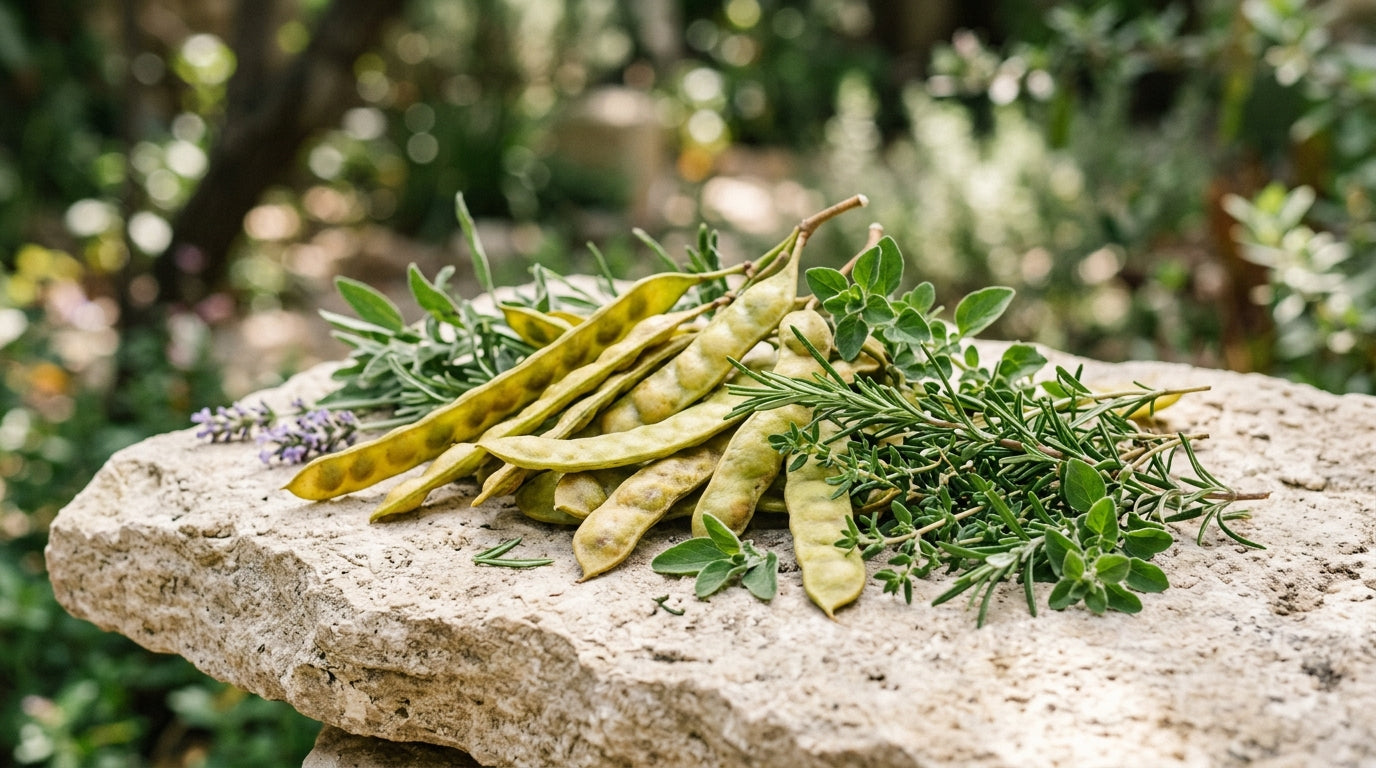
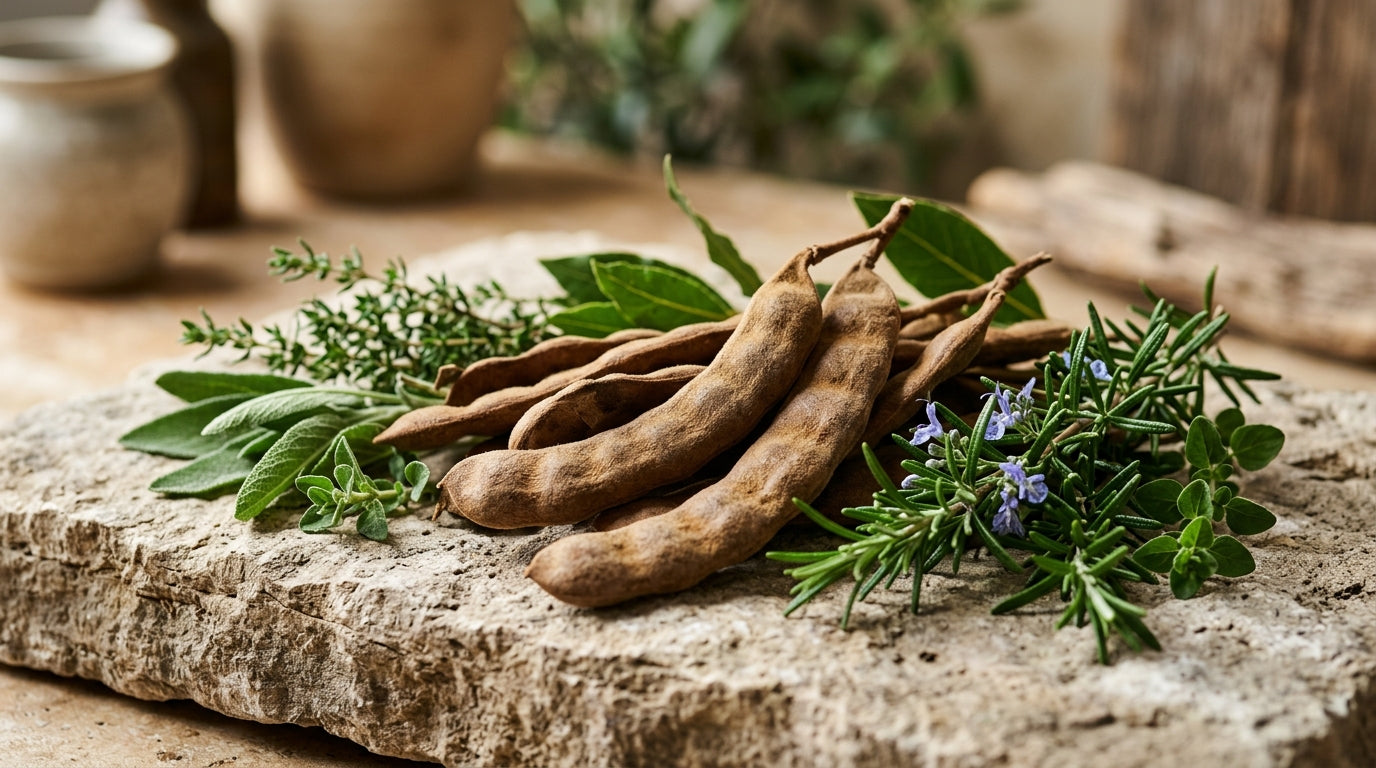
Mesquite Pod (Prosopis spp.) is derived from the resilient mesquite tree, native to the arid and semi-arid regions of the Southwestern United States, Mexico, and South America. These nutrient-dense pods are a sustainable superfood, offering a unique profile of functional carbohydrates and minerals.
Potential benefits
- Regulates blood sugar levels and enhances insulin sensitivity through its low glycemic index carbohydrates.
- Promotes digestive health and microbiome diversity with its high dietary fiber content, supporting regularity.
- Supports cardiovascular wellness by providing magnesium and potassium, which regulate blood pressure and heart function.
- Aids muscle repair and metabolic health due to its rich profile of essential amino acids, including lysine.
- Provides antioxidant and anti-inflammatory protection through polyphenols and lignans, neutralizing free radicals.
- Strengthens immune resilience and bone health with essential minerals like iron, zinc, calcium, and phosphorus.
How it works
Phenolic compounds including vicenin and isorhamnetin-O-rutinoside exhibit antioxidant activity through multiple pathways including DPPH, ABTS, FRAP, and ORAC radical scavenging mechanisms. Essential fatty acids like oleic acid (C18:1n9) and linoleic acid (C18:2n6) support cellular membrane function, while Maillard reaction products formed during processing enhance free radical scavenging capacity and Folin-Ciocalteu reducing activity.
What the research says
Current evidence is limited to in vitro compositional analyses and food processing studies, with no human clinical trials available. Glycemic index testing in mesquite-enriched formulations showed moderate values of 73.3±2.4 in men and 67.0±2.1 in women with no significant sex differences (p>0.05). Protein digestibility studies demonstrate high gastrointestinal amino acid release, with concentrate meeting over 31% of essential amino acid requirements. The evidence base requires human clinical trials to validate therapeutic claims.
Safety and interactions
No specific safety concerns, drug interactions, or contraindications are documented in available literature. The low fat content (0.8±0.1%) and moisture (0.9±0.4%) suggest general food safety tolerability. Processing methods like extrusion slightly enhance antioxidant capacity without excessive Maillard reaction product formation. Safety data during pregnancy, lactation, and with concurrent medications remains undocumented and requires clinical evaluation.
Suggested use
- Common forms: Flour, powder.
- Traditional use: Sun-dried, roasted, and ground into "pinole" by indigenous tribes (Apache, Pima, Tohono O'odham) for breads, porridges, beverages, and medicinal preparations.
- Modern applications: Incorporated into gluten-free baking, smoothies, energy bars, and protein powders.
- Dosage: 15-30 grams (2-4 tablespoons) daily, used as flour or powder in foods and beverages.
Frequently asked questions
What is the protein content of mesquite pod concentrate?
Mesquite pod protein concentrate contains 67.9±0.3% protein with complete essential amino acid profiles. It is particularly rich in leucine, methionine-cysteine, phenylalanine-tyrosine, tryptophan, and histidine, meeting over 31% of daily essential amino acid requirements.
What are the main antioxidant compounds in mesquite pods?
Primary antioxidants include phenolic compounds such as vicenin (apigenin-6,8-di-C-glucoside), isorhamnetin-O-rutinoside, and C-glycosyl flavones. These compounds demonstrate DPPH radical scavenging capacity of 9.11-9.32 mg ascorbic acid equivalents per gram of flour.
What is the glycemic index of mesquite pod products?
Mesquite-enriched formulations show moderate glycemic index values of 73.3±2.4 in men and 67.0±2.1 in women. These values indicate moderate blood sugar impact compared to pure glucose, with no significant differences between sexes.
Are there any clinical studies on mesquite pod health benefits?
Current evidence is limited to in vitro compositional analyses and food processing studies with no human clinical trials available. While laboratory data shows promising antioxidant and nutritional properties, human therapeutic efficacy requires clinical validation.
What fatty acids are present in mesquite pods?
Mesquite pods contain beneficial fatty acids including oleic acid (C18:1n9), linoleic acid (C18:2n6), and α-linolenic acid (C18:3n3). Despite the low overall fat content of 0.8±0.1%, these essential fatty acids contribute to the nutritional profile and cellular membrane support.
Is mesquite pod safe to take during pregnancy and breastfeeding?
Mesquite pod is generally recognized as safe for consumption and is a traditional food ingredient in many cultures; however, pregnant and breastfeeding women should consult their healthcare provider before adding mesquite supplements to their routine. While the whole food form has been used historically without reported adverse effects, clinical safety data specifically for pregnancy and lactation is limited. Starting with dietary sources rather than concentrated supplements may be a more conservative approach during these sensitive periods.
Can mesquite pod interact with blood sugar medications like metformin or insulin?
Mesquite pod's ability to regulate blood sugar and improve insulin sensitivity means it may have additive effects when combined with diabetes medications, potentially increasing the risk of hypoglycemia. Anyone taking metformin, insulin, or other glucose-lowering medications should consult their doctor before supplementing with mesquite pod and may require medication dosage adjustments. Regular blood sugar monitoring is recommended when combining mesquite supplements with prescription diabetes treatments.
What is the recommended daily dosage of mesquite pod, and when should I take it?
Most mesquite pod supplements recommend 1–3 grams daily in divided doses, though optimal dosing varies by product concentration and individual health goals. Mesquite pod can be taken with or without food, though consuming it with meals may enhance its blood sugar-regulating effects and support digestive benefits. Consistency is more important than timing, so establishing a regular daily routine will maximize its potential benefits for blood sugar management and digestive health.
References
- https://www.ncbi.nlm.nih.gov/search/all/?term=Mesquite+Pod
- https://pubmed.ncbi.nlm.nih.gov/31476598
- https://www.sciencedirect.com/science/article/pii/S2213453019300656
- https://www.ncbi.nlm.nih.gov/pmc/articles/PMC7229723/
This article is educational and is not medical advice. Statements have not been evaluated by the FDA and are not intended to diagnose, treat, cure, or prevent any disease. Consult a healthcare professional before use.