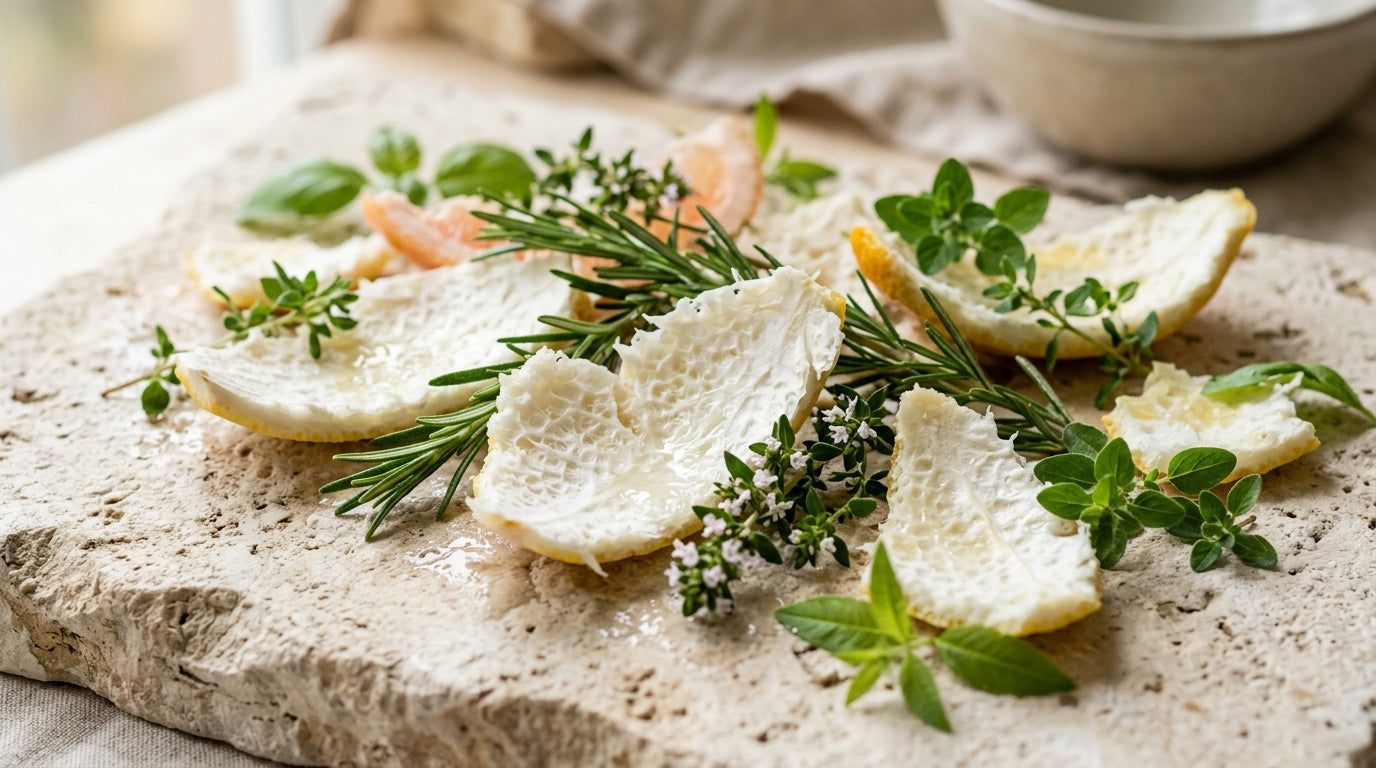
Citrus pith (albedo) contains bioactive flavonoids including hesperidin and nobiletin that modulate inflammation through the Nrf2 pathway and enhance autophagy in immune cells. The white spongy layer also provides limonoids that induce apoptosis in cancer cells via caspase-3 activation and mitochondrial dysfunction.

Origin
Citrus pith, the white spongy layer beneath the rind of citrus fruits (Citrus spp.), is native to tropical and subtropical regions worldwide. It is a significant source of bioactive compounds, particularly soluble fiber and flavonoids. This component is valued in functional nutrition for its diverse health-promoting properties.
Potential benefits
- Supports gut microbiome balance by providing prebiotic pectins, fostering beneficial bacteria.
- Strengthens blood vessels and improves circulation through the action of hesperidin and rutin.
- Reduces oxidative stress and modulates inflammation via a rich profile of flavonoids.
- Enhances liver detoxification pathways, promoting toxin elimination with limonoids.
- Stabilizes glucose metabolism and improves insulin sensitivity, contributing to metabolic health.
How it works
Nobiletin suppresses inflammation by activating the IL-6/STAT3/FOXO3a pathway and enhancing autophagy in immune cells. Hesperidin upregulates heme oxygenase-1 (HO-1) via Nrf2, ERK/JNK, and PI3K/Akt pathways while repressing IL-5 expression. Limonoids including limonexic acid and limonin induce apoptosis through caspase-3 cleavage, mitochondrial membrane potential loss, and upregulation of Bax/Bcl-2 ratio.
What the research says
Current evidence derives exclusively from in vitro and animal studies, with no published human clinical trials available. Laboratory studies demonstrate 70-90% DPPH radical scavenging activity and up to 40% reduction in inflammatory markers IL-6 and TNF-α in cell cultures. Anticancer studies show IC50 values below 50 µM for limonoids against pancreatic cancer cells at 72 hours. The absence of human trials represents a significant limitation requiring caution in therapeutic applications.
Safety and interactions
Citrus phytochemicals function as agonists/antagonists of nuclear receptors PXR, CAR, and AhR, potentially inducing CYP3A4, CYP2C9, and P-glycoprotein. This may create clinically significant interactions with medications including erlotinib, nilotinib, tamoxifen, theophylline, venlafaxine, and verapamil. The compounds upregulate CYP1A2 and CYP3A4 mRNA while downregulating CYP2E1 protein expression. No specific contraindications or pregnancy safety data are established, requiring careful evaluation in drug development protocols.
Suggested use
- Common forms include powdered or extract.
- Dosage: 5–10g daily for general digestive, immune, and cardiovascular support.
- Dosage: Up to 15g daily for enhanced metabolic and detoxification benefits.
Frequently asked questions
What is the difference between citrus pith and citrus peel?
Citrus pith (albedo) is specifically the white spongy inner layer beneath the colored outer peel (flavedo). While both contain bioactive compounds, the pith is richer in hesperidin and has stronger prebiotic fiber content compared to the outer peel.
How much citrus pith provides therapeutic benefits?
No standardized human dosages exist due to lack of clinical trials. Laboratory studies used concentrations ranging from 0.358-0.78 mg/mL for antioxidant effects, but safe therapeutic doses in humans remain undetermined.
Can citrus pith interact with prescription medications?
Yes, citrus pith compounds induce liver enzymes CYP3A4 and CYP2C9, potentially reducing effectiveness of drugs like tamoxifen, verapamil, and erlotinib. Consult healthcare providers before use with prescription medications.
Is citrus pith safe during pregnancy and breastfeeding?
Safety data for citrus pith during pregnancy and lactation are not established. Given the potential for drug enzyme interactions and lack of safety studies, pregnant and nursing women should avoid therapeutic use.
Which citrus fruits have the highest concentration of beneficial compounds in their pith?
Research shows Citrus hystrix (kaffir lime) pith has the highest antioxidant capacity at 89.0 TEAC mg/g, while immature Citrus reticulata (mandarin) pith demonstrates superior free radical scavenging with IC50 of 0.46 mg/mL compared to mature fruit.
What is the most bioavailable form of citrus pith for maximum absorption?
Citrus pith extract standardized for hesperidin and pectins offers superior bioavailability compared to whole dried pith, as the extraction process concentrates active flavonoids and breaks down cell walls to enhance absorption. Consuming citrus pith with dietary fat or vitamin C sources further improves hesperidin absorption, since these compounds are fat-soluble. Fermented citrus pith preparations may also enhance bioavailability by increasing the activity of beneficial gut bacteria that metabolize flavonoids into more absorbable metabolites.
How does citrus pith support blood sugar management differently than other citrus components?
Citrus pith's pectin content acts as a soluble fiber that slows gastric emptying and glucose absorption, directly stabilizing postprandial blood sugar levels, whereas citrus juice primarily delivers simple sugars. The flavonoids in pith, particularly hesperidin, also enhance insulin sensitivity at the cellular level and may reduce hepatic glucose production. This dual mechanism—both mechanical (fiber) and biochemical (flavonoid)—makes pith more effective for glucose metabolism than whole fruit or juice alone.
Can citrus pith supplementation replace fiber supplements for prebiotic benefits?
Citrus pith can serve as an effective prebiotic alternative because its pectin selectively feeds beneficial bacteria like Bifidobacterium and Faecalibacterium, making it comparable to inulin or FOS supplements for microbiome support. Unlike generic fiber supplements, citrus pith delivers this prebiotic benefit alongside anti-inflammatory flavonoids and limonoids that amplify digestive health. However, individual tolerance and specific bacterial community composition may affect whether citrus pith fully replaces dedicated prebiotic supplements for all users.
References
- https://www.frontiersin.org/articles/10.3389/fphar.2021.737392/full
- https://pubmed.ncbi.nlm.nih.gov/31288756
- https://doi.org/10.1016/j.jep.2021.114199
- https://www.sciencedirect.com/science/article/pii/S1756464619308832
- https://www.ncbi.nlm.nih.gov/pmc/articles/PMC7523489/
This article is educational and is not medical advice. Statements have not been evaluated by the FDA and are not intended to diagnose, treat, cure, or prevent any disease. Consult a healthcare professional before use.