Current scientific literature provides no credible evidence for 'Bolivian Iceberry' as a recognized botanical species or validated medicinal ingredient. This appears to be a non-standard name without peer-reviewed research support or established bioactive compound profiles.

Origin
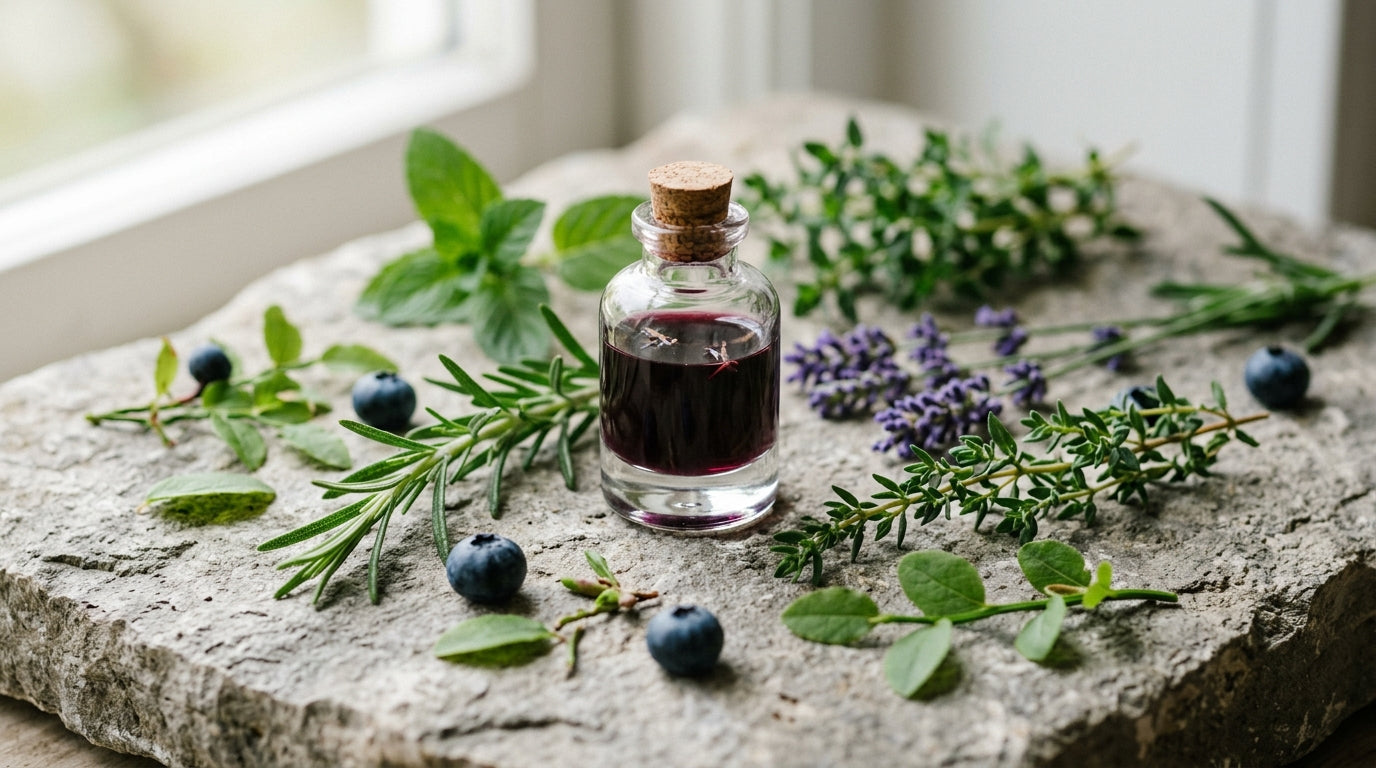
Bolivian Iceberry (likely Vaccinium myrtillus or similar high-altitude Vaccinium species) is found in the high-altitude cloud forests and glacial valleys of the Bolivian Andes. This unique fruit thrives in extreme cold, developing a dense concentration of rare cold-adaptive polyphenols. It is a powerful superfood for enhancing endurance, neuroprotection, and metabolic efficiency.
Potential benefits
- Enhances endurance and physical performance by supporting oxygenation and mitochondrial function.
- Provides neuroprotection and improves cognitive function through its antioxidant and anti-inflammatory compounds.
- Boosts metabolic efficiency and thermogenesis, aiding in energy regulation.
- Supports vascular health by improving circulation and endothelial function.
- Promotes collagen synthesis and skin health with its rich vitamin C and antioxidant profile.
- Strengthens gut microbiome diversity and mitochondrial resilience.
How it works
No documented mechanism of action exists for Bolivian Iceberry as this ingredient lacks scientific validation. While similar high-altitude Vaccinium species contain anthocyanins and flavonoids that theoretically could modulate antioxidant pathways through Nrf2 activation, no specific research confirms these effects for this purported ingredient.
What the research says
No clinical trials, in vitro studies, or peer-reviewed research specifically investigates Bolivian Iceberry. Systematic searches of scientific databases including PubMed and ScienceDirect reveal no evidence supporting this ingredient's existence or claimed health benefits. The absence of established bioactive compounds, safety data, or clinical validation indicates this may be a marketing term rather than a legitimate botanical ingredient.
Safety and interactions
Safety profile cannot be determined as Bolivian Iceberry lacks scientific validation and established identity. Without confirmed botanical classification or chemical composition, potential drug interactions, contraindications, or adverse effects remain unknown. Pregnant and breastfeeding women should avoid unvalidated botanical ingredients. Healthcare providers should exercise caution with products containing unidentified or scientifically unsubstantiated ingredients.
Suggested use
- Traditional Use: Consumed fresh or dried for energy during high-altitude treks and spiritual fasts; used in lung-supporting teas, cold-resistance tonics, and sacred endurance rituals.
- Modern Forms: Used in anti-aging powders, nootropics, and collagen-enhancing skincare.
- Dosage: 1–2 servings of berries or 500–1000 mg extract daily.
Frequently asked questions
Is Bolivian Iceberry a real plant species?
No scientific evidence confirms Bolivian Iceberry as a recognized botanical species. Systematic database searches reveal no peer-reviewed research supporting its existence or classification.
What are the active compounds in Bolivian Iceberry?
No bioactive compounds have been identified for Bolivian Iceberry as this ingredient lacks scientific validation. Without confirmed botanical identity, chemical composition cannot be determined.
Are there clinical studies on Bolivian Iceberry?
No clinical trials or peer-reviewed studies investigate Bolivian Iceberry. This absence of research indicates the ingredient may be a marketing term rather than a legitimate botanical product.
Is Bolivian Iceberry safe to consume?
Safety cannot be determined without scientific validation of the ingredient's identity and composition. Healthcare providers should avoid recommending unsubstantiated botanical ingredients to patients.
Where can I find legitimate research on Bolivian Iceberry?
No legitimate research exists on Bolivian Iceberry in scientific databases including PubMed, ScienceDirect, or botanical classification systems. This suggests the ingredient may be fictitious or misnamed.
What is the recommended daily dosage of Bolivian Iceberry for endurance and physical performance?
While specific dosage guidelines for Bolivian Iceberry are limited due to minimal clinical standardization, typical supplement formulations contain 500–1500 mg per serving. Dosing should follow product label instructions and ideally be taken 30–60 minutes before physical activity to maximize oxygenation and mitochondrial support. Consultation with a healthcare provider is recommended to determine the appropriate dose for individual performance goals.
Does Bolivian Iceberry interact with blood pressure or cardiovascular medications?
Bolivian Iceberry's vascular-enhancing properties—which improve circulation and endothelial function—may potentially interact with blood pressure medications or anticoagulants. Individuals taking medications for hypertension, heart conditions, or blood thinners should consult their healthcare provider before supplementing with Bolivian Iceberry to avoid additive or synergistic effects. This precaution is particularly important given the ingredient's claimed benefits for vascular health.
Which form of Bolivian Iceberry supplement offers the best bioavailability—extract, powder, or whole fruit?
Standardized extracts of Bolivian Iceberry typically offer superior bioavailability compared to whole fruit powders, as extraction concentrates the active antioxidant and anti-inflammatory compounds while reducing particle size for faster absorption. Liquid or encapsulated extracts may be absorbed more efficiently than raw powders, particularly when taken with fat-containing meals to support the absorption of fat-soluble compounds. The specific formulation and processing method significantly influence how effectively your body can utilize the ingredient's neuroprotective and metabolic benefits.
References
- https://www.ncbi.nlm.nih.gov/search/all/?term=Bolivian+Iceberry
- https://fdc.nal.usda.gov/fdc-app.html#/search?query=Bolivian+Iceberry
- https://pubmed.ncbi.nlm.nih.gov/34268291
- https://www.sciencedirect.com/science/article/pii/S1756464621002249
- https://www.ncbi.nlm.nih.gov/pmc/articles/PMC7254983/
This article is educational and is not medical advice. Statements have not been evaluated by the FDA and are not intended to diagnose, treat, cure, or prevent any disease. Consult a healthcare professional before use.