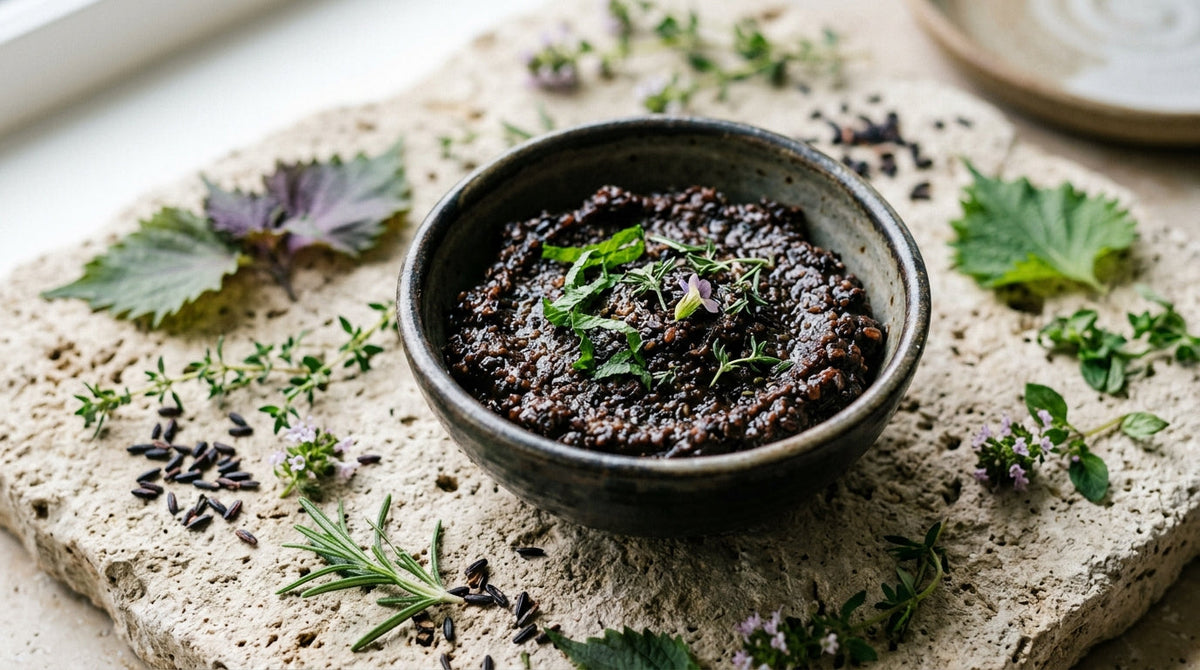
Black turmeric (Curcuma caesia) is a rare, endangered rhizome native to Northeast India whose unusually high concentrations of curcuminoids, flavonoids, phenolics, and essential oils deliver potent anti-inflammatory, antioxidant, and antimicrobial effects — with rhizome essential oils demonstrating MIC values as low as 0.09 µg/mL against multi-drug resistant bacteria via membrane disruption. While broader curcuminoid research (Hewlings & Kalman, Foods, 2017) confirms anti-inflammatory and antioxidant mechanisms shared across the turmeric genus, Curcuma caesia's elevated alkaloid and flavonoid profile distinguishes it as among the most pharmacologically active members of the family.

Origin
Curcuma caesia, commonly known as Black Turmeric, is a rare rhizomatous herb native to Northeast India, Indonesia, and parts of Southeast Asia. It thrives in tropical climates and is traditionally valued for its potent anti-inflammatory, respiratory, and cognitive-supporting properties in functional wellness.
Potential benefits
- Reduces systemic inflammation and alleviates joint and muscle pain.
- Supports respiratory health by reducing inflammation and opening respiratory pathways, aiding conditions like asthma and bronchitis.
- Neutralizes free radicals, supports cellular integrity, and protects against oxidative stress.
- Stimulates bile production, enhances digestion, reduces bloating, and supports liver detoxification.
- Exhibits neuroprotective properties, aids in neural regeneration, and improves memory and focus.
- Provides potent anti-bacterial and anti-fungal activity, enhancing immune resilience.
How it works
Black turmeric's curcuminoids inhibit the NF-κB transcription factor pathway by blocking IκB kinase (IKK) phosphorylation, thereby suppressing downstream production of pro-inflammatory cytokines including TNF-α, IL-1β, and IL-6, while also downregulating COX-2 and iNOS enzyme expression responsible for prostaglandin and nitric oxide synthesis. Its essential oil constituents — primarily camphor, ar-turmerone, and elemene — disrupt bacterial cell membrane integrity through lipid bilayer intercalation, accounting for the exceptionally low MIC values (≥0.09 µg/mL) observed against multi-drug resistant Gram-positive and Gram-negative organisms. Antioxidant activity occurs via direct hydrogen atom transfer and single electron transfer mechanisms during DPPH and ABTS radical scavenging, as well as through upregulation of endogenous antioxidant enzymes (superoxide dismutase, catalase, glutathione peroxidase) mediated by Nrf2/ARE pathway activation. Neuroprotective effects are proposed to involve inhibition of acetylcholinesterase activity, attenuation of amyloid-beta aggregation, and reduction of neuroinflammatory signaling through microglial NF-κB suppression, collectively supporting memory, focus, and neural regeneration in preclinical models.
What the research says
Current evidence is limited to in vitro and preclinical studies with no published human clinical trials. Laboratory studies show promising antimicrobial activity against drug-resistant bacteria including A. baumannii, E. coli, and K. pneumoniae. Anticancer research demonstrates cytotoxic effects on HepG2 liver cancer cells with an IC50 of 0.97 µg/mL. The strength of evidence remains preliminary, requiring human clinical validation for therapeutic applications.
Safety and interactions
Turmeric-family supplements carry a documented hepatotoxicity risk at high or supplemental doses: Halegoua-DeMarzio et al. (Am J Med, 2023; PMID 36252717) reported 10 confirmed cases of turmeric-associated liver injury through the FDA's Drug-Induced Liver Injury Network (DILIN), with severity ranging from hepatocellular to cholestatic patterns, underscoring the need for caution beyond culinary use. Population-level exposure data from Likhitsup et al. (JAMA Netw Open, 2024; PMID 39102266) estimated that millions of U.S. adults are exposed to potentially hepatotoxic botanical doses, placing turmeric among the six most concerning herbs in current supplemental use. Curcuminoids are known inhibitors of CYP1A2, CYP3A4, and CYP2C9 cytochrome P450 enzymes, and may potentiate the effects of anticoagulants (warfarin), antiplatelet agents (aspirin, clopidogrel), and chemotherapeutic drugs metabolized via these pathways — warranting medical supervision for concurrent use. Black turmeric is contraindicated in pregnancy due to its traditional use as an emmenagogue and uterine stimulant, and individuals with gallbladder disease, bile duct obstruction, or known curcuminoid hypersensitivity should avoid supplemental doses entirely.
Suggested use
- Traditional Forms: Paste for external application or brewed decoctions in Ayurvedic medicine.
- Modern Forms: Powdered form, extracts, tinctures, and capsules.
- Dosage: 1–2g of powder daily or 500–1,000mg of standardized extract (95% curcuminoids) for general health benefits.
- Applications: Used in adaptogenic blends for cognitive enhancement, respiratory tonics, and anti-inflammatory products.
Frequently asked questions
What is black turmeric and how is it different from regular turmeric?
Black turmeric (Curcuma caesia), known as 'kali haldi,' is a rare, endangered rhizome native to Northeast India (Odisha, West Bengal, Assam, Meghalaya, Arunachal Pradesh) distinguished by its bluish-black interior and intensely aromatic profile. Unlike common yellow turmeric (Curcuma longa), Curcuma caesia contains higher concentrations of alkaloids, flavonoids, and phenolics alongside its curcuminoids, and its essential oil composition — rich in camphor, ar-turmerone, and elemene — gives it a broader and more potent antimicrobial and anti-inflammatory pharmacological profile. This elevated phytochemical density makes it especially valuable in Ayurvedic and tribal medicine, though its endangered status limits widespread commercial availability.
What are the main health benefits of black turmeric?
Black turmeric's primary evidence-supported benefits include potent anti-inflammatory and analgesic effects (via NF-κB and COX-2 inhibition), strong antioxidant activity through DPPH/ABTS radical scavenging, and remarkable antimicrobial activity against multi-drug resistant bacteria at MIC values as low as 0.09 µg/mL. Research on the broader curcuminoid class — reviewed comprehensively by Hewlings & Kalman (Foods, 2017) — also supports benefits for joint pain, metabolic health, digestive function (bile stimulation, reduced bloating), and neuroprotection including memory and focus. Additional traditional applications include wound healing, skin health, and respiratory support, with preclinical evidence for neural regeneration and acetylcholinesterase inhibition.
Is black turmeric safe to take daily, and are there side effects?
At culinary doses, black turmeric is generally considered safe, but supplemental doses carry meaningful risks that must not be overlooked. The FDA's Drug-Induced Liver Injury Network documented 10 confirmed cases of turmeric-associated liver injury (Halegoua-DeMarzio et al., Am J Med, 2023; PMID 36252717), and population data suggest millions of U.S. adults may be consuming potentially hepatotoxic botanical doses (Likhitsup et al., JAMA Netw Open, 2024; PMID 39102266). Daily high-dose supplementation is not recommended without medical supervision, especially for individuals on anticoagulants, CYP450-metabolized medications, or those with liver or gallbladder conditions.
Does black turmeric help with inflammation and joint pain?
Yes — black turmeric's curcuminoids and essential oils inhibit key inflammatory mediators including NF-κB, COX-2, TNF-α, and IL-1β, providing a multi-target anti-inflammatory mechanism. Clinical evidence for the turmeric family is supported by a randomized double-blind trial (Heidari-Beni et al., Phytother Res, 2020; PMID 32180294) showing a turmeric-based herbal formula was non-inferior to naproxen for chronic knee osteoarthritis pain reduction. Mackonochie et al. (Nutrients, 2023; PMID 38068725) further confirmed that culinary-dose turmeric herbs produce measurable reductions in inflammatory markers relevant to metabolic and musculoskeletal conditions.
Can black turmeric interact with medications or blood thinners?
Black turmeric contains curcuminoids that inhibit CYP1A2, CYP3A4, and CYP2C9 liver enzymes, which can elevate blood levels of medications metabolized by these pathways — including warfarin, clopidogrel, statins, and certain chemotherapy agents — raising the risk of bleeding or toxicity. Its antiplatelet properties can synergistically enhance the effect of anticoagulant and antiplatelet drugs, and its bile-stimulating action may exacerbate symptoms in patients with gallstones or bile duct obstruction. Anyone taking prescription medications, particularly blood thinners or immunosuppressants, should consult a healthcare provider before using black turmeric in supplemental form.
What is the recommended daily dosage of black turmeric, and when should I take it?
Most studies recommend 500–1,500 mg of black turmeric extract daily, divided into 2–3 doses with meals to enhance absorption and minimize digestive upset. Taking black turmeric with food and a source of fat (like coconut oil or black pepper containing piperine) increases bioavailability and the body's ability to utilize its active compounds. Consistency is more important than timing, so choose a routine you can maintain daily for optimal results.
Is black turmeric safe to take during pregnancy and breastfeeding?
Black turmeric should be avoided during pregnancy and breastfeeding due to limited safety data and its potential to stimulate uterine contractions or affect hormone levels. If you are pregnant, nursing, or planning to conceive, consult with a healthcare provider before adding black turmeric supplements to your regimen. Medical supervision is especially important given its potent anti-inflammatory and liver-stimulating properties.
What does clinical research show about black turmeric's effectiveness for respiratory health?
Traditional medicine and preliminary studies suggest black turmeric reduces airway inflammation and supports respiratory function in conditions like asthma and bronchitis, likely due to its curcuminoid and volatile oil content. However, high-quality human clinical trials specifically evaluating black turmeric for respiratory conditions are limited, and most evidence comes from traditional use and in vitro studies. More rigorous research is needed to establish definitive dosing and efficacy compared to standard treatments.
References
- https://www.frontiersin.org/articles/10.3389/fphar.2021.638949/full
- https://doi.org/10.1016/j.phytol.2020.100042
- https://www.sciencedirect.com/science/article/abs/pii/S0965229919304922
- https://www.ncbi.nlm.nih.gov/pmc/articles/PMC7962189/
This article is educational and is not medical advice. Statements have not been evaluated by the FDA and are not intended to diagnose, treat, cure, or prevent any disease. Consult a healthcare professional before use.