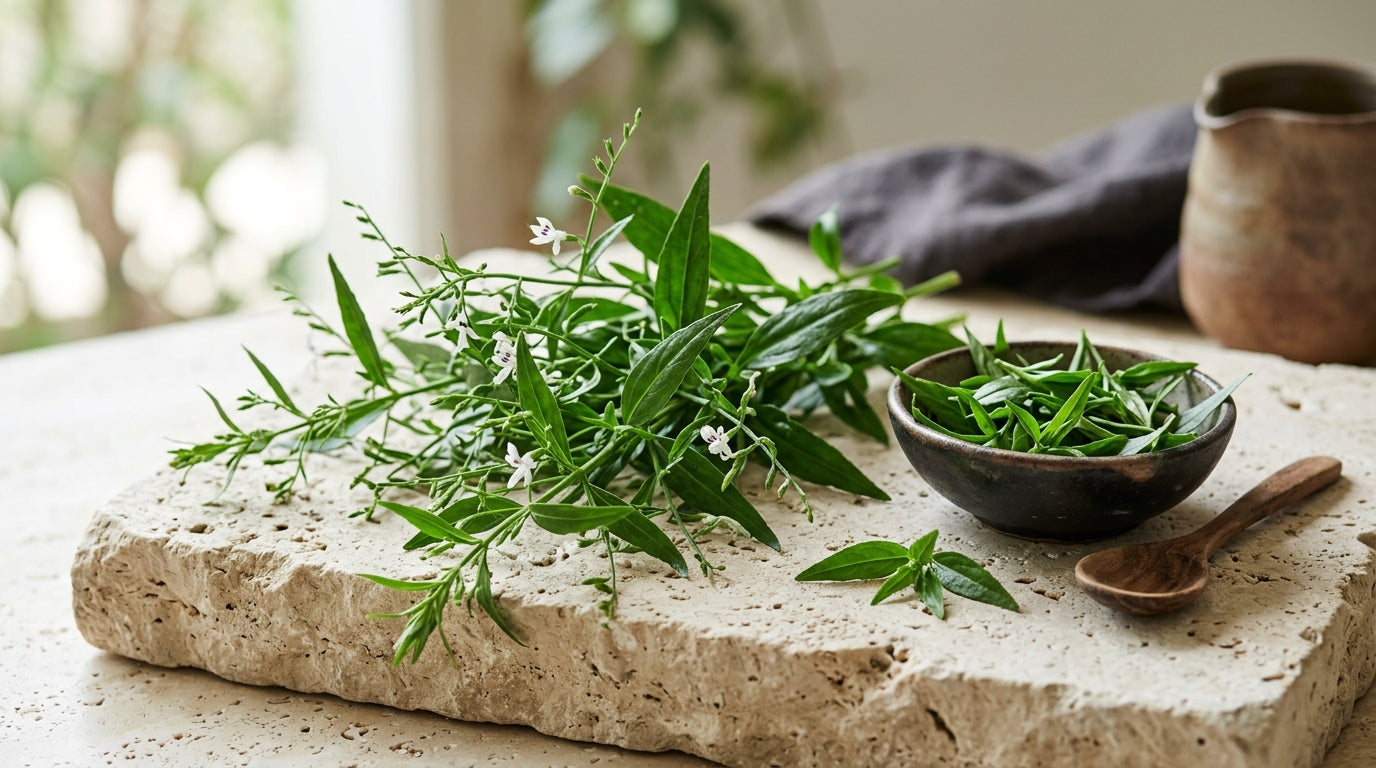
Andalusian Wild Asparagus (Asparagus acutifolius) contains high concentrations of steroidal saponins (4.4-800 mg/g dry matter) and flavonoids including isorhamnetin-3-O-glucoside that enhance hepatic antioxidant enzyme activity. These bioactive compounds significantly increase superoxide dismutase, catalase, and glutathione peroxidase activity while reducing malondialdehyde levels in hypercholesterolemia models.

Origin
Andalusian Wild Asparagus, Asparagus acutifolius, is native to southern Spain, particularly in Andalusia, where it thrives in Mediterranean climates. This wild vegetable is valued in functional nutrition for its detoxifying, anti-inflammatory, and nutrient-rich profile.
Potential benefits
- Supports liver detoxification pathways by enhancing enzyme activity and bile production.
- Promotes healthy digestion and gut motility due to its high fiber content.
- Boosts immune function through its rich vitamin and antioxidant profile.
- Helps regulate blood sugar levels by improving insulin sensitivity and fiber intake.
- Provides potent anti-inflammatory effects, reducing systemic inflammation.
- Offers robust antioxidant protection, neutralizing free radicals and preventing cellular damage.
How it works
The flavonoids (1.3-110 mg/g dry matter) and steroidal saponins activate hepatic antioxidant enzymes including superoxide dismutase, catalase, and glutathione reductase/peroxidase pathways. Hydroxycinnamic acid derivatives like p-coumaroylquinic acid and feruloylhexosylhexose isomers reduce oxidative stress by decreasing malondialdehyde formation. High dietary fiber content (565-610 mg/g dry matter) improves insulin sensitivity and supports bile acid sequestration for cholesterol metabolism.
What the research says
Current evidence is limited to animal studies in hypercholesterolemic rat models, with no published human clinical trials available. Animal studies demonstrate significant improvements in hepatic antioxidant enzyme activity and lipid profiles with lyophilized asparagus and flavonoid fractions compared to high-cholesterol diet controls. The flavonoid fraction showed 10 mg/g dry matter concentration versus 1.3 mg/g in fiber fractions. Clinical efficacy and safety in humans remains unestablished, requiring controlled human trials.
Safety and interactions
No documented safety concerns, drug interactions, or contraindications are reported in available research literature. Traditional Mediterranean dietary use suggests general safety at normal consumption levels, but lacks formal clinical safety evaluation. Pregnant and breastfeeding women should consult healthcare providers due to insufficient safety data. Patients on anticoagulant medications should exercise caution due to potential vitamin K content, though specific interactions are not documented.
Suggested use
- Common Forms: Fresh spears, typically consumed as a vegetable.
- Preparation: Enjoy roasted, grilled, steamed, or as an ingredient in soups, stews, and salads.
- Dosage: Consume 1-2 servings (100–150 grams) daily to support liver health and digestion.
Frequently asked questions
What is the difference between Andalusian wild asparagus and regular asparagus?
Andalusian wild asparagus (Asparagus acutifolius) contains significantly higher concentrations of steroidal saponins (4.4-800 mg/g) and flavonoids compared to commercial Asparagus officinalis. The wild variety shows enhanced antioxidant enzyme activity and unique phenolic compounds like feruloylhexosylhexose isomers not found in cultivated varieties.
How much Andalusian wild asparagus should I take daily?
No established dosage recommendations exist due to lack of human clinical trials. Animal studies used lyophilized fractions, but safe and effective human dosing requires clinical research. Traditional Mediterranean consumption suggests dietary amounts are generally safe for most individuals.
Can Andalusian wild asparagus help with diabetes?
The high fiber content (565-610 mg/g dry matter) may support blood sugar regulation by improving insulin sensitivity, but human clinical evidence is lacking. Animal studies show promising lipid profile improvements, but diabetic patients should consult healthcare providers before use as a therapeutic intervention.
What are the active compounds in triguero asparagus?
Key bioactives include steroidal saponins (4.4-800 mg/g), flavonoids like isorhamnetin-3-O-glucoside (1.3-110 mg/g), and hydroxycinnamic acid derivatives including p-coumaroylquinic acid. These compounds work synergistically to enhance hepatic antioxidant enzymes and reduce oxidative stress markers like malondialdehyde.
Is Andalusian wild asparagus safe for liver problems?
Animal studies suggest hepatoprotective effects through enhanced antioxidant enzyme activity, but human safety data for liver conditions is unavailable. Individuals with existing liver disease should consult healthcare providers before use, as clinical safety and efficacy in hepatic disorders remains unestablished.
Does Andalusian wild asparagus interact with blood sugar medications?
Andalusian wild asparagus may have additive effects when combined with diabetes medications due to its insulin-sensitizing properties and high fiber content. If you are taking metformin, sulfonylureas, or other blood sugar-lowering drugs, consult your healthcare provider before supplementing, as dose adjustments may be necessary to avoid hypoglycemia. Monitor blood sugar levels closely when combining this ingredient with prescription antidiabetic medications.
Is Andalusian wild asparagus safe during pregnancy and breastfeeding?
There is limited clinical data on the safety of Andalusian wild asparagus supplementation during pregnancy and lactation, so it is not recommended without medical supervision. Pregnant and breastfeeding women should consult their healthcare provider before use, as some compounds in wild asparagus may affect hormone levels or pass into breast milk. Whole food sources of asparagus in normal dietary amounts are generally considered safe during these periods.
What is the most effective form of Andalusian wild asparagus supplement?
Dried whole plant powder and standardized extracts (typically 4:1 or higher concentration ratios) are the most bioavailable forms, as they preserve the full spectrum of fiber, vitamins, and active compounds. Fresh or freeze-dried preparations retain more heat-sensitive nutrients compared to traditionally dried versions, though they may have shorter shelf lives. The choice between forms depends on your primary health goal—powders support digestive fiber intake, while extracts provide concentrated anti-inflammatory and liver-supporting compounds.
References
This article is educational and is not medical advice. Statements have not been evaluated by the FDA and are not intended to diagnose, treat, cure, or prevent any disease. Consult a healthcare professional before use.