




Turmeric (curcumin) and fish oil (omega-3 EPA/DHA) both lower inflammation, but differently: curcumin blocks the inflammatory switch NF-κB, while omega-3s help your body actively resolve inflammation. Turmeric has the strongest evidence for osteoarthritis; fish oil for rheumatoid arthritis and heart health. Curcumin needs black pepper (piperine) to be absorbed. For broad support, many people take both.
Hermetica Superfood Co.
If you have ever stood in the supplement aisle holding turmeric in one hand and fish oil in the other, you already know the problem: both are sold as “anti-inflammatory,” and it is rarely clear which one you actually need.
The good news is that the research gives a genuinely useful answer, not “they’re both good,” but a clear picture of where each one earns its place. They lower inflammation through different biology, and they shine for different conditions.
Below, we compare curcumin and omega-3 head to head on how they work, what the clinical trials actually show, the absorption problem you need to know about, safe dosing, and a simple decision guide at the end. Every claim here is tied to a cited, published study.
Two Supplements, Two Very Different Strategies
Turmeric and fish oil are two of the most popular anti-inflammatory supplements in the world, and people often treat them as interchangeable. They are not. They lower inflammation through almost completely different biological routes, they have the strongest evidence for different conditions, and they behave very differently once they reach your gut. Understanding those differences is the key to choosing the right one, or deciding to use both.
Turmeric works mainly by blocking inflammatory signals before they get switched on. Fish oil works mainly by helping your body resolve inflammation that is already underway. One is a brake; the other is a clean-up crew. That single distinction explains most of what follows.
This guide walks through what each one is, how it actually works, what the clinical research shows for inflammatory markers and joint pain, the practical problem of absorption, safe dosing, and finally a plain decision guide for which to reach for.
What's Actually in Them: Curcumin vs EPA and DHA
The anti-inflammatory activity of turmeric comes almost entirely from a group of compounds called curcuminoids, and the most studied of these is curcumin. Whole turmeric root is only about 2–5% curcumin by weight, which is why most research uses concentrated standardized extracts rather than culinary turmeric powder.
Fish oil's activity comes from two long-chain omega-3 fatty acids: EPA (eicosapentaenoic acid) and DHA (docosahexaenoic acid). These are the forms your body can actually use for anti-inflammatory signaling. Plant omega-3 (ALA, from flax or chia) has to be converted to EPA and DHA first, and that conversion is inefficient in most people, which is why fish oil or algae oil is the more reliable source.
So the honest comparison is really curcumin versus EPA and DHA. Both are natural, both are well tolerated, and both have a real, published evidence base, but they are chemically unrelated and do different jobs.
How Turmeric Fights Inflammation
Curcumin's main trick is interfering with a master inflammatory switch called NF-κB. When NF-κB is activated, it turns on the genes for a cascade of inflammatory molecules, COX-2, TNF-α, and various interleukins. Curcumin dampens that activation, which reduces the downstream production of those inflammatory mediators.
What the research shows: Reviews of curcumin's biology report that it reduces inflammation largely by inhibiting the NF-κB transcription factor, along with downstream mediators such as COX-2 and cytokines like TNF-α (Source: Baliga et al., Food Funct, 2012.)
Because it acts upstream, curcumin's effect is broad rather than targeted at one pathway. That is a strength for general inflammation, but it also means the effect on any single condition is usually modest rather than dramatic.
How Fish Oil Fights Inflammation
Fish oil takes a different route. EPA and DHA are the raw material your body uses to build a family of signaling molecules called specialized pro-resolving mediators (SPMs), resolvins, protectins, and maresins. Rather than just suppressing inflammation, these molecules actively tell the immune system that the job is done and it is time to clean up and repair.
What the research shows: EPA and DHA are the precursors from which specialized pro-resolving mediators (resolvins, protectins, maresins) are made, and these mediators actively drive the resolution of inflammation (Source: Chiang et al., Essays Biochem, 2020.)
Omega-3s also partly displace an inflammatory fat called arachidonic acid in your cell membranes, which shifts the balance toward less inflammatory signaling over time. This is why fish oil's benefits tend to build over weeks to months rather than appearing overnight.
The Evidence: Inflammatory Markers Like CRP, IL-6 and TNF
The most objective way to compare the two is to look at what happens to measured inflammatory markers in the blood in randomized controlled trials. Here, both perform well.
What the research shows: A systematic review and dose-response meta-analysis pooling 66 randomized controlled trials found that turmeric/curcumin supplementation significantly lowered the inflammatory markers CRP, TNF-α, and IL-6 in adults (Source: Dehzad et al., Cytokine, 2023.)
What the research shows: Separately, a meta-analysis of 48 randomized controlled trials in over 8,000 people found that omega-3 (EPA/DHA) supplementation significantly reduced circulating IL-6, TNF-α, CRP, and IL-1 versus placebo (Source: Wang et al., Crit Rev Food Sci Nutr, 2023.)
The practical takeaway: on standard blood markers of inflammation, turmeric and fish oil are both supported by large bodies of trial evidence. Neither is a clear knockout winner for lowering general inflammation, which is part of why they are often used together.
Joint Pain: Where They Split: Osteoarthritis vs Rheumatoid Arthritis
This is where the choice actually starts to matter. The two supplements have their strongest joint-pain evidence for different types of arthritis.
Turmeric has its best data in osteoarthritis, the common “wear-and-tear” joint condition.
What the research shows: An umbrella meta-analysis of 11 previous meta-analyses of randomized trials found that curcumin significantly reduced pain and improved physical function and stiffness in people with knee osteoarthritis (Source: Bideshki et al., Phytother Res, 2024.)
Fish oil has its best data in rheumatoid arthritis, an autoimmune, inflammatory form of arthritis.
What the research shows: A meta-analysis of 17 randomized controlled trials found that omega-3 supplementation for 3–4 months reduced joint pain, morning stiffness, the number of tender joints, and NSAID use in people with rheumatoid arthritis and other inflammatory joint pain (Source: Goldberg et al., Pain, 2007.)
So a reasonable rule of thumb: for osteoarthritis, turmeric has the stronger case; for rheumatoid arthritis and other autoimmune-driven joint pain, fish oil does.
The Bioavailability Problem: and Why Black Pepper Matters
Curcumin has one serious weakness: on its own, your body barely absorbs it. Taken as plain turmeric or curcumin, blood levels stay very low. The classic fix is piperine, the active compound in black pepper.
What the research shows: In a human and animal study, curcumin taken alone reached very low or undetectable blood levels, but adding a small amount of piperine dramatically increased curcumin absorption, by roughly 20-fold in the human volunteers (Source: Shoba et al., Planta Med, 1998.)
The practical lesson: plain turmeric powder is mostly wasted money. A formula that pairs curcumin with piperine, or uses a bioavailability-enhanced form, is what turns the research into something your body can absorb. Fish oil does not have this problem, EPA and DHA are fats and are absorbed reasonably well, especially when taken with a meal that contains some fat.
Beyond Inflammation: Fish Oil's Extra Job
If inflammation were the only consideration, this would be close. But fish oil brings a well-established second benefit that turmeric does not: it lowers blood triglycerides and supports cardiovascular health.
What the research shows: A Cochrane review of 86 randomized controlled trials concluded, with high-certainty evidence, that increasing long-chain omega-3 intake lowers triglycerides in a dose-dependent way (Source: Abdelhamid et al., Cochrane Database Syst Rev, 2020.)
That extra cardiovascular angle is one reason many people default to fish oil when they want a single daily supplement that does more than one thing. Turmeric's story, by contrast, is more tightly focused on inflammation and joint comfort.
Can You Take Turmeric and Fish Oil Together?
Because they work through different mechanisms, one blocking inflammatory signals, the other helping resolve them, there is a sensible case for using both, and they are not known to interfere with each other.
What the research shows: A randomized, double-blind trial combining omega-3 fatty acids with a curcumin formulation reported anti-neuroinflammatory benefits, supporting the idea that the two can be complementary rather than redundant (Source: Honarvar et al., Endocr Metab Immune Disord Drug Targets, 2021.)
For most healthy people, a bioavailability-enhanced turmeric alongside a quality fish oil is a simple, low-risk way to cover both sides of the inflammatory equation. The goal is a habit you keep, not a megadose you abandon.
Dosing, Safety, and Who Should Be Careful
Typical research doses. Curcumin trials commonly use roughly 500–1,000 mg of a standardized extract per day, usually with piperine or in an enhanced-absorption form. Fish oil trials for anti-inflammatory effects generally use higher doses of EPA plus DHA than the small amounts in a basic capsule.
What the research shows: Research on omega-3s indicates the anti-inflammatory effects are dose-dependent, so meaningfully raising EPA/DHA intake, not just a token dose, is what the trials rely on (Source: Ferguson et al., Mol Nutr Food Res, 2013.)
Safety. Both are well tolerated by most people. The most common side effect of curcumin is mild digestive upset; the most common with fish oil is a fishy aftertaste or mild reflux.
What the research shows: Evidence reviews describe curcumin as generally safe and well tolerated, with mild gastrointestinal effects being the most common complaint (Source: Bannuru et al., Semin Arthritis Rheum, 2018.)
What the research shows: At higher doses, fish oil can modestly affect platelet function, so people on blood-thinning medication or heading into surgery should talk to their doctor first (Source: Wachira et al., Br J Nutr, 2014.)
Anyone who is pregnant, nursing, taking medication (especially blood thinners), or managing a health condition should check with a qualified professional before starting either one.
Which Should You Take?
Here is the plain-English answer, so you can stop guessing in the supplement aisle:
- Choose turmeric if your main concern is osteoarthritis or general everyday joint stiffness, and pair it with black pepper (piperine) for absorption.
- Choose fish oil if you have rheumatoid arthritis or other autoimmune-type inflammation, or if you also want the triglyceride and heart benefits of omega-3s.
- Consider both if you want broad inflammatory support and tolerate them well, they work through different, complementary pathways.
Whichever you start with, take it daily, consistency beats intensity every time. These work alongside good sleep, movement, and a whole-food diet, not instead of them. This article is educational and is not medical advice.

Frequently Asked Questions
Is turmeric or fish oil better for inflammation?
Both significantly lower inflammatory markers in large trials, so neither is a clear overall winner for general inflammation. The better question is which condition: turmeric has the strongest evidence for osteoarthritis, while fish oil (omega-3) has the strongest evidence for rheumatoid arthritis and also lowers triglycerides for heart health.
Can I take turmeric and fish oil together?
Yes. They work through different, complementary pathways, curcumin blocks inflammatory signaling (NF-kB) while omega-3s help resolve inflammation, and they are not known to interfere with each other. Many people take both for broad support. If you are on blood-thinning medication, check with your doctor first.
Why does turmeric need black pepper?
Curcumin, the active compound in turmeric, is very poorly absorbed on its own. Piperine, the active compound in black pepper, dramatically increases curcumin absorption, by roughly 20-fold in human studies, which is why good turmeric supplements pair the two or use an enhanced-absorption form.
How much turmeric or fish oil should I take?
Curcumin trials commonly use about 500 to 1,000 mg of a standardized extract daily, ideally with piperine. Fish oil studies for anti-inflammatory effects rely on meaningful doses of EPA plus DHA rather than a token amount. Take fish oil with a meal, and talk to a professional about the right dose for you.
Are there any side effects of turmeric or fish oil?
Both are well tolerated by most people. Turmeric can cause mild digestive upset; fish oil can cause a fishy aftertaste or mild reflux. At higher doses fish oil may modestly affect bleeding, so anyone on blood thinners or facing surgery should consult their doctor. This is educational information, not medical advice.

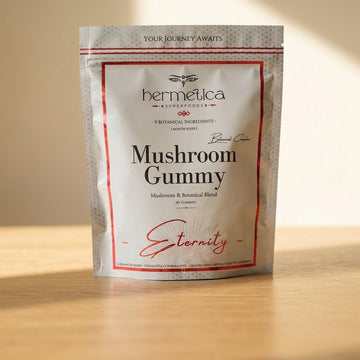
Six mushroom extracts standardized to 40% beta-glucans, dual-extracted, third-party tested, one daily serving.
Pairs Well With This Article

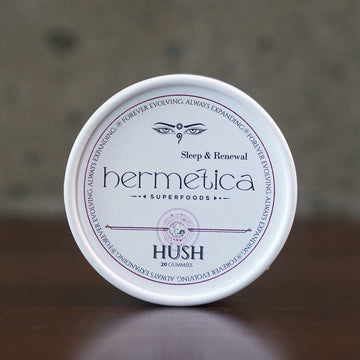
A gentle 0.35 mg of melatonin with L-theanine, reishi, and passion flower. 20 nights per tin.

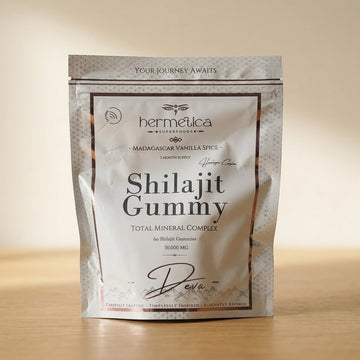
30,000 MG of purified Himalayan shilajit per serving. Resin-free, in a gummy.

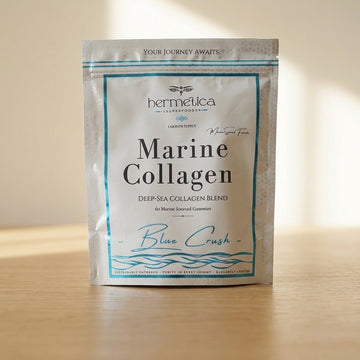
Wild-caught marine collagen with hyaluronic acid, blue spirulina, and tremella. Skin, hair, and nails.
Relevant Articles


Continue Reading
Mushroom Coffee Benefits: Why Functional Fungi Are Replacing Your Morning Cup
Adaptogen Drinks: The Science Behind the Wellness Trend That Actually Delivers
Shilajit Benefits: The Himalayan Mineral Complex Your Body Is Missing

Why People Choose Hermetica