


NMN and resveratrol are not competitors. NMN refills the NAD+ your cells run on. Resveratrol switches on the sirtuins that spend it. Take one without the other and you are either fuelling an engine nobody started, or flooring an accelerator with an empty tank. Here is what the human trials found, and what to actually take.
Hermetica Superfoods
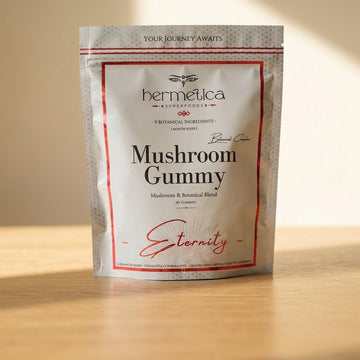
Longevity supplements live or die on one question: does the active compound reach your cells at a dose that matters. That is true for NMN and resveratrol, and it is just as true for functional mushrooms, lion's mane, reishi, and cordyceps among them. Extraction and dose separate a supplement that works from expensive powder. Eternity is six mushroom extracts standardized to 40% beta-glucans, which is the number worth caring about.
Below: how NMN and resveratrol each work, what the human trials actually measured, the doses they used, and why stacking them beats picking a side. If you are building a longevity routine, start here.
The Core Mechanisms: Fuel vs. Accelerator
To understand the difference between NMN and Resveratrol, it is helpful to use the analogy of a high-performance vehicle. In this scenario, your cells are the engine, Sirtuins are the driver, and NAD+ is the fuel.
NMN: The NAD+ Precursor
NMN is a direct precursor to NAD+. As we age, our NAD+ levels drop precipitously; by age 50, most individuals have roughly half the NAD+ levels they had in their 20s. This decline is linked to nearly every hallmark of aging, from mitochondrial dysfunction to impaired DNA repair. When you take NMN, your body rapidly converts it into NAD+, providing the "fuel" necessary for cellular processes. Without sufficient NAD+, enzymes like PARPs (which repair DNA) and Sirtuins (which regulate gene expression) simply cannot function (Imai & Guarente, 2014).
Resveratrol: The Sirtuin Activator
Resveratrol is a polyphenolic compound found in the skins of red grapes and Japanese knotweed. Unlike NMN, Resveratrol does not increase NAD+ levels directly. Instead, it acts as a Sirtuin Activating Compound (STAC). Specifically, it targets SIRT1, an enzyme that protects the heart, improves insulin sensitivity, and promotes mitochondrial biogenesis. If NAD+ is the fuel, Resveratrol is the foot on the gas pedal, signaling the Sirtuins to work harder and more efficiently. However, if there is no fuel (NAD+) in the tank, pushing the accelerator won't get the car very far.
Clinical Evidence: What Does the Science Say?
Yeast and mice made the headlines. Humans made the case. Here is what the controlled trials in people actually measured for each molecule, and where the evidence is strongest.
NMN Evidence
Human trials for NMN have accelerated in the last three years. A landmark study by Yoshino et al. (2021) demonstrated that NMN supplementation (250 mg/day) significantly increased muscle insulin sensitivity and insulin signaling in postmenopausal women with prediabetes. This suggests that NMN is a potent tool for metabolic health. Furthermore, research has shown that NMN is safe and effectively raises blood NAD+ levels in humans without significant adverse effects, even at higher doses (Liao et al., 2021).
Resveratrol Evidence
Resveratrol has a longer history of human study. A notable study by Timmers et al. (2011) found that 150 mg of high-purity trans-resveratrol per day for 30 days mimicked the effects of calorie restriction in obese men, leading to improved metabolic rates, lower blood pressure, and reduced liver fat. Another study by Most et al. (2017) highlighted its ability to improve mitochondrial function and fat oxidation, though it noted that results can vary based on the individual's baseline metabolic health.
| Feature | NMN | Resveratrol |
|---|---|---|
| Mechanism | Direct NAD+ Precursor | SIRT1 Enzyme Activator |
| Primary Use | Energy, DNA Repair, Metabolism | Heart Health, Inflammation, Longevity |
| Typical Dose | 250mg - 1,000mg | 500mg - 1,000mg |
| Evidence Tier | High (Human/Animal) | High (Human/Animal) |
| Side-effect Profile | Very Low (Rare nausea) | Low (Mild GI upset) |
| Time to Feel | 2-4 Weeks | 4-8 Weeks |
Optimal Dosing and Bioavailability
One of the biggest challenges with both NMN and Resveratrol is bioavailability, how much of the substance actually reaches your bloodstream and cells. For NMN, the molecule is relatively stable, but its absorption can be enhanced through sublingual (under the tongue) delivery or liposomal encapsulation, which bypasses the harsh environment of the digestive tract.
Resveratrol, on the other hand, is notoriously difficult for the body to absorb because it is fat-soluble. Taking Resveratrol on an empty stomach often results in most of it being excreted. To maximize efficacy, Resveratrol should always be taken with a source of healthy fats, such as yogurt, olive oil, or avocado. Most experts, including Dr. David Sinclair, suggest a dose of 500mg to 1,000mg of trans-resveratrol in the morning to align with the body's natural circadian rhythms.
Who Should Choose Which?
If you are deciding between NMN and Resveratrol as a standalone supplement, your choice should depend on your specific health goals and age.
- Choose NMN if: Your primary goals are increasing physical energy, overcoming afternoon fatigue, improving cognitive clarity, or supporting metabolic health. NMN is generally considered the more "foundational" supplement for those over 40, as it addresses the root cause of NAD+ depletion.
- Choose Resveratrol if: You are primarily concerned with cardiovascular health, managing systemic inflammation, or mimicking the benefits of a calorie-restricted diet. It is also an excellent choice for younger individuals (in their 20s or 30s) who may still have high NAD+ levels but want to optimize their Sirtuin activity.
There is a third lever worth pulling alongside either one: Nicotinamide Riboside, or a daily beta-glucan source. Eternity delivers six mushroom extracts standardized to 40% beta-glucans in one gummy, the base layer under a longevity stack.
The Case for Stacking: Why 1+1=3
While the NMN vs Resveratrol debate is common, the most effective approach is likely not "either/or" but "both." This is known as "stacking."
As established, Resveratrol activates the Sirtuin enzymes, but Sirtuins require NAD+ to function. By taking NMN, you provide the necessary fuel. By taking Resveratrol, you ensure that the engine is primed to use that fuel for longevity-promoting tasks like DNA repair and mitochondrial maintenance. Without Resveratrol, NMN might increase your energy, but it may not activate the specific longevity pathways that protect against chronic disease. Without NMN, Resveratrol may signal the Sirtuins to work, but they will lack the resources to carry out their functions effectively (Sinclair et al., 2019).
When stacking, the timing is also crucial. Most longevity researchers recommend taking both in the morning. This mimics the natural rise in NAD+ that occurs when we wake up and helps set our internal biological clocks.
Safety, Side Effects, and Precautions
Both NMN and Resveratrol are considered safe for human consumption and are well-tolerated by the majority of users. However, as with any potent bioactive compound, there are considerations to keep in mind.
NMN Side Effects: Reported side effects are rare but can include mild nausea, bloating, or occasional headaches if the dose is too high too quickly. It is always recommended to start with a lower dose (250mg) and titrate up.
Resveratrol Side Effects: Because it is a polyphenol, high doses of Resveratrol can sometimes cause digestive upset or diarrhea. Additionally, because Resveratrol has mild blood-thinning properties, individuals on anticoagulant medications (like Warfarin) or those scheduled for surgery should consult a physician before use.
Crucially, neither of these supplements is intended to cure or treat specific diseases. They are tools for cellular support and should be used as part of a lifestyle that includes a balanced diet, regular exercise, and adequate sleep.
Final Verdict: The Longevity Duo
In the comparison of NMN vs Resveratrol, there is no clear "winner" because they perform different, complementary roles. NMN restores the cellular fuel that naturally declines with age, while Resveratrol activates the protective enzymes that keep our cells resilient.
If you are over 35, stack them. Fuel plus signal beats either one alone. And build that stack on a daily base you will actually keep taking, Eternity puts six mushroom extracts standardized to 40% beta-glucans into a single gummy, third-party tested and made in the USA.
Frequently Asked Questions
Are mushroom gummies actually effective, or are they just a trend?
How long does it take for mushroom gummies to work?
Can I take mushroom gummies with other supplements or medications?
What is the difference between fruiting body and mycelium?
Do mushroom gummies contain psilocybin?
Are there side effects from taking mushroom gummies daily?
How should I store my mushroom gummies?
Can children take mushroom gummies?

Pairs Well With This Article

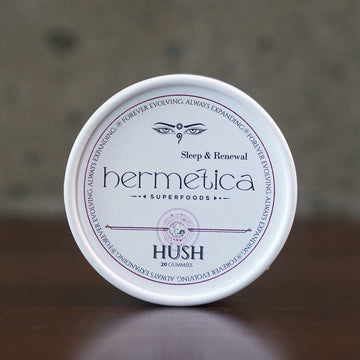
A gentle 0.35 mg of melatonin with L-theanine, reishi, and passion flower. 20 nights per tin.

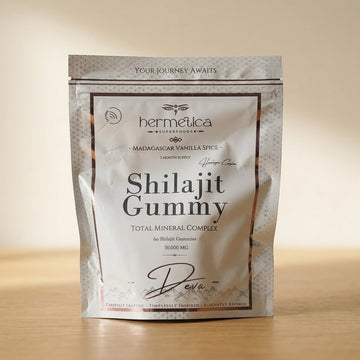
30,000 MG purified Himalayan shilajit, resin-free, with naturally occurring fulvic acid.

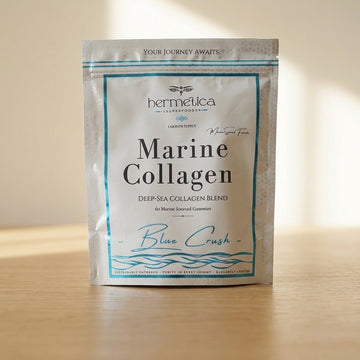
Wild-caught marine collagen and hyaluronic acid with blue spirulina and tremella.
Relevant Articles


Why People Choose Hermetica
