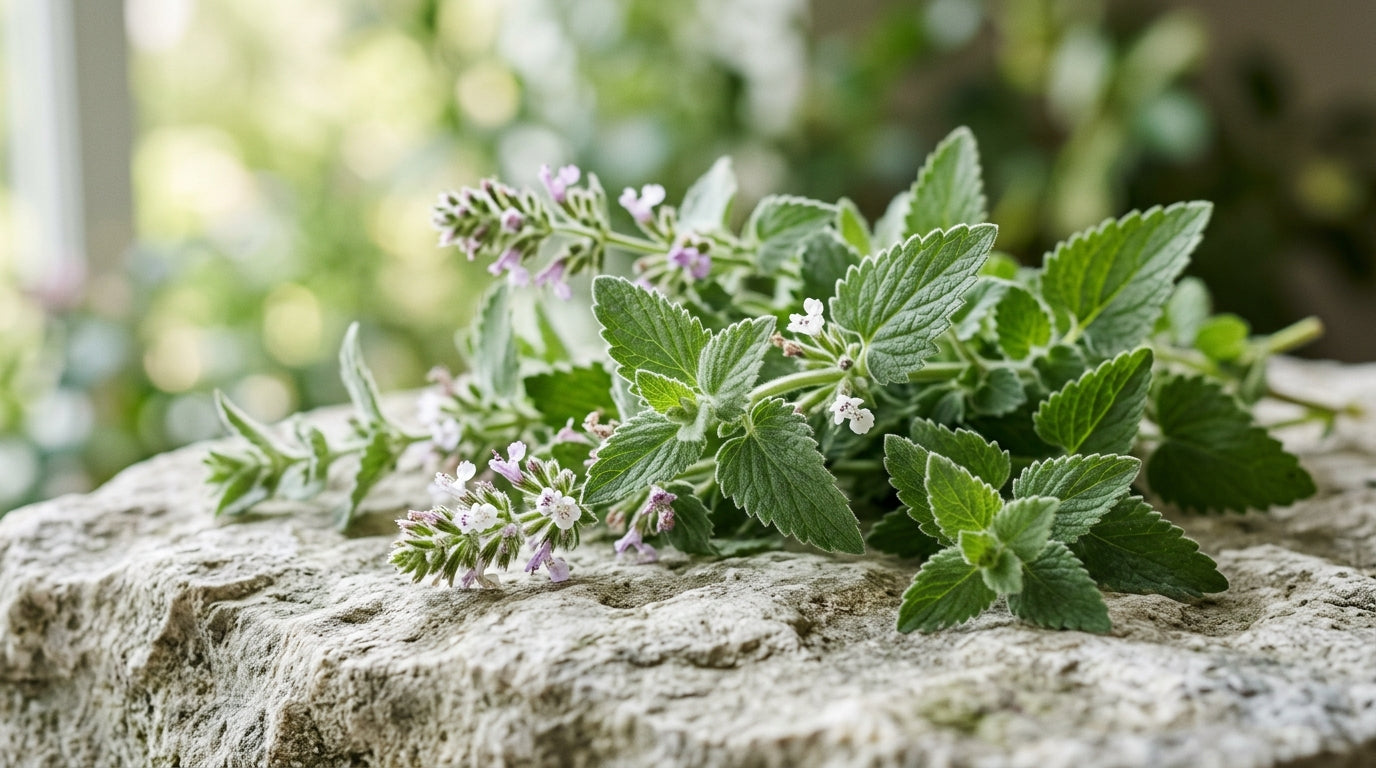
Wild catnip (Nepeta cataria) contains nepetalactone and related iridoids that activate μ-opioid receptors, elevating β-endorphin levels within 5 minutes of exposure in animal studies. These compounds demonstrate sedative, anti-inflammatory, and hepatoprotective effects, with extracts inhibiting nitric oxide production at concentrations of 20-80 µg/mL in laboratory studies.

Origin
Wild Catnip (Nepeta cataria), also known as catmint, is a perennial herb native to Europe and Asia, now naturalized across North America. Renowned for its aromatic, minty scent, it has been utilized in traditional medicine for its calming and therapeutic properties. This herb is valued for its bioactive compounds, including nepetalactone and flavonoids, which contribute to human health benefits such as relaxation, digestive support, and immune function.
Potential benefits
- Promotes relaxation and restful sleep through nepetalactone, which exhibits mild sedative properties that reduce stress and anxiety.
- Supports digestive health by acting as a natural carminative, soothing indigestion, bloating, and cramps.
- Exhibits anti-inflammatory effects via bioactive compounds, benefiting conditions like arthritis and respiratory inflammation.
- Enhances immune function with its antioxidant and antimicrobial properties, protecting against infections.
- Supports respiratory health with antispasmodic properties that help relieve coughs and clear mucus.
- Provides mild pain relief, traditionally used for headaches and menstrual cramps.
- Supports detoxification processes through its mild diuretic properties, aiding kidney health and toxin elimination.
How it works
Nepetalactone and nepetalactol activate μ-opioid receptors, triggering β-endorphin release within 5 minutes as demonstrated in feline studies. Secondary metabolites including rosmarinic acid and apigenin provide anti-inflammatory effects by inhibiting nitric oxide production dose-dependently at 20-80 µg/mL concentrations. The hepatoprotective mechanism involves reducing oxidative stress markers including catalase and topoisomerase IIα activity.
What the research says
No human clinical trials exist for wild catnip, with evidence limited to animal and in vitro studies. In Wistar rats with CCl4-induced liver damage, N. cataria extracts reduced serum liver damage markers at specified therapeutic doses. Mouse studies using intraperitoneal administration of nepetalactone showed central nervous system depressant effects, though specific dosing protocols were not detailed. The strongest evidence comes from feline behavioral studies involving 12 cats, where nepetalactol demonstrated the highest potency among 12 tested iridoid compounds.
Safety and interactions
Safety data is extremely limited, with only animal studies available showing CNS depressant effects in mice following intraperitoneal nepetalactone administration. No specific drug interactions or contraindications have been documented in research literature. Given its sedative and antispasmodic properties demonstrated in animal models, caution is advised when combining with CNS depressants, though this recommendation is based on theoretical concerns rather than clinical evidence. Pregnant and nursing women should avoid use due to insufficient safety data.
Suggested use
- Common Forms: Fresh or dried leaves (herbal teas, tinctures, compresses), seasoning.
- Dosage: 1–2 cups of catnip tea per day (prepared by steeping 1–2 teaspoons of dried leaves in hot water for 5–10 minutes).
- Preparation: Brew as a calming tea; use as a seasoning in culinary dishes.
- Storage: Store dried catnip in an airtight container away from light and heat.
Frequently asked questions
How does wild catnip affect the brain and nervous system?
Wild catnip's nepetalactone activates μ-opioid receptors in the brain, leading to β-endorphin release within 5 minutes as shown in animal studies. This mechanism produces sedative and calming effects, though all evidence comes from animal research with no human clinical trials available.
What is the difference between wild catnip and regular catnip?
No scientific evidence distinguishes 'wild catnip' as a separate species from standard catnip (Nepeta cataria). The term likely refers to naturally occurring, non-cultivated forms of the same plant with identical bioactive compounds including nepetalactone and nepetalactol.
What are the proven anti-inflammatory effects of wild catnip?
Laboratory studies show wild catnip extracts inhibit nitric oxide production at concentrations of 20-80 µg/mL when exposed to inflammatory stimuli. The anti-inflammatory compounds include rosmarinic acid, caffeic acid, and flavonoids like apigenin, though human studies are lacking.
Is wild catnip safe for human consumption and what are the side effects?
Human safety data is extremely limited, with only animal studies showing CNS depressant effects in mice. No documented side effects, drug interactions, or contraindications exist in research literature, making safety assessment difficult without clinical trials.
How does wild catnip protect liver health?
Rat studies demonstrate that N. cataria extracts reduce liver damage markers including catalase and topoisomerase IIα activity in chemically-induced liver injury. The hepatoprotective mechanism appears to involve reducing oxidative stress, though human efficacy and dosing remain unestablished.
What is the recommended dosage of wild catnip for sleep and relaxation?
Typical wild catnip supplementation ranges from 300-500 mg per dose, though optimal amounts vary by individual sensitivity and extract concentration. For sleep support, taking wild catnip 30-60 minutes before bedtime is generally recommended to allow the nepetalactone compounds time to exert their mild sedative effects. It's advisable to start with lower doses to assess tolerance, as some individuals may experience drowsiness at standard doses.
Is wild catnip safe during pregnancy and breastfeeding?
Wild catnip is traditionally contraindicated during pregnancy due to its potential uterine-stimulating properties, and pregnant women should consult their healthcare provider before use. Limited safety data exists for nursing mothers, making it prudent to avoid supplementation while breastfeeding unless specifically approved by a physician. Women planning pregnancy or currently pregnant should choose alternative relaxation and digestive support options with established safety profiles.
Does wild catnip interact with sedative medications or sleep aids?
Wild catnip may potentiate the effects of prescription sedatives, benzodiazepines, and over-the-counter sleep medications due to its mild CNS-depressant properties, potentially causing excessive drowsiness. Individuals taking medications for anxiety, depression, or sleep disorders should consult their healthcare provider before adding wild catnip supplementation to avoid unwanted additive effects. Combining wild catnip with alcohol or other depressant substances is similarly not recommended without professional medical guidance.
References
- https://www.ncbi.nlm.nih.gov/search/all/?term=Wild+Catnip
- https://fdc.nal.usda.gov/fdc-app.html#/search?query=Wild+Catnip
This article is educational and is not medical advice. Statements have not been evaluated by the FDA and are not intended to diagnose, treat, cure, or prevent any disease. Consult a healthcare professional before use.