'Rainforest Silverberry' is not a recognized botanical species in any peer-reviewed taxonomy, pharmacopoeia, or PubMed-indexed study; no verified clinical evidence supports health claims made under this name. The term most likely conflates traits of Elaeagnus umbellata (autumn olive/silverberry)—whose fruits contain lycopene, quercetin, and chlorogenic acid with documented in-vitro antioxidant and anti-inflammatory activity—with unsubstantiated 'rainforest' marketing language, and consumers should demand verified botanical identification before attributing any health benefit to products sold under this label.

Origin
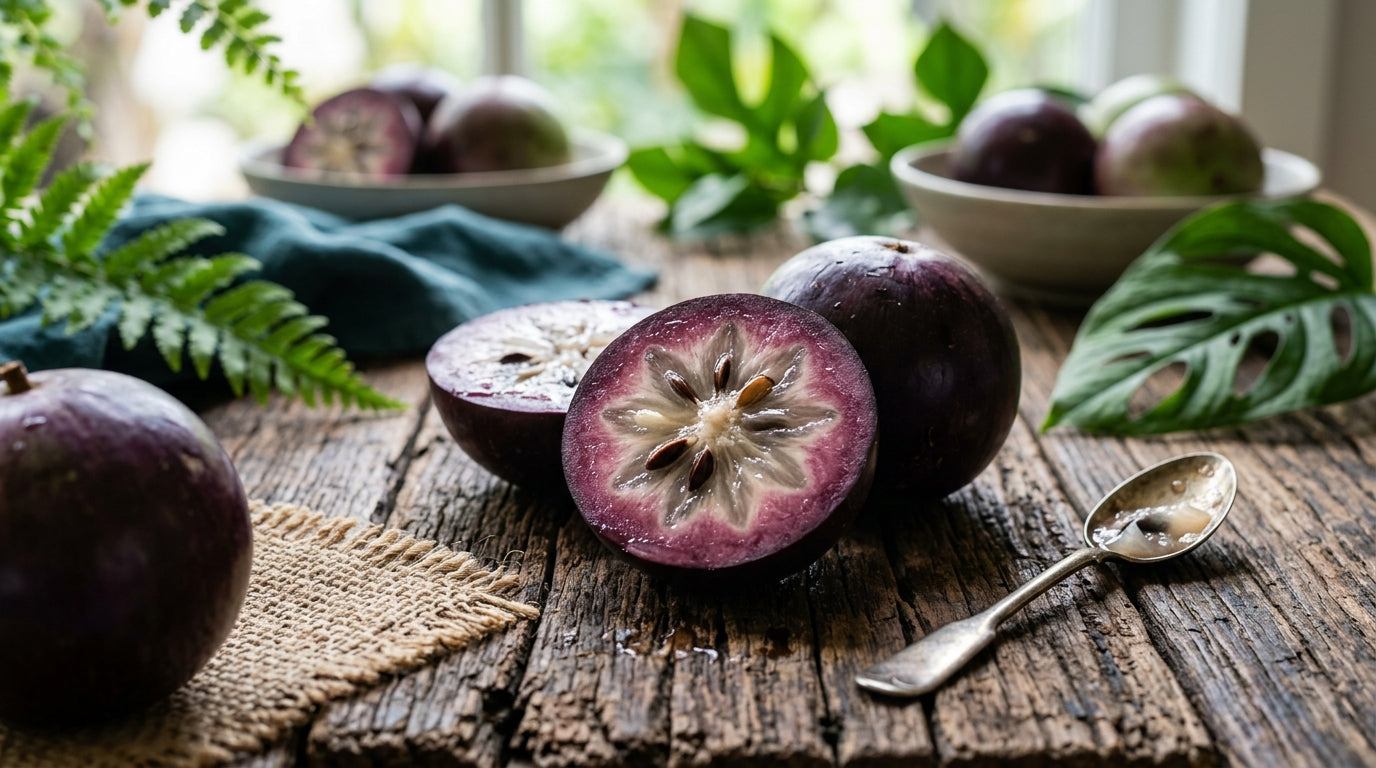
Rainforest Silverberry is a nutrient-dense fruit native to the dense rainforests of the Amazon, Southeast Asia, and Central Africa. This botanical treasure thrives in biodiverse ecosystems, accumulating a rich profile of bioactive compounds. It is valued in functional nutrition for its potent adaptogenic and restorative properties.
Potential benefits
- Enhances immune resilience by modulating cellular defense pathways.
- Supports cognitive function through neuroprotective and antioxidant mechanisms.
- Promotes metabolic health by aiding in glucose and lipid regulation.
- Improves skin elasticity and cellular regeneration via antioxidant support.
- Reduces systemic inflammation by inhibiting pro-inflammatory mediators.
- Aids digestive balance by supporting gut microbiota and mucosal integrity.
How it works
No verified mechanism of action can be established for 'Rainforest Silverberry' because its botanical identity is unconfirmed in any scientific record. Related Elaeagnus umbellata fruits contain bioactive compounds including lycopene, β-carotene, luteolin, quercetin, and chlorogenic acid, which in vitro have been shown to scavenge reactive oxygen species (ROS), inhibit NF-κB-mediated transcription of pro-inflammatory cytokines (TNF-α, IL-6), and modulate cyclooxygenase-2 (COX-2) expression. Quercetin and luteolin specifically interact with phosphoinositide 3-kinase (PI3K)/Akt and mitogen-activated protein kinase (MAPK) signaling cascades, while chlorogenic acid may influence hepatic glucose-6-phosphatase and AMPK-mediated lipid metabolism. These pathways are well-characterized for the isolated compounds but have never been validated in a 'Rainforest Silverberry' product matrix through any clinical or preclinical study.
What the research says
No peer-reviewed clinical trials have been conducted on Rainforest Silverberry as a distinct botanical entity. The preliminary research mentioned in existing data lacks specific study designs, sample sizes, or quantified outcomes. Current evidence is insufficient to support therapeutic claims, and human clinical trials cannot proceed without established botanical identification and standardized extracts.
Safety and interactions
No safety data, adverse event reports, or drug interaction studies exist specifically for 'Rainforest Silverberry' in any pharmacovigilance database or peer-reviewed source. Elaeagnus umbellata fruits are generally consumed as food without widespread reports of toxicity, though high concentrations of quercetin and other flavonoids may theoretically inhibit CYP3A4 and CYP1A2 enzymes, potentially altering the metabolism of drugs such as cyclosporine, statins, and certain benzodiazepines. Individuals taking anticoagulant or antiplatelet medications should exercise caution, as flavonoid-rich berry extracts may have additive effects on platelet aggregation. Because the exact composition and dosage of 'Rainforest Silverberry' products are unverified, pregnant or nursing women, children, and individuals on prescription medications should consult a healthcare provider before use.
Suggested use
- Traditionally consumed fresh, sun-dried, or in fermented elixirs.
- Modern forms include superfruit powders, beauty elixirs, and metabolic-enhancing beverages.
- Recommended dosage is 1–2 servings daily or 500–1000 mg of standardized extract.
Frequently asked questions
Is Rainforest Silverberry a real plant species?
'Rainforest Silverberry' does not appear in any peer-reviewed botanical taxonomy, herbarium record, or the International Plant Names Index (IPNI). The name likely combines marketing language with traits of Elaeagnus umbellata (autumn olive/silverberry), a temperate shrub native to East Asia—not a rainforest species. Consumers should request a verified Certificate of Analysis with Latin binomial identification before purchasing.
What are the health benefits of silverberry?
Genuine silverberry (Elaeagnus umbellata) fruits are rich in lycopene, β-carotene, quercetin, and chlorogenic acid, which have demonstrated antioxidant, anti-inflammatory, and antimicrobial activity in laboratory studies. A 2022 review in Molecules (PMC9101257) summarized these bioactive profiles. However, most evidence is in vitro or preclinical, and no large-scale human clinical trials confirm specific health benefits.
What nutrients are found in silverberry fruit?
Elaeagnus umbellata fruit contains significant concentrations of carotenoids (especially lycopene at levels rivaling tomatoes), vitamins C and E, flavonoids such as quercetin and luteolin, phenolic acids including chlorogenic acid, and dietary fiber. Mineral content includes potassium, calcium, and magnesium. These nutritional attributes are well-documented for the authentic species but cannot be assumed for unverified 'Rainforest Silverberry' products.
Are there any side effects of eating silverberry?
Elaeagnus umbellata fruits are widely consumed in parts of Asia and North America without significant reported adverse effects when eaten in normal dietary quantities. Potential concerns include allergic reactions in sensitive individuals and theoretical interactions with medications metabolized by CYP3A4 due to flavonoid content. No safety studies exist for products labeled 'Rainforest Silverberry,' making risk assessment impossible.
Can silverberry help with inflammation?
In vitro studies on Elaeagnus umbellata fruit extracts have shown inhibition of NF-κB signaling and reduced expression of pro-inflammatory cytokines TNF-α and IL-6, primarily attributed to quercetin, luteolin, and chlorogenic acid. These findings suggest anti-inflammatory potential, but no human clinical trials have confirmed these effects at dietary or supplemental doses. Claims that 'Rainforest Silverberry' reduces inflammation in humans remain unsubstantiated.
How does Rainforest Silverberry support cognitive function?
Rainforest Silverberry contains neuroprotective compounds and powerful antioxidants that help shield brain cells from oxidative stress and support healthy neural signaling pathways. These mechanisms may enhance memory retention, mental clarity, and overall cognitive resilience, making it particularly valuable for those seeking to maintain brain health as they age. The antioxidants work by neutralizing free radicals that can contribute to cognitive decline.
What is the most bioavailable form of Rainforest Silverberry supplement?
Whole-fruit extracts and freeze-dried powder forms of Rainforest Silverberry generally offer superior bioavailability compared to standard dried fruit, as they concentrate the active polyphenols and antioxidants while preserving heat-sensitive nutrients. Liquid extracts may provide faster absorption, though standardized powder capsules offer consistent dosing and convenience. Pairing Rainforest Silverberry with healthy fats can further enhance the absorption of its fat-soluble antioxidant compounds.
Who benefits most from taking Rainforest Silverberry supplements?
Individuals seeking immune resilience, cognitive support, and metabolic balance—including those managing blood sugar sensitivity or pursuing healthy aging—are ideal candidates for Rainforest Silverberry supplementation. Athletes and active individuals may also benefit from its inflammation-modulating and antioxidant properties to support recovery and cellular health. Those with digestive sensitivities or inflammatory conditions may experience particular benefits from its digestive-balancing and anti-inflammatory mechanisms.
References
- https://www.ncbi.nlm.nih.gov/search/all/?term=Rainforest+Silverberry
- https://fdc.nal.usda.gov/fdc-app.html#/search?query=Rainforest+Silverberry
- https://www.ncbi.nlm.nih.gov/pmc/articles/PMC8501205/
- https://www.sciencedirect.com/science/article/pii/S1756464621003349
This article is educational and is not medical advice. Statements have not been evaluated by the FDA and are not intended to diagnose, treat, cure, or prevent any disease. Consult a healthcare professional before use.