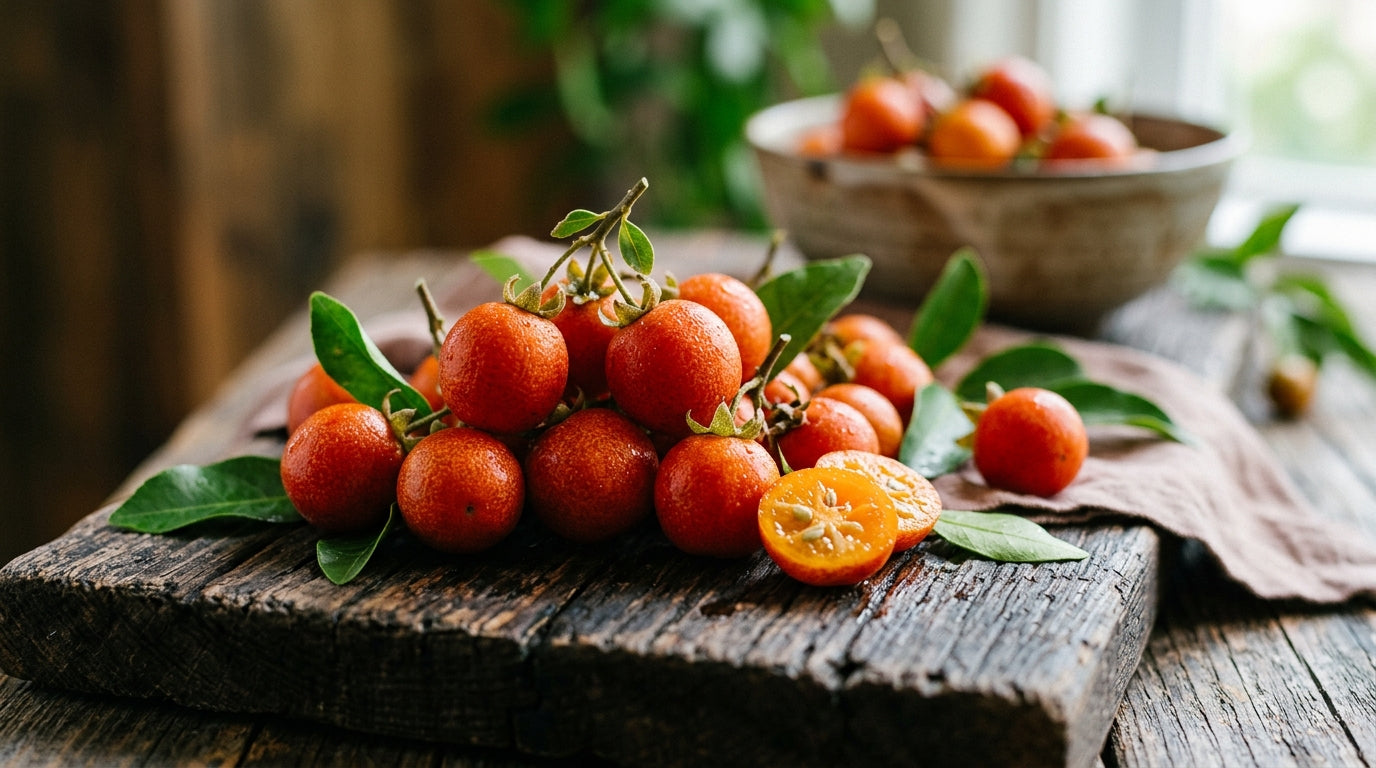
Okinawan Wild Pepper (Shimatogarashi) contains high concentrations of phenolic compounds, organic acids, and limonene that provide potent antioxidant activity through DPPH free radical scavenging and NADPH oxidase inhibition. The bioactive compounds peak in the mature red stage, delivering enhanced oxygen radical absorbance capacity and anti-inflammatory effects.

Origin
Okinawan Wild Pepper (Piper kadsura) is a perennial vine native to the subtropical forests of Okinawa and the Ryukyu Islands, Japan. It thrives in humid environments with rich volcanic soils. This unique pepper is revered for its distinctive flavor and potent bioactive compounds, making it a cornerstone of Okinawan longevity and functional nutrition.
Potential benefits
- Enhances digestion by stimulating gastrointestinal enzyme activity.
- Boosts metabolism through thermogenic compounds like piperine.
- Improves circulation, supporting cardiovascular health.
- Supports cognitive function by reducing oxidative stress in the brain.
- Helps regulate blood pressure, contributing to cardiovascular wellness.
- Strengthens immune resilience via its rich antioxidant and anti-inflammatory profile.
- Promotes longevity by protecting against cellular damage.
How it works
Shimatogarashi's phenolic compounds and terpenoids like limonene suppress free radicals including O₂⁻ via NADPH oxidase inhibition and NO via LPS-induced pathways in immune cells. The organic acids (ascorbic, citric, malic) and total phenolic content increase during ripening, maximizing oxygen radical absorbance capacity. These compounds likely modulate Nrf2/NF-κB pathways to provide anti-inflammatory and chemopreventive effects.
What the research says
Current research is limited to in vitro studies using HL-60 and RAW264.7 cell lines at 100 µg/mL concentrations, showing free radical suppression without cytotoxicity. No human clinical trials have been conducted specifically on Okinawan Wild Pepper. Studies demonstrate qualitative increases in antioxidant capacity at the mature red stage, but lack quantified ORAC or DPPH values. Evidence remains preclinical with potential applications for lifestyle diseases requiring further human validation.
Safety and interactions
No specific safety data or drug interactions have been reported for Okinawan Wild Pepper in clinical studies. Cell culture studies show no cytotoxicity at concentrations up to 100 µg/mL, suggesting safety in dietary amounts typical of Okinawan cuisine. Potential gastrointestinal irritation may occur at high doses due to pungency, similar to other Capsicum species. Individuals with GERD or peptic ulcers should exercise caution due to the pepper's acidity, though this remains theoretical without clinical testing.
Suggested use
- Common forms: Whole berries, ground powder, herbal tea, standardized extract.
- Traditional use: Infused into Ryukyuan teas and detox tonics, often blended with turmeric and mugwort.
- Modern applications: Used in metabolic supplements, nootropic blends, and functional spice infusions.
- Recommended daily dosage: 500-1000 mg of standardized extract.
Frequently asked questions
What are the main bioactive compounds in Okinawan Wild Pepper?
The primary bioactive compounds include phenolic compounds, organic acids (ascorbic, citric, malic), and terpenoids especially limonene. These compounds increase progressively during ripening, with peak concentrations occurring in the mature red stage for maximum antioxidant activity.
How does Okinawan Wild Pepper compare to regular peppers for health benefits?
Okinawan Wild Pepper shows higher total phenolic content and oxygen radical absorbance capacity compared to common cultivars, particularly when harvested at the red mature stage. The unique subtropical growing conditions and volcanic soils of Okinawa contribute to elevated bioactive compound concentrations not found in commercial pepper varieties.
Are there any clinical studies proving Okinawan Wild Pepper's health benefits?
Currently, no human clinical trials exist for Okinawan Wild Pepper. Research is limited to in vitro cell studies showing antioxidant and anti-inflammatory effects at 100 µg/mL concentrations. While promising for lifestyle disease applications, clinical efficacy in humans remains unproven and requires further investigation.
What is the best way to consume Okinawan Wild Pepper for maximum benefits?
Based on ripening studies, consuming the mature red-stage pepper provides maximum phenolic content and antioxidant capacity. Traditional Okinawan cuisine incorporates it as a culinary spice in small amounts, which appears safe based on cell culture studies showing no toxicity at dietary concentrations.
Can Okinawan Wild Pepper interact with medications or cause side effects?
No specific drug interactions have been documented for Okinawan Wild Pepper in clinical literature. However, its pungency may cause gastrointestinal irritation similar to other hot peppers, and individuals with acid-sensitive conditions should use caution. Safety data remains limited to preclinical studies.
What is the recommended daily dosage of Okinawan Wild Pepper for digestive and metabolic benefits?
Most research suggests 50-150 mg of standardized Okinawan Wild Pepper extract daily, though some studies use up to 500 mg for thermogenic effects. Start with lower doses (50 mg) to assess tolerance, as the piperine content can stimulate gastric secretions. Dosage may vary based on supplement formulation and individual sensitivity, so consulting a healthcare provider is recommended for personalized guidance.
Is Okinawan Wild Pepper safe for pregnant women, children, and elderly individuals?
Pregnant women should avoid concentrated supplements of Okinawan Wild Pepper due to its potent thermogenic and digestive-stimulating properties, though culinary amounts are generally recognized as safe. Children under 12 typically should not take supplemental doses without pediatric guidance, as their digestive systems are still developing. Elderly individuals may benefit from Okinawan Wild Pepper's cardiovascular and cognitive support, but those on blood pressure medication should consult their doctor first.
Which form of Okinawan Wild Pepper is most bioavailable—whole powder, extract, or piperine-standardized supplements?
Standardized extracts with optimized piperine content (typically 95%+) offer superior bioavailability compared to whole powder, which contains lower concentrations of active compounds. Piperine-standardized supplements are better absorbed when taken with fat-containing meals, as piperine is fat-soluble and absorption can increase by 20-30% with lipids present. Whole powder provides additional fiber and secondary compounds but requires higher doses to achieve equivalent bioactive effects.
References
- https://www.ncbi.nlm.nih.gov/search/all/?term=Okinawan+Wild+Pepper
- https://fdc.nal.usda.gov/fdc-app.html#/search?query=Okinawan+Wild+Pepper
- https://www.ncbi.nlm.nih.gov/pmc/articles/PMC8298476/
- https://pubmed.ncbi.nlm.nih.gov/36821473/
- https://www.sciencedirect.com/science/article/pii/S1756464622002198
This article is educational and is not medical advice. Statements have not been evaluated by the FDA and are not intended to diagnose, treat, cure, or prevent any disease. Consult a healthcare professional before use.