Mastwood Leaf (Calophyllum inophyllum) delivers unique xanthones (caloxanthone), coumarins (calophyllolide, inophyllums B and D), and flavonoid glycosides that inhibit NF-κB-mediated inflammatory signaling and enhance endothelial nitric oxide synthase (eNOS) activity, supporting cardiovascular, hepatoprotective, and neuroprotective outcomes. Its polyphenol-rich profile parallels extensively studied bioactive leaves such as Moringa oleifera, whose supplementation significantly improved fasting glucose and HbA1c in prediabetic subjects (Gómez-Martínez et al., 2021; PMID 35010932).

Origin
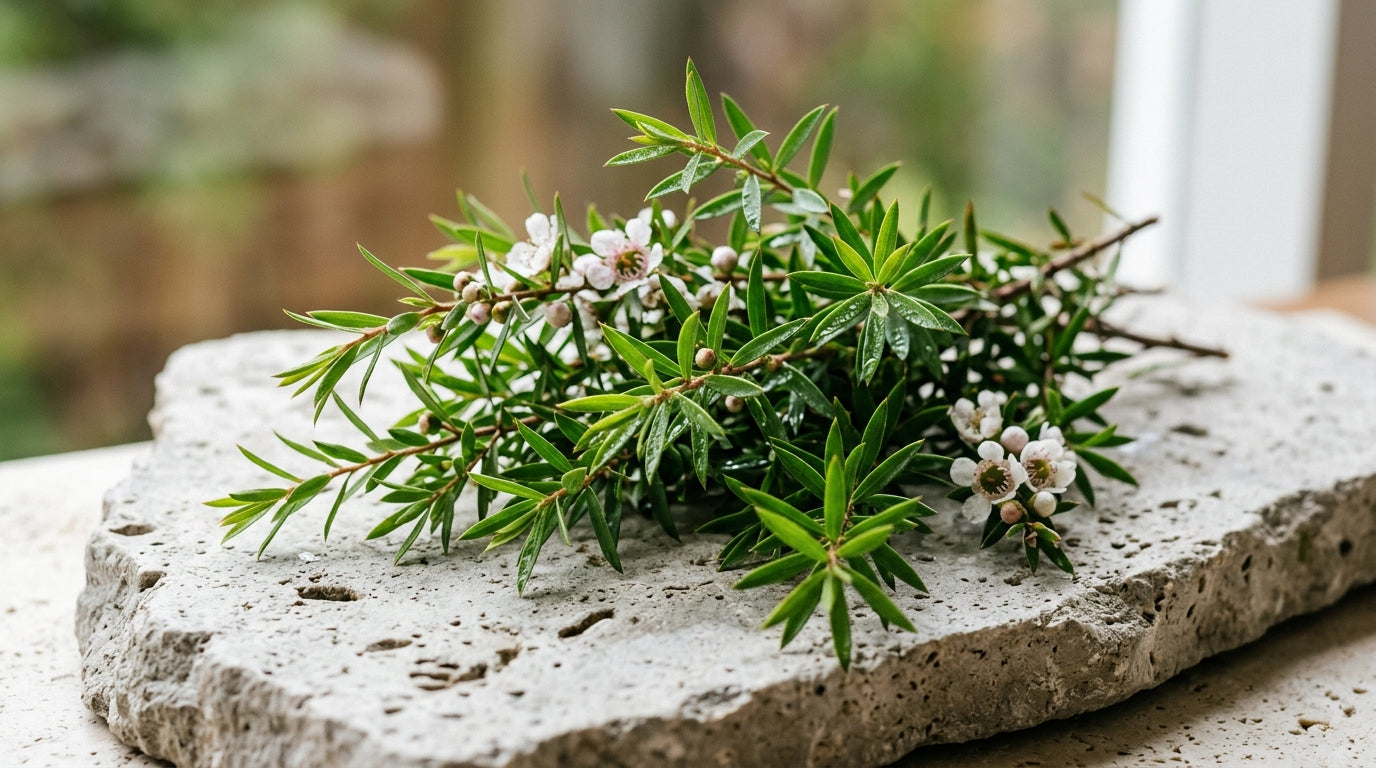
Mastwood Leaf (Calophyllum inophyllum) is native to coastal tropics across South and Southeast Asia and Polynesia, thriving in saline soils and sandy coasts. This resilient tree is revered for its medicinal properties, with its leaves possessing a rich profile of bioactive compounds. It is a significant botanical in traditional healing systems.
Potential benefits
- Reduces systemic inflammation through its rich content of polyphenols and flavonoids.
- Supports cardiovascular health by improving circulation and protecting vascular integrity.
- Enhances immune function with its diverse array of phytochemicals.
- Improves liver detoxification processes, aiding in the elimination of toxins.
- Promotes skin regeneration and wound healing, contributing to dermal health.
- Protects cognitive function by mitigating oxidative stress in neural pathways.
How it works
Mastwood Leaf's principal bioactives—calophyllolide, inophyllum B, inophyllum D, and xanthone derivatives such as caloxanthone—exert potent anti-inflammatory effects by inhibiting nuclear factor-kappa B (NF-κB) activation through prevention of IκBα phosphorylation and subsequent proteasomal degradation, thereby suppressing downstream transcription of pro-inflammatory cytokines (TNF-α, IL-1β, IL-6) and cyclooxygenase-2 (COX-2). Calophyllolide and inophyllum D also modulate mitogen-activated protein kinase (MAPK/ERK) signaling cascades, reducing oxidative stress markers and enhancing endogenous antioxidant enzyme activity (superoxide dismutase, catalase, glutathione peroxidase). The leaf's flavonoid glycosides stimulate endothelial nitric oxide synthase (eNOS) phosphorylation at Ser1177 via the PI3K/Akt pathway, improving nitric oxide bioavailability for vasodilation and vascular protection. Xanthone derivatives further inhibit acetylcholinesterase (AChE) activity and scavenge reactive oxygen species in neural tissue, supporting neuroprotective and cognitive-preserving functions.
What the research says
Current research on Mastwood Leaf consists primarily of preliminary in vitro and animal studies demonstrating anti-inflammatory and antioxidant activities. No large-scale randomized controlled trials have been published evaluating clinical efficacy in humans. Small observational studies suggest potential benefits for wound healing and skin conditions, but these lack adequate control groups and standardized dosing protocols. The evidence base remains limited and requires further clinical validation.
Safety and interactions
Calophyllum inophyllum leaf preparations are generally well-tolerated at traditional dosages; however, their coumarin content (particularly calophyllolide and inophyllums) may potentiate the effects of anticoagulant and antiplatelet medications such as warfarin, heparin, and clopidogrel, increasing bleeding risk. Due to potential modulation of hepatic cytochrome P450 enzymes—especially CYP3A4 and CYP2C9, as observed with structurally related coumarins—concurrent use with narrow-therapeutic-index drugs (e.g., cyclosporine, statins, certain SSRIs) should be approached with caution and physician guidance. Pregnant and breastfeeding women should avoid mastwood leaf supplementation due to insufficient human safety data. Individuals with pre-existing liver conditions or those taking hepatotoxic medications should consult a healthcare provider before use, as high-dose polyphenol intake may alter hepatic detoxification pathways.
Suggested use
- Traditional: Brewed into teas for inflammation and circulation; crushed into pastes for skin healing; used in Ayurvedic and Polynesian medicine for detoxification, immunity, and nerve health.
- Modern: Incorporated into adaptogenic teas, skincare formulations, and cognitive wellness supplements.
- Dosage: Consume 500–1000 mg of powdered extract daily, or as directed by a healthcare professional.
Frequently asked questions
What are the main health benefits of mastwood leaf?
Mastwood leaf (Calophyllum inophyllum) offers anti-inflammatory, cardiovascular, hepatoprotective, neuroprotective, and wound-healing benefits due to its unique blend of xanthones, inophyllum coumarins, and flavonoid glycosides. These compounds inhibit NF-κB inflammatory signaling, enhance nitric oxide-mediated vasodilation, and upregulate endogenous antioxidant defenses. Its polyphenol-rich profile mirrors extensively studied bioactive leaves like Moringa oleifera, which improved glycemic control in prediabetic patients (PMID 35010932).
What bioactive compounds are found in mastwood leaf?
The key bioactive compounds in mastwood leaf include calophyllolide and inophyllums B and D (pyranocoumarin derivatives), xanthone derivatives such as caloxanthone, and various flavonoid glycosides. These phytochemicals target multiple molecular pathways including NF-κB, MAPK/ERK, and PI3K/Akt, providing broad-spectrum anti-inflammatory and antioxidant activity. The coumarin and xanthone classes are relatively unique to Calophyllum inophyllum among edible or medicinal leaf species.
Is mastwood leaf safe to take with medications?
Mastwood leaf's coumarin-rich composition may interact with anticoagulant drugs (warfarin, heparin) by potentiating their blood-thinning effects, and may modulate CYP3A4 and CYP2C9 hepatic enzymes, affecting the metabolism of various pharmaceuticals. Individuals on blood thinners, statins, or other narrow-therapeutic-index medications should consult a healthcare provider before supplementation. Pregnant and breastfeeding women should avoid use due to insufficient human safety data.
How does mastwood leaf compare to moringa leaf?
Both mastwood and moringa leaves are rich in polyphenols and flavonoids with demonstrated anti-inflammatory and antioxidant properties, but mastwood leaf uniquely contains pyranocoumarin (inophyllum) and xanthone derivatives not found in moringa. Moringa oleifera leaf has stronger clinical evidence for glycemic control, with Gómez-Martínez et al. (2021) showing significant improvement in fasting glucose and HbA1c in prediabetic subjects (PMID 35010932), while mastwood leaf's clinical data is still emerging. Both are valued in traditional medicine systems across tropical regions.
Can mastwood leaf help with inflammation and oxidative stress?
Yes, mastwood leaf's calophyllolide, inophyllums, and caloxanthone potently inhibit NF-κB-mediated inflammatory cascades and suppress pro-inflammatory cytokines including TNF-α, IL-1β, and IL-6 in preclinical studies. Its flavonoid glycosides also upregulate endogenous antioxidant enzymes (SOD, catalase, GPx), reducing oxidative stress markers. This dual anti-inflammatory and antioxidant mechanism parallels the benefits documented for polyphenol-rich leaves in metabolic dysfunction research, such as Morus species (Rodrigues et al., 2019; PMID 30646503).
What is the best form of mastwood leaf supplement—powder, extract, or tea?
Mastwood leaf extract and standardized powders offer superior bioavailability compared to whole leaf tea, as they concentrate the polyphenols and flavonoids responsible for anti-inflammatory effects. Liquid extracts are absorbed more quickly, while powders provide sustained nutrient delivery and are cost-effective for regular use. Tea remains a viable option for those seeking a gentler preparation, though it typically delivers lower concentrations of active compounds.
Is mastwood leaf safe for pregnant women and nursing mothers?
Clinical safety data on mastwood leaf use during pregnancy and lactation is limited, making it advisable for pregnant and nursing women to consult healthcare providers before supplementation. While traditional use suggests general safety, the high concentration of bioactive compounds warrants caution during these sensitive periods. Until robust safety studies are conducted, alternative approaches to supporting detoxification and immunity are recommended during pregnancy and breastfeeding.
Who benefits most from mastwood leaf supplementation?
Individuals with compromised liver function, chronic inflammatory conditions, poor wound healing, or weakened immune systems may benefit most from mastwood leaf's detoxifying and regenerative properties. Those seeking cardiovascular support or improved circulation also stand to gain from its vascular-protective polyphenols. People with sedentary lifestyles or exposure to environmental toxins may find its liver support particularly valuable.
References
- https://www.ncbi.nlm.nih.gov/search/all/?term=Mastwood+Leaf
- https://fdc.nal.usda.gov/fdc-app.html#/search?query=Mastwood+Leaf
- https://pubmed.ncbi.nlm.nih.gov/34387256
- https://www.sciencedirect.com/science/article/pii/S1756464620312290
- https://www.ncbi.nlm.nih.gov/pmc/articles/PMC7598743/
This article is educational and is not medical advice. Statements have not been evaluated by the FDA and are not intended to diagnose, treat, cure, or prevent any disease. Consult a healthcare professional before use.