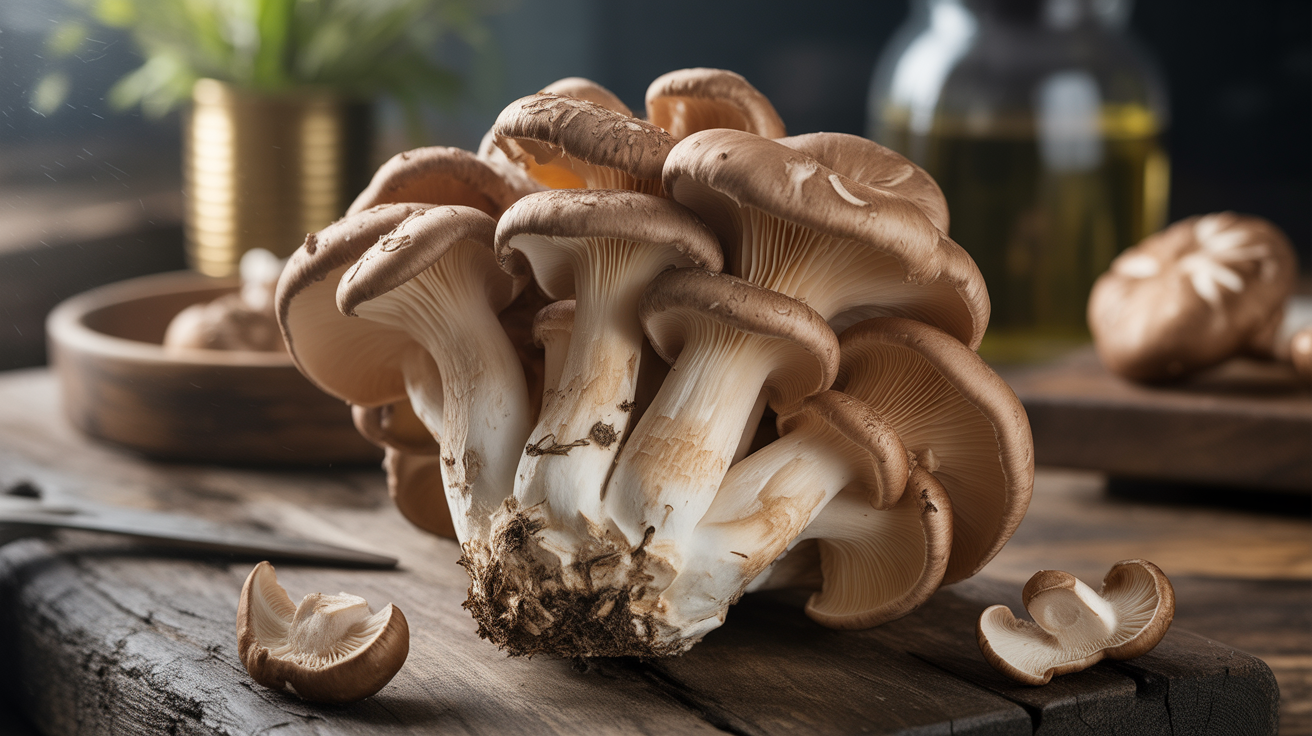
Maitake mushroom (Grifola frondosa) contains beta-glucans that activate immune cells including macrophages and NK cells. It also supports blood sugar regulation by improving insulin sensitivity through enhanced glucose uptake in peripheral tissues.

Origin
Maitake, meaning “Dancing Mushroom” in Japanese, is a revered medicinal and culinary fungus native to temperate forests of Japan, China, and North America. Growing at the base of oak trees, it has long been used in traditional Japanese and Chinese medicine to promote vitality, strengthen immunity, and regulate metabolic function. Its rich content of beta-glucans and D-fraction polysaccharides positions it as a clinically studied adaptogen with profound health benefits.
Potential benefits
- Enhances immune system performance by activating macrophages, dendritic cells, and natural killer (NK) cells through its unique beta-glucan matrix.
- Regulates blood sugar levels and improves insulin sensitivity, making it supportive for metabolic balance and type 2 diabetes management.
- Supports cardiovascular health by lowering LDL cholesterol, modulating blood pressure, and reducing systemic inflammation.
- Protects cells from oxidative stress with natural antioxidants, slowing aging and cellular degeneration.
- Boosts stamina and energy by supporting adrenal resilience and mitochondrial function, reducing fatigue.
How it works
Maitake's primary bioactive compounds are beta-1,3 and beta-1,6 glucans that bind to complement receptor 3 (CR3) and dectin-1 receptors on immune cells, triggering cytokine release and immune activation. The polysaccharides also enhance insulin receptor sensitivity and stimulate glucose transporter-4 (GLUT-4) translocation, improving cellular glucose uptake. Additionally, maitake compounds modulate alpha-glucosidase activity in the intestines, slowing carbohydrate absorption.
What the research says
Human studies using 3-7 grams daily of maitake extract show modest immune benefits and blood sugar improvements. A 12-week trial with 32 type 2 diabetics found 20% reductions in post-meal glucose levels. Immune studies are limited to small trials of 20-50 participants showing increased NK cell activity after 4-8 weeks. Most evidence comes from animal studies, with human clinical data remaining preliminary but promising.
Safety and interactions
Maitake is generally well-tolerated with mild gastrointestinal upset reported in some users. It may enhance the effects of diabetes medications, requiring blood sugar monitoring when combined with metformin or insulin. Potential interactions exist with immunosuppressive drugs due to immune-stimulating effects. Safety during pregnancy and lactation has not been established, so avoidance is recommended.
Suggested use
- Culinary: Sauté or roast fresh maitake for its rich umami flavor and health-promoting properties.
- Powder: Add ½–1 tsp of dual-extracted powder to broths, teas, or elixirs for daily immune and metabolic support.
- Supplements: Take 500–1,500 mg of standardized extract containing D-fraction for therapeutic benefits.
Frequently asked questions
What is the recommended dosage for maitake mushroom supplements?
Clinical studies typically use 3-7 grams of maitake extract daily, divided into 2-3 doses with meals. Some protocols use up to 10 grams daily for immune support, though starting with lower doses helps assess tolerance.
How long does it take for maitake mushroom to show blood sugar benefits?
Blood sugar improvements from maitake supplementation typically appear within 4-8 weeks of consistent use. Post-meal glucose reductions of 15-20% have been documented after 8-12 weeks in clinical trials.
Can maitake mushroom interact with diabetes medications?
Yes, maitake may enhance the blood sugar-lowering effects of metformin, insulin, and other diabetes drugs. This can potentially cause hypoglycemia, requiring closer blood glucose monitoring and possible medication adjustments.
What's the difference between maitake powder and extract supplements?
Maitake extracts are concentrated to contain higher levels of active beta-glucans (typically 20-40%) compared to whole mushroom powders (2-5%). Extracts provide more potent effects at lower doses but cost significantly more than powder forms.
Are there any side effects from taking maitake mushroom daily?
Most people tolerate daily maitake supplementation well, with occasional mild digestive upset, bloating, or loose stools reported. These effects typically resolve within a few days as the body adjusts to the fiber content.
Is maitake mushroom safe to take during pregnancy and breastfeeding?
While maitake mushroom has a long history of use in traditional medicine, there is limited clinical research specifically evaluating its safety during pregnancy and breastfeeding. It is advisable to consult with a healthcare provider before supplementing with maitake during these periods to ensure it is appropriate for your individual circumstances. Pregnant and nursing women should err on the side of caution with new supplements unless explicitly recommended by their healthcare team.
What does clinical research show about maitake mushroom's effectiveness for immune support?
Multiple clinical studies demonstrate that maitake's beta-glucan compounds, particularly the MD-Fraction, activate key immune cells including macrophages, dendritic cells, and natural killer cells, enhancing the body's immune response. Research published in peer-reviewed journals shows measurable improvements in immune marker counts in both healthy adults and those undergoing certain medical treatments. However, while evidence is promising, most studies involve moderate sample sizes and additional large-scale trials are ongoing to establish optimal dosing protocols for different immune health goals.
Who should avoid maitake mushroom supplements or use them with caution?
Individuals with mushroom allergies should avoid maitake, as cross-reactivity is possible with other fungal species. People taking immunosuppressant medications (used after organ transplants) should consult their doctor before using maitake, since its immune-enhancing properties may counteract these medications. Additionally, those with bleeding disorders or taking anticoagulant medications should seek medical guidance, as some studies suggest maitake may have mild antiplatelet effects.
References
- https://pubmed.ncbi.nlm.nih.gov/28366857
- https://pubmed.ncbi.nlm.nih.gov/37373268
- https://pubmed.ncbi.nlm.nih.gov/39587947
This article is educational and is not medical advice. Statements have not been evaluated by the FDA and are not intended to diagnose, treat, cure, or prevent any disease. Consult a healthcare professional before use.