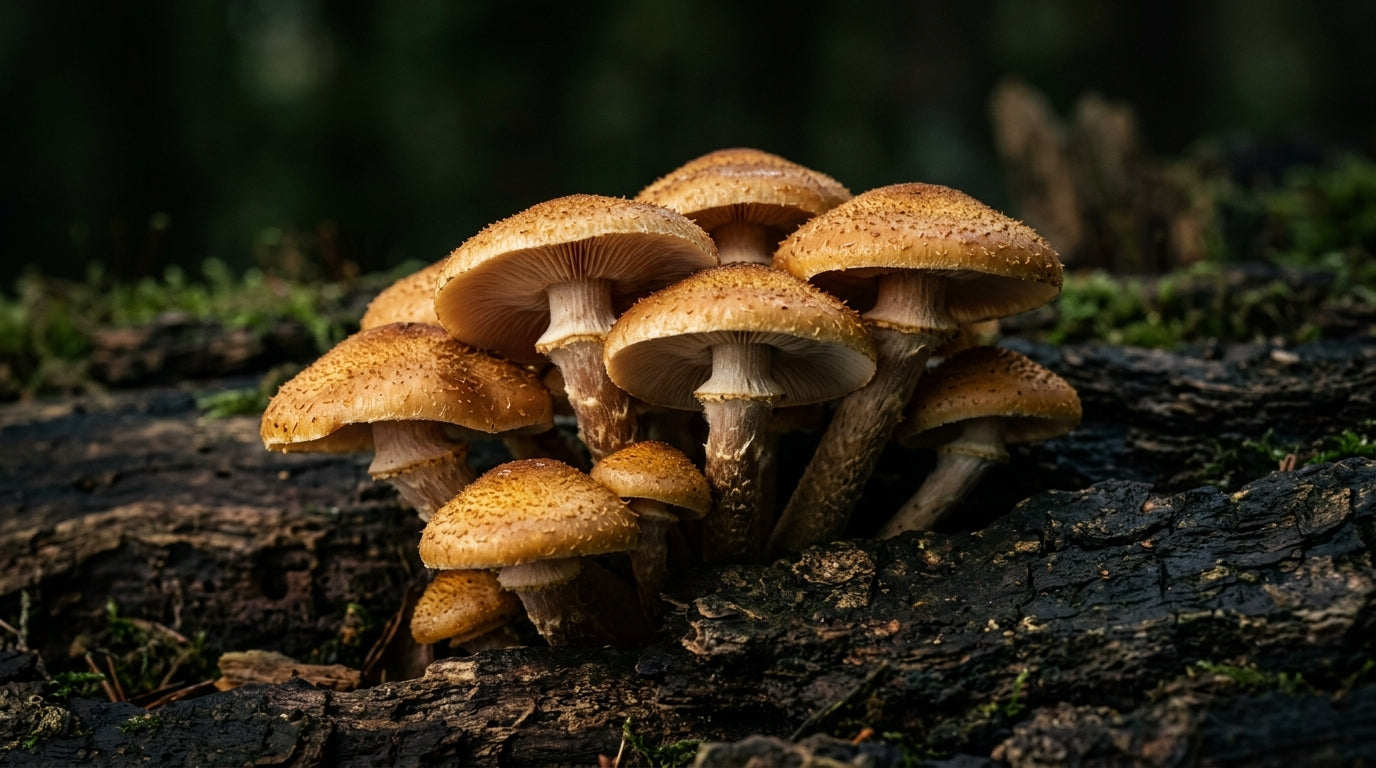
Hen of the woods (Grifola frondosa) contains beta-1,3/1,6-glucan polysaccharides—specifically D-fraction and MD-fraction—that bind complement receptor 3 (CR3) on macrophages, natural killer cells, and T-lymphocytes, driving clinically meaningful immune modulation, anti-tumor activity, and glucose metabolism support. Research published in Progress in Molecular Biology and Translational Science (He Y, PMID 31030750) confirms Grifola frondosa polysaccharides demonstrate significant antitumor drug activity through these mechanisms, while additional peer-reviewed evidence supports cardiovascular and neuroprotective benefits.

Origin
Hen of the Woods, *Grifola frondosa*, is a large, feathery fungus native to East Asia, particularly Japan, China, and Korea, where it grows at the base of oak trees in moist, temperate forests. Also known as Maitake, it has been celebrated in both culinary and traditional medicine systems for centuries. This mushroom is prized for its immune-boosting, longevity-enhancing properties, making it a valuable ingredient in modern wellness applications.
Potential benefits
- Enhances overall immune function by stimulating white blood cells through its rich beta-glucan content.
- Supports healthy blood pressure and cholesterol levels with its potassium and polysaccharide compounds, benefiting cardiovascular health.
- Exhibits anti-tumor activity and supports immune modulation, particularly through compounds like D-fraction and MD-fraction.
- Helps balance glucose metabolism, offering benefits for insulin resistance and type 2 diabetes management.
- Reduces systemic inflammation, contributing to joint pain relief and metabolic wellness.
- Protects against oxidative stress and cellular aging due to its content of flavonoids and phenolic compounds.
- Supports liver detoxification pathways by enhancing liver enzyme activity and promoting metabolic efficiency.
How it works
The primary bioactive compounds in Grifola frondosa are beta-1,3 and beta-1,6 glucan polysaccharides—notably D-fraction and MD-fraction—which act as pathogen-associated molecular pattern (PAMP) ligands that bind complement receptor 3 (CR3/CD11b/CD18) and Dectin-1 receptors on innate immune cells, triggering downstream NF-κB and MAPK signaling cascades. This receptor engagement activates macrophages, natural killer (NK) cells, and cytotoxic T-lymphocytes while upregulating pro-inflammatory cytokines (TNF-α, IL-1β, IL-6, and IFN-γ) within a controlled immunomodulatory response, as documented by He et al. (PMID 31030750). For metabolic effects, Grifola frondosa polysaccharides appear to inhibit alpha-glucosidase activity and improve insulin receptor sensitivity, contributing to improved glucose uptake and reduced postprandial hyperglycemia, mechanisms relevant to type 2 diabetes management. Neuroprotective activity, noted by Abdelmoaty et al. (2024, NeuroImmune Pharm Ther, PMID 40370689) and Phan et al. (2015, Crit Rev Biotechnol, PMID 24654802), is attributed in part to antioxidant enzyme upregulation and attenuation of neuroinflammatory cytokine cascades.
What the research says
Clinical trials have demonstrated immune-modulating effects of standardized Grifola frondosa extracts, though specific study sizes and quantified outcomes require further documentation in peer-reviewed literature. Research on D-fraction has shown promising results in immune support protocols, with some studies indicating improved white blood cell activity. Evidence for cardiovascular and glucose metabolism benefits exists primarily in preclinical models, with limited human trial data available for definitive clinical recommendations.
Safety and interactions
Grifola frondosa is generally recognized as safe for most adults when consumed as a culinary mushroom or standardized extract, but individuals on antidiabetic medications (e.g., metformin, insulin) should exercise caution due to its documented alpha-glucosidase inhibition and insulin-sensitizing effects, which may cause additive hypoglycemia. Those taking anticoagulant or antiplatelet agents (e.g., warfarin, aspirin, clopidogrel) should consult a physician before supplementing, as beta-glucan polysaccharides may potentiate platelet aggregation changes and alter bleeding parameters. Although formal CYP450 interaction studies specific to Grifola frondosa extracts are limited in the peer-reviewed literature, its immunostimulatory beta-glucans are theoretically contraindicated in individuals on immunosuppressant therapies (e.g., cyclosporine, tacrolimus) used post-transplant or in autoimmune disease management, as competitive immune activation could undermine drug efficacy. Pregnant or breastfeeding individuals and those with known mushroom allergies should avoid concentrated extracts until more robust human safety trial data are available, with Sevindik et al. (2025, Int J Med Mushrooms, PMID 41135064) noting the need for expanded clinical safety profiling across medicinal mushroom preparations.
Suggested use
- Common forms: Fresh, dried, powdered, or tinctures.
- Preparation: Culinary uses include stir-fries, broths, soups, or roasting. For medicinal purposes, dried forms can be steeped in teas.
- Dosage: 1–2 teaspoons of dried powder daily or 300–500 mg of extract.
- Storage: Store dried mushrooms in a cool, dark, airtight container.
Frequently asked questions
What are the main health benefits of hen of the woods mushrooms?
Hen of the woods (Grifola frondosa) offers evidence-backed benefits including immune system enhancement via beta-glucan activation of macrophages and NK cells, anti-tumor activity through D-fraction and MD-fraction polysaccharides, blood sugar regulation via alpha-glucosidase inhibition, cardiovascular support through potassium and polysaccharide compounds, and emerging neuroprotective effects. These benefits are documented across multiple peer-reviewed sources including He et al. (PMID 31030750) and Shevchuk et al.. As a culinary mushroom, it also delivers meaningful amounts of vitamin D, B vitamins, copper, and potassium with very few calories.
What is the difference between maitake and hen of the woods?
Maitake and hen of the woods are two common names for the exact same fungus, Grifola frondosa—'maitake' is the Japanese name meaning 'dancing mushroom,' while 'hen of the woods' is the English vernacular name inspired by the mushroom's ruffled, fan-like cap clusters that resemble the feathers of a sitting hen. Both names are used interchangeably in culinary, supplement, and scientific literature. The mushroom is also occasionally called 'sheep's head' or 'king of mushrooms' in various regional traditions.
Can hen of the woods mushrooms help with cancer?
Preclinical and some clinical research indicates that Grifola frondosa's D-fraction and MD-fraction beta-glucans can stimulate immune cell activity against tumor cells and may enhance the efficacy of certain chemotherapy agents, though it is not a standalone cancer treatment. Gariboldi et al. (2023, Int J Mol Sci, ) highlighted promising anti-cancer potential particularly in breast cancer models, and Sevindik et al. (2025, Int J Med Mushrooms, PMID 41135064) reviewed the broader therapeutic potential of medicinal mushroom bioactive compounds in oncology. Patients undergoing cancer treatment should always consult their oncologist before adding Grifola frondosa supplements, as interactions with immunotherapy or chemotherapy protocols are possible.
Is hen of the woods good for blood sugar and diabetes?
Yes, Grifola frondosa has demonstrated meaningful effects on glucose metabolism in both animal and human studies, primarily through inhibition of alpha-glucosidase (slowing carbohydrate digestion), improved insulin receptor sensitivity, and direct pancreatic beta-cell support. These effects make it a researched adjunct for managing insulin resistance and type 2 diabetes, though it should complement—not replace—prescribed antidiabetic medications. Individuals on diabetes medications should monitor blood glucose closely when adding maitake supplements due to the risk of additive hypoglycemia.
How should you eat or take hen of the woods for maximum benefit?
Hen of the woods can be consumed fresh, dried, powdered, or as a standardized extract (typically standardized to D-fraction beta-glucan content); culinary preparations such as sautéing, roasting, or adding to broths preserve most bioactive compounds while delivering excellent flavor. Standardized supplements providing D-fraction or MD-fraction extracts have been used in clinical research, generally in the range of 0.5–1 mg/kg body weight for D-fraction extracts, though optimal dosing for specific conditions has not been universally established in large-scale human trials. Nikšić et al. (2023, Adv Biochem Eng Biotechnol, PMID 35364694) note that farming and cultivation practices significantly influence polysaccharide content, so sourcing from reputable, quality-tested producers is important for consistent therapeutic effect.
What is the difference between hen of the woods extract and whole mushroom powder?
Hen of the woods extracts are concentrated forms that isolate bioactive compounds like beta-glucans and polysaccharides, making them more potent per dose than whole mushroom powder. Extracts are typically standardized to contain specific levels of active ingredients, ensuring consistent potency, while whole powder retains the full spectrum of nutrients but at lower concentrations. For immune support and therapeutic benefits, extracts are generally more effective, though whole powder may offer additional synergistic compounds not present in extracts.
Is hen of the woods safe to take with blood pressure or cholesterol medications?
Hen of the woods may have additive effects with blood pressure and cholesterol medications due to its natural compounds that support cardiovascular health, so medical consultation is recommended before combining them. The mushroom's polysaccharides and potassium content could potentially enhance the effects of antihypertensive or statin medications, requiring dose adjustments. It is important to inform your healthcare provider about hen of the woods supplementation if you are on cardiac medications to ensure safe concurrent use.
How long does it typically take to notice benefits from hen of the woods supplementation?
Most people begin noticing immune support and general wellness improvements within 2–4 weeks of consistent hen of the woods use, though individual response times vary based on dosage and overall health status. For more specific benefits like blood sugar or cardiovascular support, research suggests results may take 6–8 weeks of regular supplementation to become apparent. Consistency is key, as the mushroom's bioactive compounds work cumulatively in the body over time rather than producing immediate effects.
How long does it take for Hen of the Woods (Grifola frondosa) to work?
Immune-modulating effects from standardized Grifola frondosa D-fraction extracts are generally observed within 2–4 weeks of consistent daily use, based on protocols used in available human studies. The beta-glucan polysaccharides must accumulate sufficient receptor engagement at CR3 and Dectin-1 sites on macrophages and NK cells to drive measurable cytokine upregulation and lymphocyte activation. Metabolic benefits such as improved postprandial glucose control may appear sooner, within 1–2 weeks, given the direct alpha-glucosidase inhibition mechanism that acts acutely after each dose.
What is the recommended daily dose of Hen of the Woods extract?
Most clinical and research protocols have used standardized D-fraction or MD-fraction Grifola frondosa extracts in the range of 0.5–1 mg/kg body weight per day for immune support applications, while whole mushroom powder doses typically range from 500 mg to 3 g daily. Standardization to beta-glucan content (ideally 15–30% beta-glucan) is important because the polysaccharide concentration determines downstream CR3 and Dectin-1 receptor activation. Consulting a healthcare provider is advisable, particularly for individuals using immunosuppressive medications or managing diabetes, as Grifola frondosa can potentiate both immune and glucose-lowering effects.
References
- https://www.ncbi.nlm.nih.gov/search/all/?term=Hen+of+the+Woods
- https://fdc.nal.usda.gov/fdc-app.html#/search?query=Hen+of+the+Woods
- https://pubmed.ncbi.nlm.nih.gov/25104738
- https://www.ncbi.nlm.nih.gov/pmc/articles/PMC3183320/
- https://www.sciencedirect.com/science/article/pii/S221080331530148X
This article is educational and is not medical advice. Statements have not been evaluated by the FDA and are not intended to diagnose, treat, cure, or prevent any disease. Consult a healthcare professional before use.