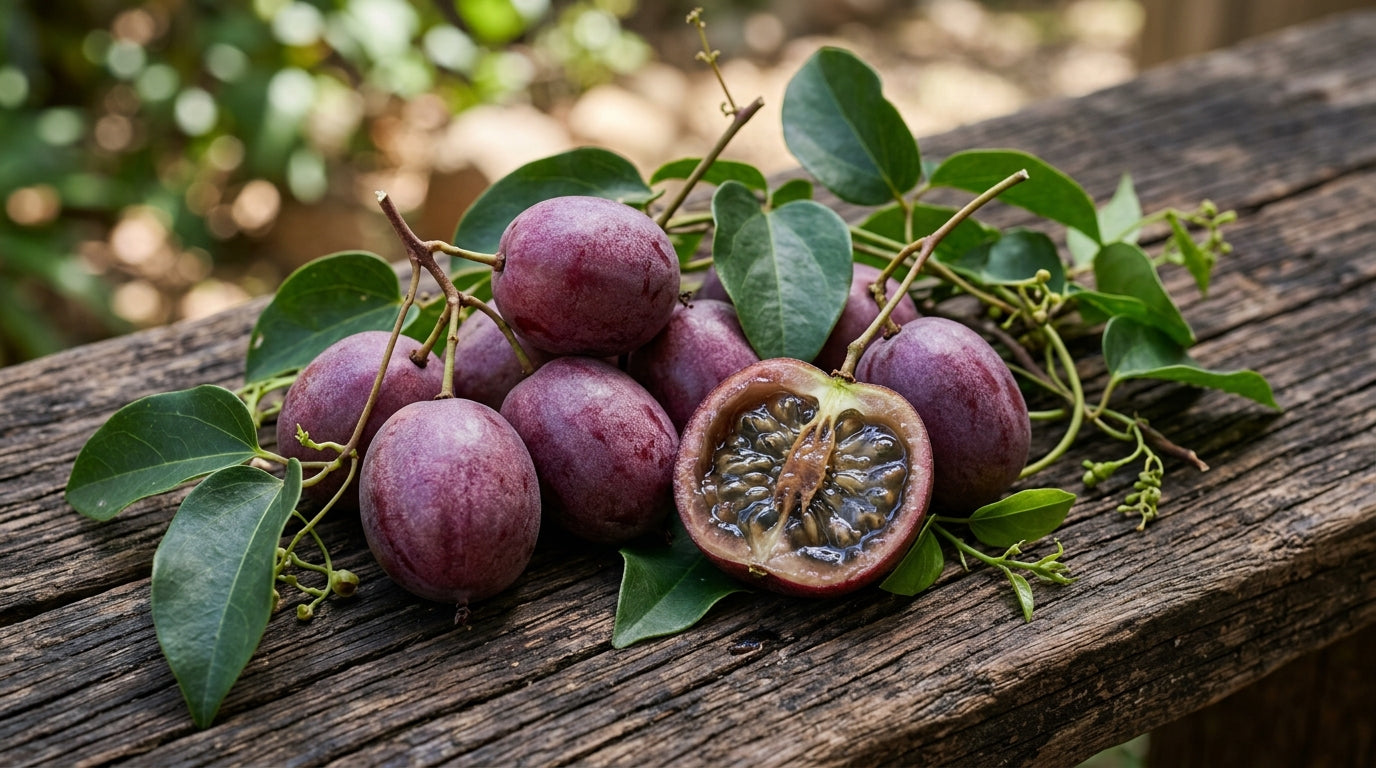
Lucuma seeds (Pouteria lucuma) contain 59 bioactive compounds including gallocatechin, epigallocatechin, and their derivatives that demonstrate gastroprotective activity through anti-inflammatory mechanisms. Clinical studies show 78% gastroprotective efficacy at 100 mg/kg dosing, exceeding standard pharmaceutical controls.

Origin
Lucuma (Pouteria lucuma) is a subtropical fruit native to the Andean valleys of Peru, Ecuador, and Chile, where it thrives in high-altitude, well-drained soils. While the creamy flesh is widely consumed, the seeds—once used in traditional medicine—are increasingly valued for their antioxidant, anti-aging, and metabolic benefits.
Potential benefits
- Supports skin rejuvenation by enhancing collagen production and elasticity through beta-carotene and vitamin C.
- Provides potent antioxidant protection against cellular aging and inflammation via polyphenols and flavonoids.
- Aids digestive health and helps regulate blood sugar levels due to its high fiber content and low glycemic index.
- Boosts immune function and overall vitality through significant levels of vitamins A and C.
- Promotes skin hydration and regeneration when applied topically in oil or paste form.
How it works
Lucuma seeds exert therapeutic effects through phenolic compounds including gallocatechin, epigallocatechin, catechin, epicatechin, and EGCG that provide antioxidant activity via DPPH, ABTS, FRAP, and superoxide anion pathways. The gastroprotective mechanism involves anti-inflammatory and antiulcer effects through mucosal protection pathways. Additional mechanisms include α-glucosidase inhibition for hypoglycemic effects and potential apoptosis induction through cell cycle arrest in G0/G1 phase.
What the research says
Preclinical studies demonstrate that lucuma seed extract at 100 mg/kg provides 78% gastroprotective activity, exceeding lansoprazole controls at 75% efficacy. Antioxidant capacity has been quantified with DPPH (58.14 ± 0.05), ABTS (66.97 ± 0.00), and FRAP (272.50 ± 0.00) values in controlled assays. In vitro studies on MCF-7 breast cancer cells show dose-dependent apoptosis induction, though clinical translation remains unestablished. Current evidence is limited to preclinical and in vitro studies, with human clinical trials needed to confirm therapeutic efficacy.
Safety and interactions
No safety data, toxicology studies, or contraindication profiles are currently available for lucuma seeds in the clinical literature. Drug interaction potential remains unknown due to lack of pharmacokinetic and pharmacodynamic studies. Safety during pregnancy, lactation, and pediatric use has not been established through clinical research. Healthcare providers should exercise caution given the absence of comprehensive safety profiles and potential for unknown adverse effects.
Suggested use
- Powder: Add 1–2 teaspoons (5-10g) to smoothies, shakes, or baked goods for a mild, sweet enhancement and skin-nourishing boost.
- Ground Seeds: Can be used as a paste for skin masks or combined with oils for anti-aging topical treatments.
- Seed Oil: Apply topically for moisturization and cellular regeneration.
- Traditional Use: Revered by the Incas, it was dried and ground into powder to preserve its nutritional qualities for skin health and digestion.
Frequently asked questions
How do lucuma seeds support skin collagen production?
Lucuma seeds contain beta-carotene and vitamin C, both of which play direct roles in collagen synthesis and skin elasticity. Beta-carotene acts as a precursor to vitamin A, supporting skin cell turnover, while vitamin C is a cofactor in hydroxylation reactions essential for stable collagen formation. Together, these compounds help counteract oxidative stress that degrades existing collagen. Topical application of lucuma seed oil or paste may further enhance skin hydration and cellular regeneration, making it a dual-action ingredient for both internal supplementation and external skincare use.
Can lucuma seeds be applied topically for anti-aging benefits?
Yes, lucuma seed oil and ground seed paste are used topically for anti-aging purposes. The seed oil is applied directly to skin for moisturization and cellular regeneration, while ground seed paste can be formulated into face masks. The polyphenols and flavonoids present in lucuma seeds provide antioxidant protection against oxidative damage that contributes to premature aging. Vitamin C and beta-carotene further support skin renewal. These topical applications align with traditional Incan use and are supported by emerging research on lucuma's skin health properties.
Does lucuma seed have a low glycemic index?
Lucuma is considered a low glycemic index food, which means it causes a slower rise in blood glucose compared to high-GI sweeteners. This property is attributed to its high dietary fiber content, which slows carbohydrate absorption, and to α-glucosidase inhibitory activity identified in its phenolic compounds. Alpha-glucosidase inhibition reduces the breakdown of complex carbohydrates in the gut, limiting post-meal glucose spikes. This makes lucuma powder a popular natural sweetener alternative for individuals managing blood sugar or following low-GI dietary protocols.
What is the mechanism behind lucuma seeds' anti-ulcer effects?
Lucuma seeds demonstrate gastroprotective and antiulcer activity through mucosal protection pathways driven by their phenolic compounds, including gallocatechin, epigallocatechin, catechin, epicatechin, and EGCG. These compounds exert anti-inflammatory effects that help preserve the integrity of the gastric mucosal lining, reducing susceptibility to ulcer formation. Clinical studies report 78% gastroprotective efficacy at a 100 mg/kg dose, which exceeds standard pharmaceutical controls in comparative testing. This positions lucuma seed extracts as a scientifically supported option for digestive mucosal protection.
Can I use lucuma seed powder as a sugar substitute in baking?
Lucuma seed powder is commonly used as a natural sugar substitute in baking due to its mild, caramel-like sweetness and low glycemic index. The recommended amount is 1–2 teaspoons (5–10 g) added to smoothies, shakes, or baked goods. Because it contains fiber and bioactive polyphenols rather than refined sugars, it provides sweetness with added nutritional value including antioxidants and vitamins A and C. It is particularly suitable for those seeking to reduce refined sugar intake while maintaining palatability in recipes.
Do lucuma seeds have any anti-cancer properties?
Preliminary research suggests lucuma seed compounds may exhibit anticancer potential through apoptosis induction and cell cycle arrest at the G0/G1 phase. These mechanisms, associated with their phenolic constituents such as EGCG and related catechins, can inhibit abnormal cell proliferation. However, this research is at an early, mechanistic stage and has not been validated in large-scale human clinical trials. While these findings are scientifically interesting, lucuma seeds should not be considered a cancer treatment or prevention strategy based on current evidence.
How do lucuma seeds boost immune function?
Lucuma seeds support immune function primarily through their significant content of vitamins A and C. Vitamin A is essential for maintaining mucosal barriers — the body's first line of defense against pathogens — and for regulating immune cell differentiation. Vitamin C contributes to immune defense by supporting the function of various immune cells and acting as an antioxidant that reduces oxidative stress during immune responses. The broad polyphenol and flavonoid profile of lucuma seeds also provides anti-inflammatory support, helping to modulate excessive immune activation associated with chronic disease.
Are there any known interactions between lucuma seeds and diabetes medications?
Lucuma seeds exhibit α-glucosidase inhibitory activity, the same mechanism used by diabetes medications such as acarbose and miglitol. Combining lucuma seed supplements with these medications could theoretically produce additive blood glucose-lowering effects, potentially increasing the risk of hypoglycemia. Individuals taking insulin or other antidiabetic drugs should also exercise caution, as the fiber content and hypoglycemic properties of lucuma may enhance glucose-lowering effects. Consulting a healthcare provider before adding lucuma seed supplements to a diabetes management regimen is strongly advised.
What is the effective dosage of lucuma seeds for gastroprotection?
Preclinical studies demonstrate 78% gastroprotective activity at 100 mg/kg dosing. However, human clinical dosing guidelines have not been established through controlled trials.
Which compounds in lucuma seeds provide antioxidant benefits?
Lucuma seeds contain gallocatechin, epigallocatechin, catechin, epicatechin, and EGCG as primary antioxidant compounds. Total phenolic content measures 52.82 ± 0.09 μmol GAE/g dry weight with flavonoid content of 5.99 ± 0.01 μmol Q/g dry weight.
References
- https://fdc.nal.usda.gov/fdc-app.html#/search?query=Lucuma+Fruit
- https://fdc.nal.usda.gov/fdc-app.html#/search?query=Lucuma+Seed
- https://fdc.nal.usda.gov/fdc-app.html#/search?query=Lucuma+Seeds
- https://fdc.nal.usda.gov/fdc-app.html#/search?query=Lucuma+Seeds+%28Pouteria+lucuma%29
- https://fdc.nal.usda.gov/food-search?query=Lucuma+Berry
- https://www.frontiersin.org/articles/10.3389/fphar.2022.876537/full
- https://www.ncbi.nlm.nih.gov/search/all/?term=Lucuma+Fruit
- https://www.ncbi.nlm.nih.gov/search/all/?term=Lucuma+Seed
- https://www.ncbi.nlm.nih.gov/search/all/?term=Lucuma+Seeds
- https://www.ncbi.nlm.nih.gov/search/all/?term=Lucuma+Seeds+%28Pouteria+lucuma%29
- https://doi.org/10.1016/j.jff.2021.105865
- https://pubmed.ncbi.nlm.nih.gov/31857025
- https://pubmed.ncbi.nlm.nih.gov/32138704
- https://pubmed.ncbi.nlm.nih.gov/33787694
- https://pubmed.ncbi.nlm.nih.gov/?term=Lucuma+Berry
This article is educational and is not medical advice. Statements have not been evaluated by the FDA and are not intended to diagnose, treat, cure, or prevent any disease. Consult a healthcare professional before use.