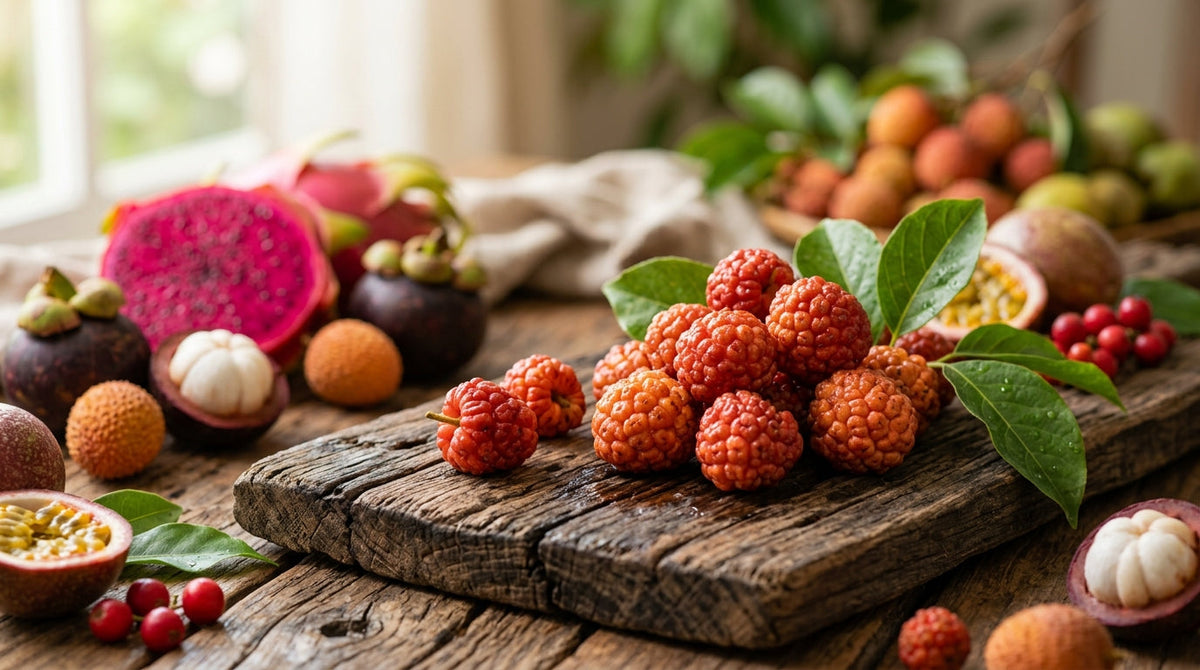
Soapberry kernel, the seed of Sapindus mukorossi, contains triterpenoid saponins (0.98-13.26%), flavonoids, and phenylpropanoids that exhibit antioxidant activity through DPPH radical scavenging. These bioactive compounds undergo complex biosynthesis involving 49 genes including 41 cytochrome P450s and 45 glycosyltransferases.

Origin
The kernel of Soapberry (Sapindus mukorossi) originates from humid subtropical forests across tropical Asia, the Americas, and Africa. This often-overlooked component is now recognized for its concentrated bioactive compounds, offering significant potential in cognitive, metabolic, and skin health.
Potential benefits
- Enhances cognitive function and neuroprotection through its rich content of flavonoids and plant sterols.
- Balances metabolism by modulating lipid profiles and supporting healthy glucose regulation.
- Supports digestive health by promoting a balanced gut environment and aiding nutrient absorption.
- Strengthens immunity through its saponins and polyphenols, which exhibit antimicrobial and antioxidant effects.
- Protects and regenerates skin, both internally and topically, via essential fatty acids and antioxidant compounds like vitamin E.
- Improves circulation and cardiovascular health, potentially through its flavonoid content and ability to balance lipid metabolism.
How it works
Triterpenoid saponins in soapberry kernel exhibit non-ionic surface activity and antioxidant effects via DPPH radical scavenging mechanisms. Transcription factors SmbHLH2, SmTCP4, and SmWRKY27 regulate saponin biosynthesis through SmCYP71D-3 gene transcription. These compounds also demonstrate antimicrobial activity by modulating microbial pathways and reducing fungal pathogenesis markers.
What the research says
Currently, no human clinical trials have been conducted on soapberry kernel specifically. Available research is limited to in vitro analytical studies using HPLC-Q-Orbitrap HRMS, which identified 22 bioactive components in fermented extracts. Laboratory studies showed fermentation increased saponin content by 46.67% compared to water extracts and enhanced DPPH scavenging activity at concentrations below 1.0% V/V. The evidence base remains preliminary and requires human studies to establish clinical efficacy.
Safety and interactions
No specific safety data, drug interactions, or contraindications have been established for soapberry kernel in human studies. General saponin properties suggest potential gastrointestinal irritation at high doses, though specific thresholds are not quantified. Fermented extracts showed safety in scalp application during in vitro testing, but human safety data is absent. Pregnant and breastfeeding women should avoid use due to insufficient safety information.
Suggested use
- Traditionally ground into powders for supporting digestion and brain function in Ayurvedic and Indigenous medicine.
- Cold-pressed oil from the kernel is traditionally used topically for skin and scalp health.
- Modern uses include cognitive support supplements, metabolic wellness blends, and antioxidant skincare formulations.
- Recommended dosage is 500–1000 mg of extract daily for internal use.
Frequently asked questions
What bioactive compounds are found in soapberry kernel?
Soapberry kernel contains triterpenoid saponins (0.98-13.26% content), flavonoids (0.31-1.74%), terpenoids including betulin, phenylpropanoids, and steroids. Research has identified 54 different saponins with 25 showing differential accumulation patterns.
How does fermentation affect soapberry kernel's potency?
Fermentation increases saponin content by 46.67% compared to water extracts and enhances DPPH radical scavenging activity. HPLC-Q-Orbitrap HRMS analysis identified 22 components in fermented filtrates with superior antioxidant properties below 1.0% V/V concentration.
Are there clinical studies proving soapberry kernel's health benefits?
No human clinical trials have been conducted on soapberry kernel specifically. Current evidence is limited to in vitro analytical studies and laboratory research, making the clinical efficacy claims preliminary and requiring human studies for validation.
What are the potential side effects of soapberry kernel?
No specific side effects have been documented in human studies since clinical research is lacking. Based on general saponin properties, potential gastrointestinal irritation may occur at high doses, though specific safety thresholds have not been established.
How is soapberry kernel different from soapberry fruit?
Soapberry kernel refers specifically to the seed inside the fruit, while most research focuses on the pericarp (fruit rind). Both contain similar triterpenoid saponins, but kernel-specific bioactive profiles and concentrations require further investigation to establish distinct therapeutic properties.
Is soapberry kernel safe to take during pregnancy and breastfeeding?
Limited clinical data exists on soapberry kernel's safety during pregnancy and lactation, so it is generally recommended to consult with a healthcare provider before use during these periods. While traditional use suggests safety, the saponin content and potential effects on hormonal balance warrant caution. Pregnant and breastfeeding women should err on the side of caution and seek professional medical guidance before supplementing.
What is the recommended dosage of soapberry kernel extract for cognitive health?
Most research and traditional applications suggest 500–1,500 mg of standardized soapberry kernel extract daily, divided into 2–3 doses with meals for optimal absorption. Dosage may vary depending on the extract's concentration of flavonoids and bioactive compounds, so following product-specific labeling is essential. Starting with a lower dose and gradually increasing allows the body to adjust while monitoring individual response.
Does soapberry kernel interact with blood pressure or diabetes medications?
Soapberry kernel's glucose-regulating and lipid-modulating properties may potentiate the effects of diabetes and cholesterol-lowering medications, requiring medical supervision. The saponin content may also have mild anticoagulant properties, which could theoretically interact with blood thinners or antiplatelet agents. Anyone taking prescription medications for metabolic or cardiovascular conditions should consult their healthcare provider before adding soapberry kernel supplementation.
References
- https://www.ncbi.nlm.nih.gov/search/all/?term=Soapberry+Kernel
- https://pubmed.ncbi.nlm.nih.gov/36621794
- https://www.sciencedirect.com/science/article/pii/S1756464620314599
- https://www.ncbi.nlm.nih.gov/pmc/articles/PMC7903127/
This article is educational and is not medical advice. Statements have not been evaluated by the FDA and are not intended to diagnose, treat, cure, or prevent any disease. Consult a healthcare professional before use.