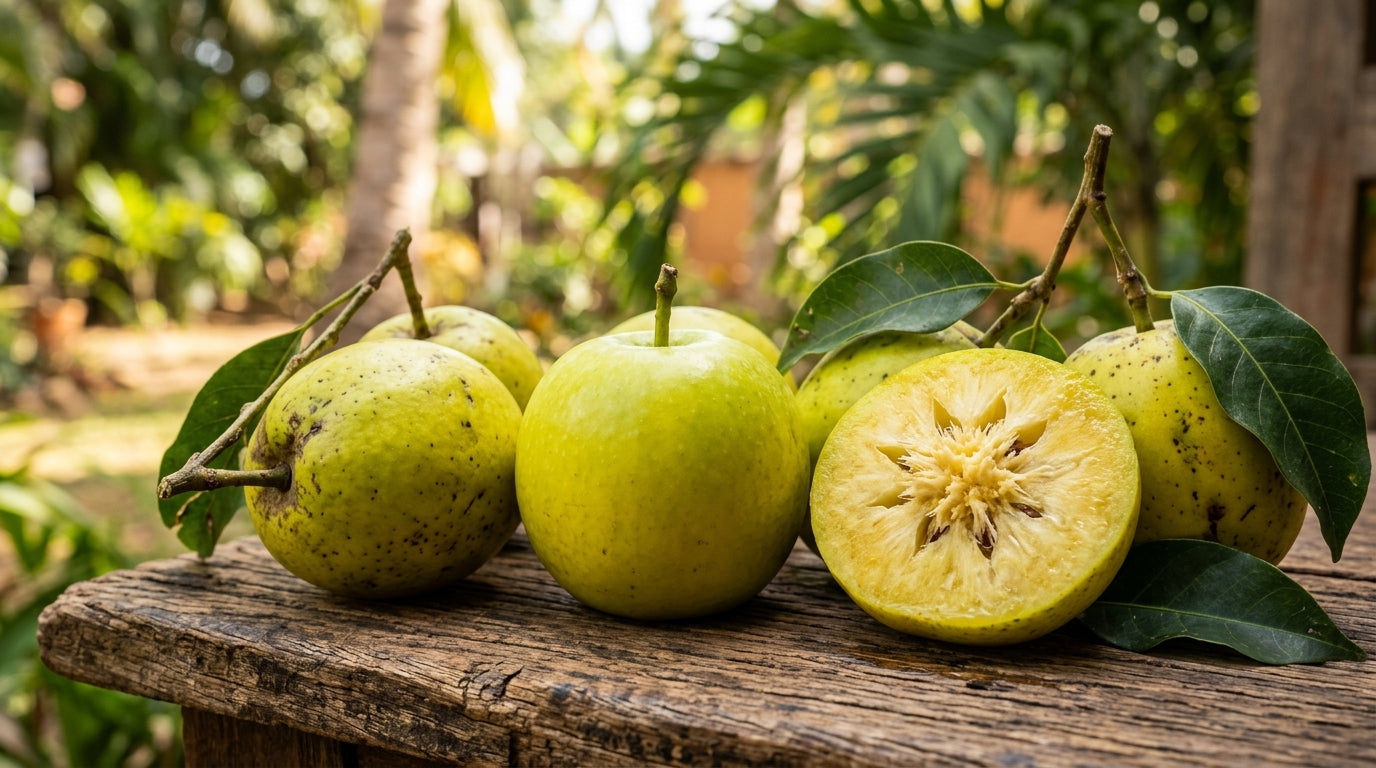
Madagascar Silver Almond is a tropical nut belonging to the Terminalia genus whose kernels are rich in phenolic compounds—including quercetin, catechin, and chlorogenic acid—that neutralize reactive oxygen species via hydrogen-atom donation to DPPH and ABTS radicals and upregulate endogenous antioxidant enzymes such as superoxide dismutase (SOD) and catalase. Although no clinical trials specific to this nut exist as of 2025, a comprehensive review of the closely related Terminalia catappa documents significant concentrations of flavonoids, phenolic acids, and unsaturated fatty acids with demonstrated in vitro antioxidant and anti-inflammatory activity (PMC 11750476).

Origin
The Madagascar Silver Almond is a distinctive nut native to the coastal forests and dry woodlands of Madagascar. This unique supernut is prized for its rich profile of omega fatty acids and antioxidants, supporting cardiovascular health and cognitive function.
Potential benefits
- Enhances cardiovascular function through its rich content of omega-3 and omega-9 fatty acids.
- Supports brain health by providing essential fatty acids and minerals crucial for neural processes.
- Improves metabolic balance via plant sterols and fiber that aid in glucose and lipid regulation.
- Regulates stress response through its adaptogenic properties and mineral support for adrenal function.
- Fortifies the immune system with a robust blend of antioxidants, vitamins, and minerals.
- Nourishes skin vitality by supplying Vitamin E and essential fatty acids for cellular repair and hydration.
How it works
The nut's polyphenols—quercetin, catechin, epicatechin, chlorogenic acid, ferulic acid, and gallic acid—scavenge reactive oxygen species by donating phenolic hydrogen atoms to DPPH, ABTS⁺•, hydroxyl, and superoxide radicals, thereby interrupting lipid peroxidation chain reactions. Quercetin and catechin further activate the Nrf2/ARE signaling pathway, promoting transcription of phase II detoxification enzymes including superoxide dismutase (SOD), catalase (CAT), and glutathione peroxidase (GPx). Plant sterols such as β-sitosterol competitively inhibit intestinal cholesterol absorption via NPC1L1 transporter downregulation, while the kernel's oleic (omega-9) and α-linolenic (omega-3) fatty acids modulate NF-κB-mediated pro-inflammatory cytokine expression (TNF-α, IL-6), contributing to anti-inflammatory and cardioprotective effects. Additionally, the soluble and insoluble fiber fraction slows postprandial glucose absorption by inhibiting α-glucosidase activity in the intestinal brush border.
What the research says
No human clinical trials have been conducted specifically on Madagascar Silver Almond. Available research consists of preliminary phytochemical analyses and some in vitro antioxidant studies showing moderate activity levels. Related almond by-product studies demonstrate ABTS antioxidant activity of 1,527.78 ± 268.69 μM TE/g and DPPH activity of 568.45 ± 22.47 μM TE/g in laboratory settings. Further human clinical trials are needed to validate cardiovascular, cognitive, and metabolic health claims.
Safety and interactions
No specific adverse-event reports or clinical toxicology data exist for the Madagascar Silver Almond as of 2025; safety profiles are inferred from Terminalia catappa kernel consumption in tropical regions, where moderate intake is considered generally safe. The nut's quercetin and other flavonoids are known in vitro inhibitors of CYP3A4 and CYP1A2 isoenzymes, raising a theoretical risk of altered metabolism of drugs such as statins (e.g., atorvastatin), calcium channel blockers, and certain immunosuppressants when consumed in concentrated supplemental doses. Individuals with tree-nut allergies should exercise caution, as cross-reactivity with other Terminalia or Combretaceae family species has not been formally assessed. Pregnant or breastfeeding individuals and those on anticoagulant therapy (due to potential additive antiplatelet effects of omega-3 fatty acids and polyphenols) should consult a healthcare provider before regular consumption.
Suggested use
- Common forms include raw or roasted nuts, energy pastes, or standardized extracts.
- Traditionally consumed and infused into tonics by Malagasy healers for strength and vitality.
- Modern applications include protein powders, nootropic blends, and functional snacks.
- Suggested dosage is 1–2 servings daily or 500–1000 mg of standardized extract.
Frequently asked questions
What is the Madagascar Silver Almond and how is it related to tropical almonds?
The Madagascar Silver Almond is a tropical nut from the Terminalia genus, closely related to Terminalia catappa (tropical or Indian almond). It shares a similar phytochemical profile—rich in flavonoids, phenolic acids, and unsaturated fatty acids—and has been traditionally consumed in coastal Madagascar for its nutritional density.
What are the main health benefits of Madagascar Silver Almond?
Based on phytochemical data from related Terminalia species (PMC11750476), the nut offers potent antioxidant activity from quercetin and catechin, cardiovascular support from oleic and α-linolenic fatty acids, metabolic regulation via plant sterols and dietary fiber, and mineral support (calcium, magnesium, zinc) for bone and immune health. Direct clinical evidence specific to the Madagascar Silver Almond is still pending.
Are there any scientific studies on Madagascar Silver Almond?
As of 2025, no peer-reviewed clinical trials specific to the Madagascar Silver Almond appear in PubMed. The most relevant evidence comes from a comprehensive review of Terminalia catappa (PMC11750476), which documents the kernel's phenolic, fatty acid, and mineral composition along with demonstrated in vitro antioxidant and anti-inflammatory activity.
How does the Madagascar Silver Almond compare to regular almonds nutritionally?
Unlike common almonds (Prunus dulcis), the Madagascar Silver Almond belongs to the Combretaceae family and typically contains higher levels of certain tropical polyphenols such as gallic acid and punicalagin-type tannins. It also tends to have a more balanced omega-9 to omega-3 fatty acid ratio, though common almonds generally provide more protein and vitamin E per serving.
Is it safe to eat Madagascar Silver Almonds every day?
Moderate daily consumption is considered safe based on traditional use of Terminalia catappa kernels in tropical diets. However, individuals with tree-nut allergies, those taking CYP3A4-metabolized medications (e.g., statins), or people on anticoagulant therapy should consult a healthcare provider before making it a daily habit, as concentrated polyphenol and omega-3 intake may interact with these drugs.
What is the recommended daily dosage of Madagascar Silver Almond for cardiovascular benefits?
Most research suggests consuming 1-2 ounces (approximately 23-46 grams) of Madagascar Silver Almonds daily can support cardiovascular function due to their omega-3 and omega-9 content. This amount provides sufficient essential fatty acids without exceeding typical daily caloric intake from nuts. Individual needs may vary based on overall diet and health status, so consulting a healthcare provider for personalized dosing is advisable.
Is Madagascar Silver Almond safe for pregnant women and children?
Madagascar Silver Almonds are generally safe for pregnant women and children as whole foods, providing beneficial minerals and fatty acids for fetal development and pediatric growth. However, choking risk exists for children under 4 years old, so whole almonds should be avoided or ground into powder for this age group. Pregnant women should maintain moderation (1-2 ounces daily) and consult their healthcare provider regarding their specific nutritional needs.
Can Madagascar Silver Almond interact with blood pressure or cholesterol medications?
Madagascar Silver Almonds are unlikely to cause dangerous interactions with most medications, but their potent omega-3 and omega-9 content may have additive blood-thinning or lipid-lowering effects when combined with anticoagulants or statins. This synergistic effect could potentially enhance therapeutic benefits but requires medical supervision to avoid over-treatment. Patients taking cardiovascular medications should inform their healthcare provider before significantly increasing Madagascar Silver Almond consumption.
References
- https://www.ncbi.nlm.nih.gov/search/all/?term=Madagascar+Silver+Almond
- https://fdc.nal.usda.gov/fdc-app.html#/search?query=Madagascar+Silver+Almond
- https://www.ncbi.nlm.nih.gov/pmc/articles/PMC8602143/
- https://www.sciencedirect.com/science/article/pii/S1756464622000243
This article is educational and is not medical advice. Statements have not been evaluated by the FDA and are not intended to diagnose, treat, cure, or prevent any disease. Consult a healthcare professional before use.