Article: The Science Behind Ashwagandha: How This Adaptogenic Herb Transforms Your Daily Wellness Routine
The Science Behind Ashwagandha: How This Adaptogenic Herb Transforms Your Daily Wellness Routine

In the quest for enhancing daily wellness, ashwagandha has emerged as a key player — gaining recognition for its ability to support both physical and mental health. Rooted in traditional Ayurvedic medicine for over 3,000 years, this adaptogenic herb has long been hailed for its restorative properties. Modern science is now confirming what ancient healers knew all along.
What Is Ashwagandha?
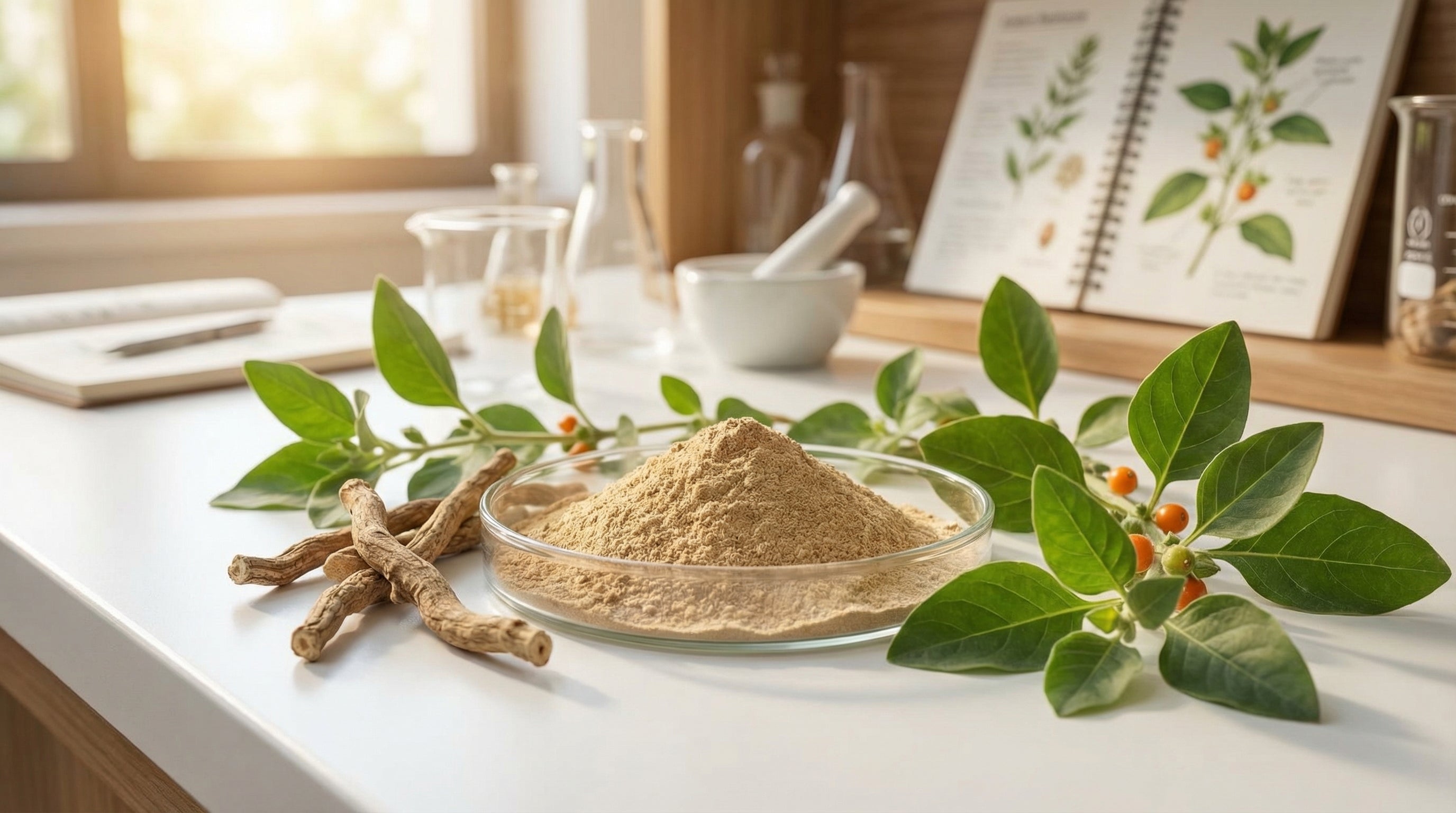
Ashwagandha (Withania somnifera) is a small shrub native to India, the Middle East, and parts of Africa. Its roots and berries are used for their medicinal properties, classified as an adaptogen — meaning it helps the body resist stressors, whether physical, chemical, or biological.
What does ashwagandha do for your body? Ashwagandha reduces cortisol (stress hormone) by up to 30%, improves sleep quality, reduces anxiety, supports muscle strength and recovery, and may normalize thyroid function. It works by modulating the HPA axis — your body's central stress response system. Benefits build over 2-8 weeks of consistent use.
The Science Behind Ashwagandha's Power
Adaptogens like ashwagandha work by modulating hormone response and supporting your body's resilience to stress. The research is compelling:
- A 2012 study in the Indian Journal of Psychological Medicine found a 28% reduction in cortisol levels
- Research in the Journal of Dietary Supplements (2017) showed significant improvements in memory and mental clarity
- A 2019 study in Cureus found 56.5% reduction in anxiety scores vs. 30.5% for placebo
- KSM-66 extract has been validated in 24+ gold-standard clinical trials
KSM-66 ashwagandha has been validated in 24+ gold-standard clinical trials — making it one of the most researched adaptogens on the planet.
Incorporating Ashwagandha Into Your Routine
The typical daily dosage is between 250-600mg. Available in various forms including powders, capsules, and gummies, ashwagandha can be easily added to your daily wellness ritual. Many people report improvements in sleep quality, reduced anxiety, and enhanced mood within the first few weeks.
For optimal benefits, take ashwagandha consistently over several weeks — the herb needs time to modulate your stress response system. Most clinical studies show peak benefits at the 4-8 week mark.
Safety Considerations
Ashwagandha is generally considered safe for most people. Some may experience mild side effects such as upset stomach or daytime drowsiness when starting. Those with autoimmune diseases such as rheumatoid arthritis or lupus should consult their healthcare provider before use.
Ashwagandha Forms Compared
Hermetica's Cozy combines KSM-66 ashwagandha with warming chai spices
| Factor | Gummies | Capsules | Powder |
|---|---|---|---|
| Convenience | Highest — tasty, no water needed | High — quick and portable | Moderate — needs mixing |
| Compliance | Best — enjoyable daily habit | Good — easy to remember | Lower — taste can be an issue |
| Dose per Serving | 250-300mg typical | 300-600mg typical | Fully customizable |
| Absorption | Good — pre-dissolved format | Good — standard delivery | Good — fast absorption |
| Best For | Daily wellness routines | Higher-dose protocols | Smoothies and lattes |
How long does ashwagandha take to work? Some users notice improved calmness and sleep within the first week. Clinical studies measure significant cortisol reduction and anxiety relief at 4-8 weeks. For best results, take 300-600mg daily of KSM-66 extract consistently for at least 2 months.
Frequently Asked Questions
Is ashwagandha safe to take daily?
Yes. Ashwagandha is generally considered safe for most people at standard supplement doses of 250-600mg daily. It has been consumed for thousands of years in Ayurvedic medicine and has a strong safety profile in clinical research. Those with autoimmune diseases should consult their healthcare provider before use.
What is the best form of ashwagandha?
KSM-66 is the most clinically validated ashwagandha extract, with 24+ gold-standard clinical trials supporting its benefits. It is available in powders, capsules, and gummies. Choose the format you will take consistently every day — compliance matters more than format.
Can I take ashwagandha with other supplements?
Ashwagandha pairs well with other adaptogens like rhodiola, holy basil, and chamomile. It can also be safely combined with magnesium, L-theanine, and most other common supplements. If you are on prescription medications, consult your healthcare provider first.
When is the best time to take ashwagandha?
It depends on your goals. For stress and anxiety relief, take it in the morning with food. For sleep support, take it in the evening. Many people take it twice daily — a smaller dose in the morning and a second dose before bed — for comprehensive benefits throughout the day.

Sources & References
- Chandrasekhar K, et al. "A prospective, randomized double-blind, placebo-controlled study of safety and efficacy of a high-concentration full-spectrum extract of ashwagandha root." Indian Journal of Psychological Medicine. 2012;34(3):255-262.
- Choudhary D, et al. "Efficacy and safety of ashwagandha (Withania somnifera) root extract in improving memory and cognitive functions." Journal of Dietary Supplements. 2017;14(6):599-612.
- Lopresti AL, et al. "An investigation into the stress-relieving and pharmacological actions of an ashwagandha extract." Cureus. 2019;11(9):e5797.
- Salve J, et al. "Adaptogenic and anxiolytic effects of ashwagandha root extract in healthy adults: A double-blind, randomized, placebo-controlled clinical study." Cureus. 2019;11(12):e6466.
- Langade D, et al. "Efficacy and safety of ashwagandha root extract in insomnia and anxiety." Cureus. 2019;11(9):e5797.
Recommended Hermetica Products
Premium adaptogenic supplements — made in the USA, third-party tested