Current research on fermented ginger specifically is limited, with most studies focusing on standard ginger extract. In vitro studies suggest fermentation enhances bioavailability and therapeutic properties compared to non-fermented ginger. Some human studies indicate benefits for digestive and immune health, but comprehensive clinical trials with specific dosages and quantified outcomes for fermented ginger are still ongoing. The evidence base remains preliminary and requires further investigation to establish definitive therapeutic protocols.

Origin
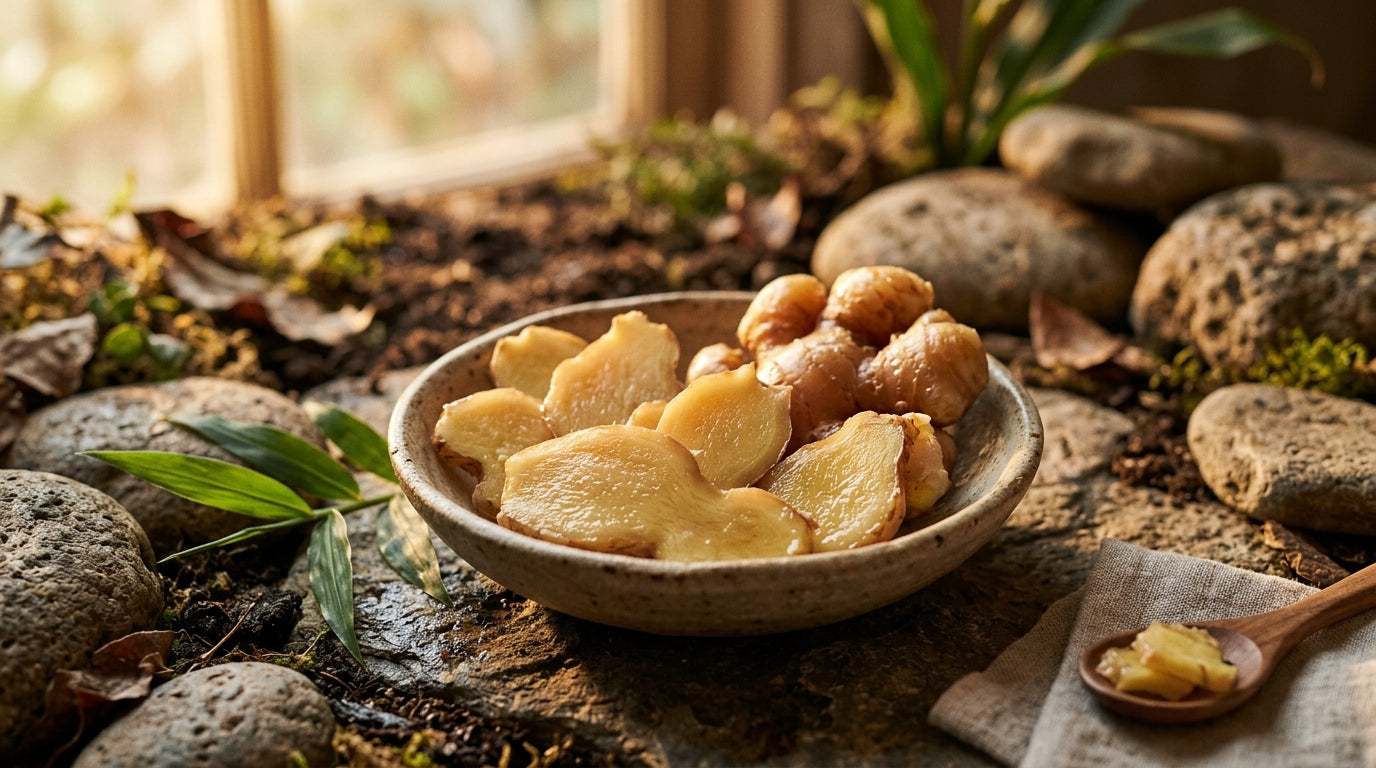
Fermented Ginger is derived from the rhizome of Zingiber officinale, a plant native to Southeast Asia, particularly India and China, with a history spanning thousands of years. The fermentation process enhances its nutrient bioavailability and introduces beneficial probiotic strains. This ancient method amplifies its therapeutic potency, making it a staple in traditional Asian wellness practices and a valued functional food.
Potential benefits
- Enhances digestive health: by improving enzyme activity, alleviating bloating, and promoting beneficial gut bacteria.
- Reduces systemic inflammation: and supports joint and heart health through its rich content of gingerol and bioactive compounds.
- Strengthens immune function: and helps prevent infections via probiotics developed during fermentation.
- Supports microbiome balance: and intestinal regularity due to increased nutrient bioavailability and probiotic activity.
- Effectively alleviates nausea,: including motion sickness, morning sickness, and chemotherapy-related nausea.
- Neutralizes free radicals,: reduces oxidative stress, and supports cellular longevity through antioxidant protection.
- Enhances metabolism and: supports healthy fat oxidation, contributing to weight management.
How it works
Fermented ginger's bioactive gingerols (particularly 6-gingerol) and their dehydrated derivatives, shogaols, exert anti-inflammatory effects by suppressing the NF-κB and MAPK (p38, JNK, ERK1/2) signaling cascades, which in turn downregulate the expression of pro-inflammatory mediators cyclooxygenase-2 (COX-2), inducible nitric oxide synthase (iNOS), tumor necrosis factor-alpha (TNF-α), and interleukin-6 (IL-6). The fermentation process—often mediated by Lactobacillus and other lactic acid bacteria—biotransforms gingerols into more bioavailable forms and generates short-chain fatty acids (SCFAs) that strengthen intestinal barrier integrity and modulate immune signaling via G-protein-coupled receptors (GPR41/GPR43). As demonstrated by Huang et al. (2025, PMID 40086974), probiotic-fermented ginger preparations activate the CREB (cAMP response element-binding protein)/BDNF (brain-derived neurotrophic factor) neuroprotective pathway while rebalancing the gut-brain axis through microbiota modulation. Furthermore, fermentation-derived antioxidant compounds scavenge reactive oxygen species (ROS) by upregulating endogenous antioxidant enzymes such as superoxide dismutase (SOD), catalase, and glutathione peroxidase via Nrf2/ARE pathway activation.
What the research says
A 2025 study by Huang et al. published in Food Research International (PMID 40086974) demonstrated that probiotic-fermented ginger-processed Gastrodia elata ameliorated AlCl₃-induced cognitive dysfunction in Alzheimer's disease rat models by regulating gut microbiota composition and activating the CREB/BDNF signaling pathway. Broeckel et al. (2025) in Nutrients (PMID 40732990) reported that ginger supplementation significantly improved markers of inflammation and functional capacity in individuals with mild to moderate joint pain. Park et al. (2014) in the Journal of Medicinal Food (PMID 24456350) documented that fermented vegetables containing ginger, such as kimchi, confer probiotic health benefits including anticancer, anti-obesity, and cholesterol-lowering properties. Additionally, Choi et al. (2019) in Recent Patents on Food, Nutrition & Agriculture (PMID 30081795) reviewed the current and prospective pharmaceutical applications of processed gingers, noting that fermentation and other processing methods enhance the bioactivity and stability of ginger's therapeutic compounds.
Safety and interactions
Fermented ginger is generally recognized as safe (GRAS) when consumed in dietary amounts, though doses exceeding 5 g of dried ginger equivalent per day may cause gastrointestinal side effects including heartburn, diarrhea, and mouth irritation. Ginger and its fermented preparations may potentiate the effects of anticoagulant and antiplatelet drugs (e.g., warfarin, aspirin, clopidogrel) due to the thromboxane synthetase–inhibiting activity of gingerols, and concurrent use should be monitored by a healthcare provider. Ginger compounds have been shown to inhibit cytochrome P450 enzymes, including CYP2C9 and CYP3A4, which may alter the metabolism of co-administered pharmaceuticals such as nifedipine, cyclosporine, and certain statins. Individuals with gallstones, those scheduled for surgery, pregnant women exceeding 1 g/day, and people taking diabetes medications (due to potential hypoglycemic synergy) should consult a physician before supplementing with fermented ginger.
Suggested use
- Consumed as pickled slices, fermented paste, or as a probiotic beverage.
- For solid forms, use 1–2 tablespoons daily in teas, smoothies, marinades, or dressings.
- For beverages, drink ¼ to ½ cup daily, preferably after meals to support digestion.
- Store in a sealed container in the refrigerator to maintain freshness and probiotic viability.
Frequently asked questions
What are the main health benefits of fermented ginger?
Fermented ginger provides enhanced anti-inflammatory, antioxidant, and digestive benefits compared to raw ginger due to increased bioavailability of gingerols and shogaols achieved through microbial fermentation. The fermentation process also produces live probiotics (primarily Lactobacillus strains) that support gut microbiome diversity, immune regulation, and intestinal barrier function. Research (PMID 40086974) further suggests neuroprotective benefits via CREB/BDNF pathway activation and gut-brain axis modulation.
How does fermentation change the properties of ginger?
Fermentation, typically by lactic acid bacteria, biotransforms ginger's primary gingerols into more bioavailable and bioactive metabolites, including shogaols and paradols, while reducing compounds that can cause gastrointestinal irritation. The process also generates beneficial probiotics, organic acids, and short-chain fatty acids (SCFAs) that enhance gut health. According to Choi et al. (2019, PMID 30081795), processed and fermented ginger preparations show improved stability and enhanced pharmaceutical and nutraceutical potential.
Can fermented ginger help with joint pain and inflammation?
Yes—Broeckel et al. (2025, PMID 40732990) published in Nutrients demonstrated that ginger supplementation significantly reduced markers of systemic inflammation and improved functional capacity in individuals with mild to moderate joint pain. Fermented ginger may offer even greater anti-inflammatory efficacy due to enhanced bioavailability of gingerols and shogaols, which inhibit NF-κB and COX-2 inflammatory pathways. These effects make fermented ginger a promising natural adjunct for managing inflammatory joint conditions.
How do you make fermented ginger at home (ginger bug)?
A ginger bug is a lacto-fermented starter culture made by combining grated fresh organic ginger, sugar, and non-chlorinated water in a jar, then feeding it daily with additional ginger and sugar for 5–7 days until active carbonation develops. The resulting culture contains live Lactobacillus and other beneficial bacteria that can be used to ferment ginger ale, tonics, or other beverages. This traditional method preserves and enhances ginger's bioactive compounds while creating a probiotic-rich drink that supports digestive and immune health.
Does fermented ginger support brain health?
Emerging research supports this claim. Huang et al. (2025, PMID 40086974) demonstrated in Food Research International that probiotic-fermented ginger preparations ameliorated aluminum chloride–induced cognitive dysfunction in an Alzheimer's disease rat model. The mechanism involved rebalancing the gut microbiota composition and upregulating the CREB/BDNF neuroprotective signaling pathway, suggesting fermented ginger may support cognitive health through the gut-brain axis. Human clinical trials are needed to confirm these findings.
Is fermented ginger safe to take with blood pressure medications?
Fermented ginger may have mild blood pressure-lowering properties, so if you're taking antihypertensive medications, consult your healthcare provider before supplementing to avoid additive effects. Most people tolerate fermented ginger well alongside common blood pressure medications, but individual interactions can vary based on dosage and medication type. Your doctor can advise whether timing adjustments or monitoring is needed for your specific regimen.
References
- https://www.ncbi.nlm.nih.gov/search/all/?term=Fermented+Ginger
- https://fdc.nal.usda.gov/fdc-app.html#/search?query=Fermented+Ginger
- https://pubmed.ncbi.nlm.nih.gov/30813191
- https://www.ncbi.nlm.nih.gov/pmc/articles/PMC4592955
- https://www.sciencedirect.com/science/article/abs/pii/S1756464614000110
- https://pubmed.ncbi.nlm.nih.gov/24456350
- https://pubmed.ncbi.nlm.nih.gov/30081795
- https://pubmed.ncbi.nlm.nih.gov/39987392
- https://pubmed.ncbi.nlm.nih.gov/40086974
- https://pubmed.ncbi.nlm.nih.gov/40731893
- https://pubmed.ncbi.nlm.nih.gov/40732990
This article is educational and is not medical advice. Statements have not been evaluated by the FDA and are not intended to diagnose, treat, cure, or prevent any disease. Consult a healthcare professional before use.